Folded Hang Tags Give Boutique Brands Room to Shine
Why Folded Hang Tags Work for Boutique Products
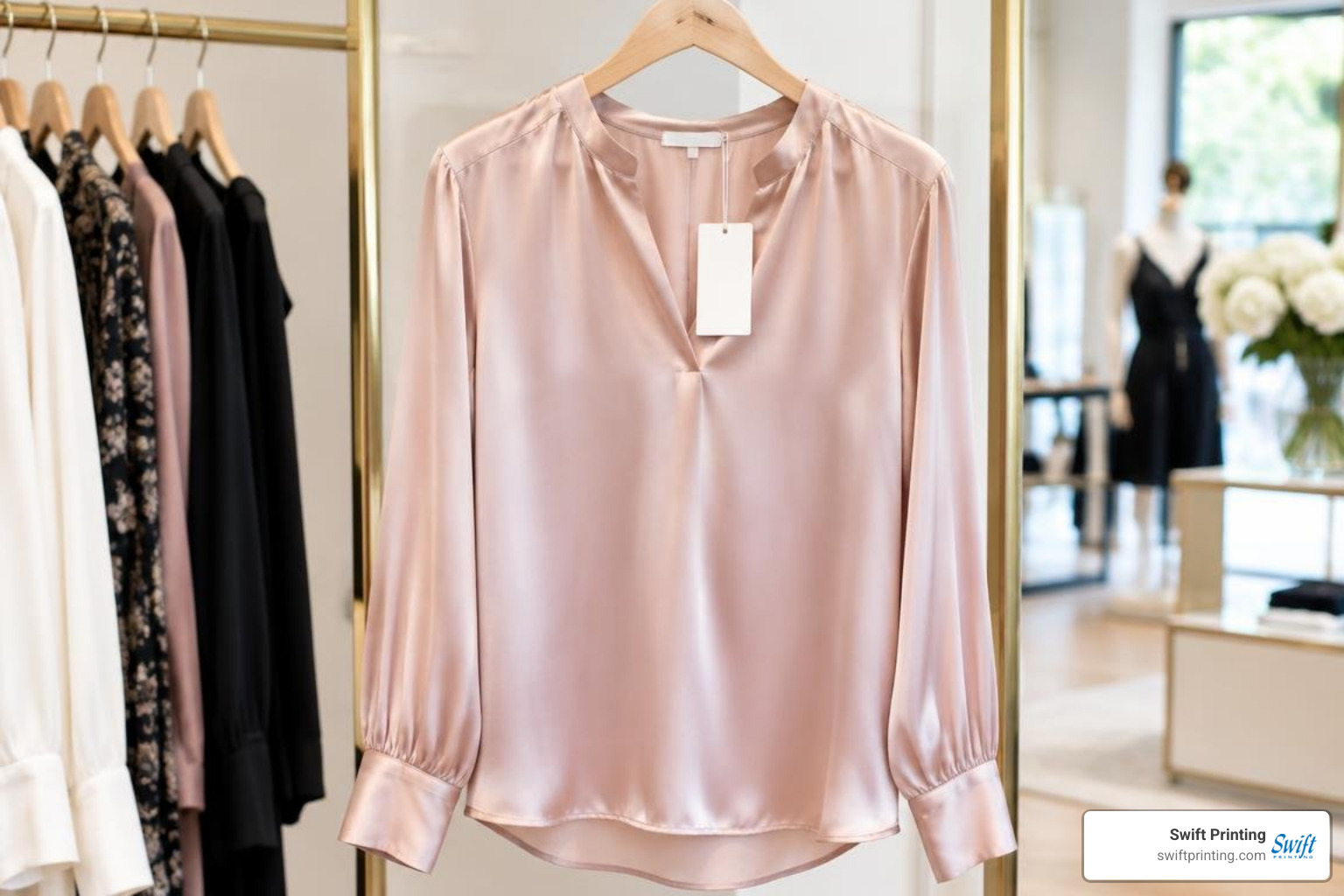
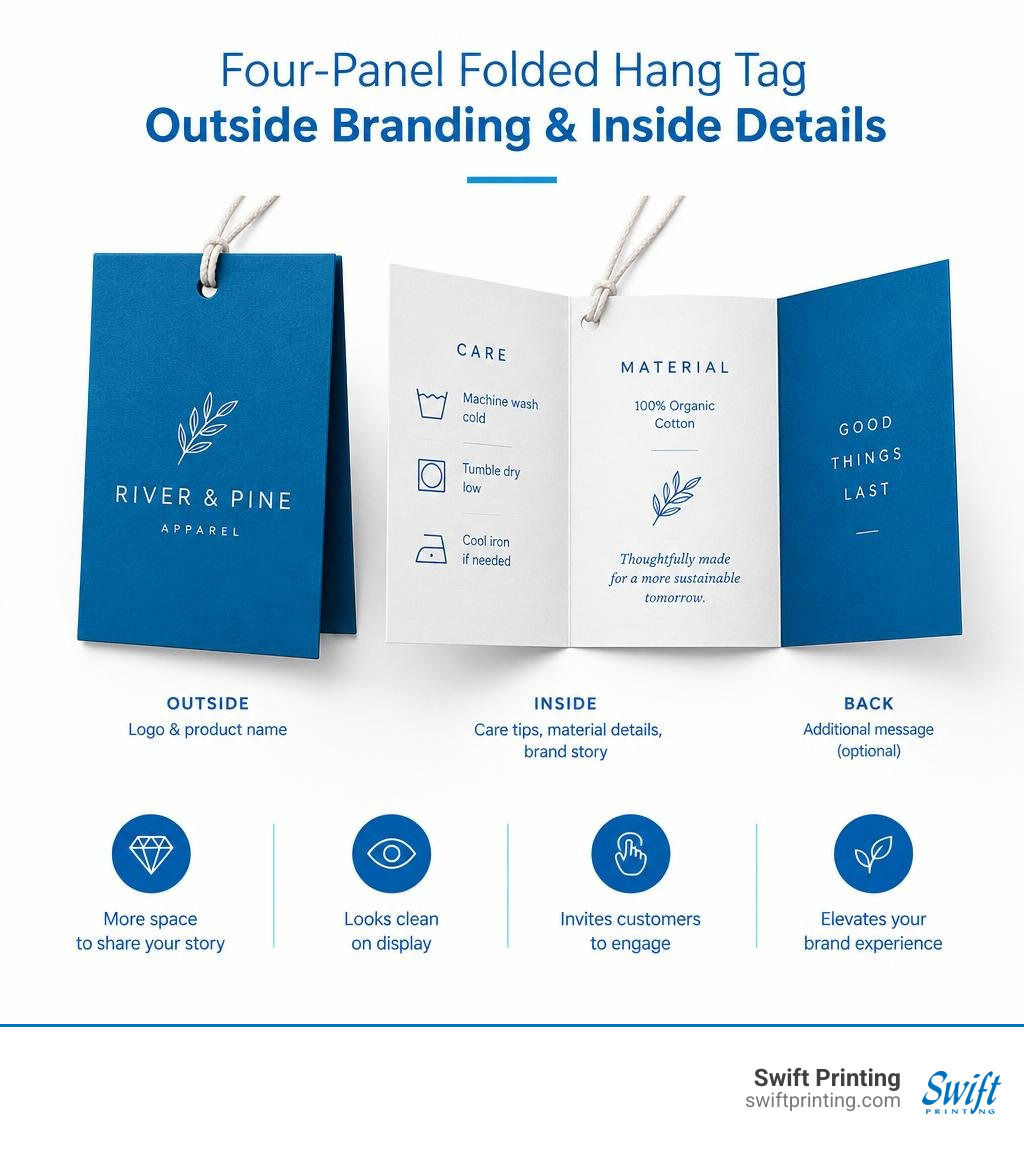
Folded hang tags give you more room to speak to shoppers without making the tag look bigger on display. Put your logo and product name on the outside. Use the inside panels for care tips, material details, or a short brand story. They are a good choice when a flat tag would feel crowded.
I'm Jessica Gutowski-Slaydon, president of Swift Printing. I help clients choose paper, finishes, and production plans for printed pieces like folded hang tags, so they can make a clear, polished impression.
What Are Folded Hang Tags and Why Choose Them?
When you browse a curated boutique, premium retail showroom, or medical spa display, every detail communicates quality. A folded hang tag functions essentially as a miniature brand booklet. Instead of a single piece of cardstock, it utilizes a bi-fold structure scored along the center or top edge. This format creates four distinct panels: the front cover, two interior spread panels, and a back cover.
Choosing folded tags gives your products an elevated tactile presence. They invite the shopper to interact, open the fold, and read your story. The format allows high-end merchandise to display thorough information while maintaining a clean, uncluttered visual appeal on racks and retail shelves.
| Feature | Standard Single-Card Tag | Multi-Panel Folded Hang Tag |
|---|---|---|
| Available Panels | 2 panels (Front / Back) | 4 panels (Front, Inside Left/Top, Inside Right/Bottom, Back) |
| Information Density | Low to moderate; text can feel crowded | High; structured sections ensure easy readability |
| Tactile Experience | Flat cardstock touch | Interactive, booklet-style opening experience |
| Footprint on Display | Must be large to fit substantial copy | Compact display size with double the surface area |
| Best Used For | Basic item codes, single logos, quick identifiers | Heritage storytelling, multi-language care, compliance, QR loyalty links |
Multi-Panel Layouts: Standard vs. Folded Hang Tags
Standard flat tags force designers to compromise. If you need to include safety disclosures, fabric origins, washing instructions, and your brand mission, a flat card quickly becomes cluttered with microscopic text. If you enlarge the card to accommodate the copy, the tag can overpower delicate garments or boutique items.
A folded tag solves this layout puzzle neatly. By doubling your printable surface area while maintaining a compact exterior footprint, your display remains balanced and refined. The front panel stays clean with your primary branding, while the interior panels organize supporting details into comfortable, readable sections.
Expanding Space for Storytelling and Compliance
Modern consumers appreciate transparency. They want to know where materials originate, how an item was crafted, and how to care for it over time. High-end lifestyle brands, corporate apparel lines, and boutique creators can use interior panels for:
- Brand Heritage & Mission: Share the artisan craftsmanship, regional sourcing, or sustainable philosophy behind the item.
- Detailed Garment Care & Use Instructions: Provide step-by-step cleaning guides or technical operating steps that prolong product life.
- Regulatory Compliance & Certifications: Display required fiber disclosures, organic certifications, or safety notices without disrupting front-facing aesthetics.
- Interactive Digital Links: Add clean QR codes directing shoppers to video tutorials, authentication portals, or loyalty rewards programs.
Keeping retail merchandise organized and presented cleanly is key to a smooth shopping experience. Much like implementing seasonal storage organization keeps spaces orderly, structured multi-panel tags keep your product merchandising cohesive across every retail season.
Material, Size, and Custom Finishing Specifications
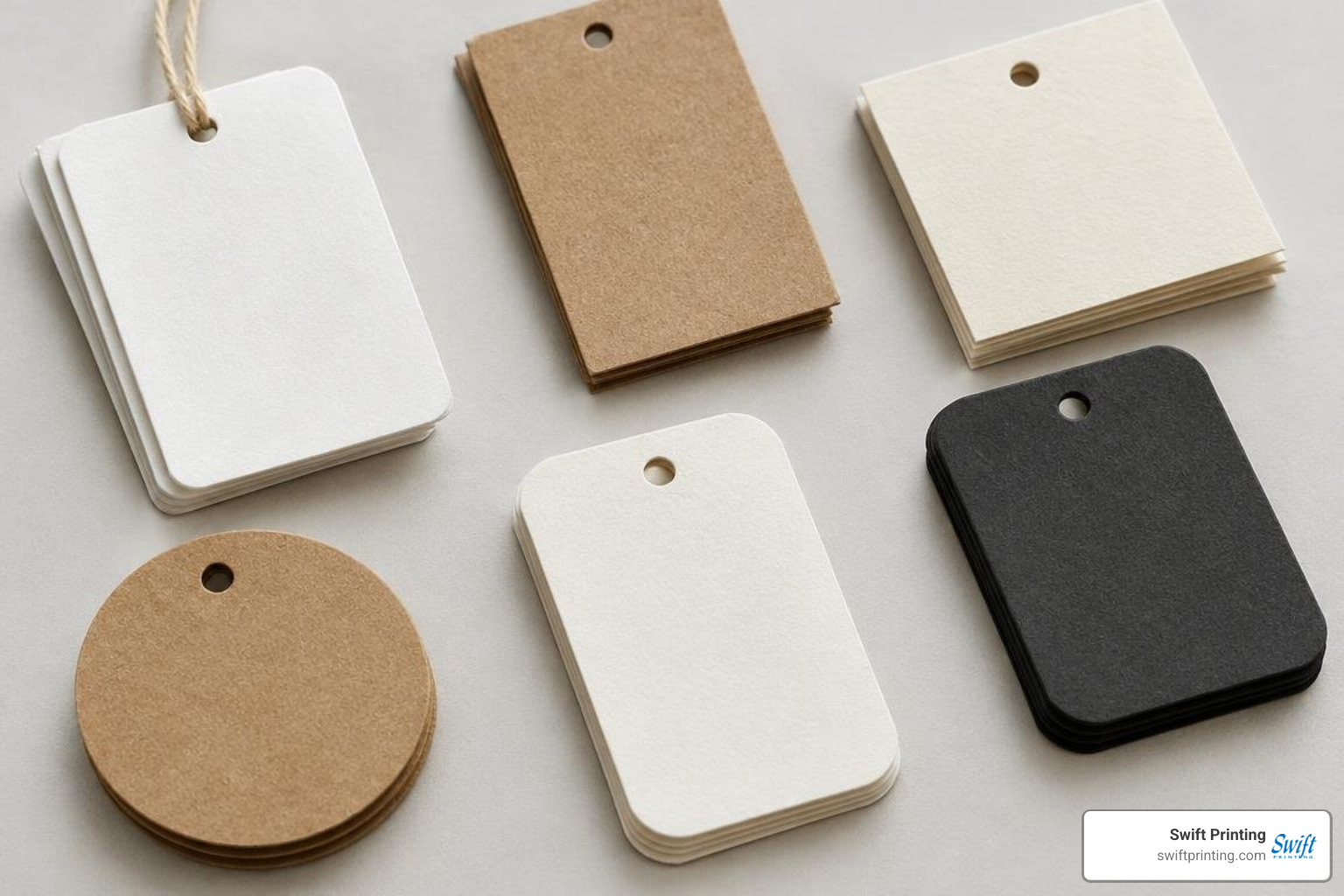
The tactile feel of your tag sets the tone before a customer even reads a word. A flimsy tag detracts from an otherwise exceptional product. Selecting substantial paperboards and intentional surface finishes ensures your presentation reflects premium craftsmanship.
Cardstock Thickness and Paper Weights
Paper thickness is measured in points (where 1 pt equals 1/1,000th of an inch). For multi-panel tags, paper selection requires balancing structural rigidity with a clean, crisp fold:
- Durable 14 pt cardstock: A versatile, classic choice providing reliable structure and crisp folding lines for light-to-medium retail products.
- Heavyweight 16 pt cardstock: A substantial, premium paperboard offering rigidity and a sturdy hand-feel that resists bending on busy retail racks.
- 18 pt Premium Heavyweight Board: An ultra-sturdy option best suited for outerwear, handcrafted leather goods, high-end equipment, and luxury corporate merchandise.
- Uncoated & Textured Stocks: Excellent for organic, artisanal, or botanical brands looking for a warm, natural, tactile grain.
Protective Coatings and Specialty Finishes
Applying the right surface finish enhances both durability and visual appeal:
- Matte Lamination: Provides an elegant, non-reflective finish that repels fingerprints and ensures effortless interior legibility under showroom lighting.
- High-Gloss UV Coating: Adds vibrant pop and deep contrast, making photographic imagery and bold cover colors stand out.
- Soft-Touch Coating: Creates a velvety texture that immediately signals luxury the moment a client touches the piece.
- Foil Stamping & Embossing: Adds metallic shine or dimensional relief to logos and seal emblems.
- Eco-Friendly Water-Based Inks: Prints crisp, rich colors with formulations free of harsh chemical solvents, matching sustainable packaging goals.
Explore our full range of finishing options for printing to discover how specialty coatings protect your tags throughout handling.
Preparing Print-Ready Artwork for Folded Hang Tags
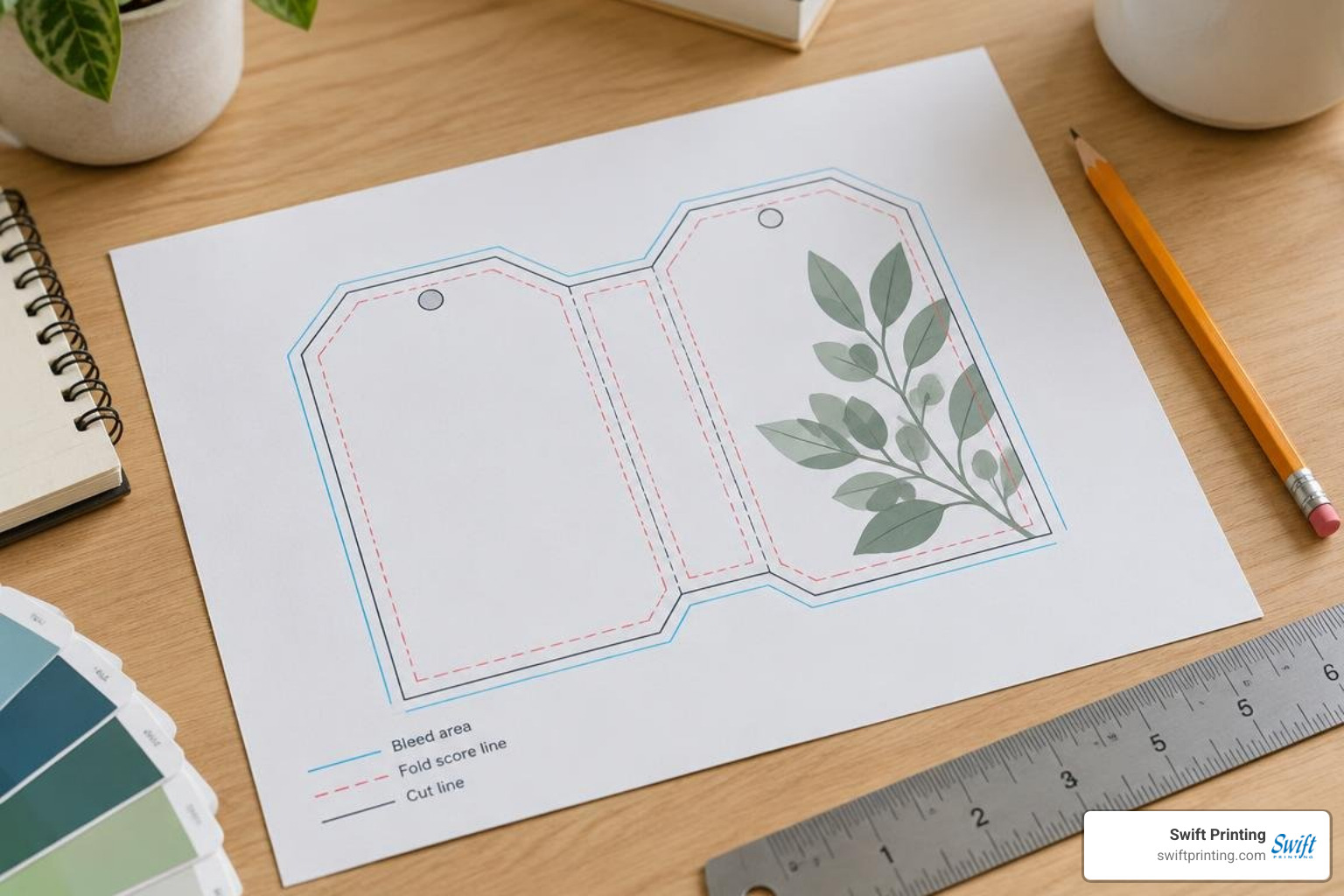
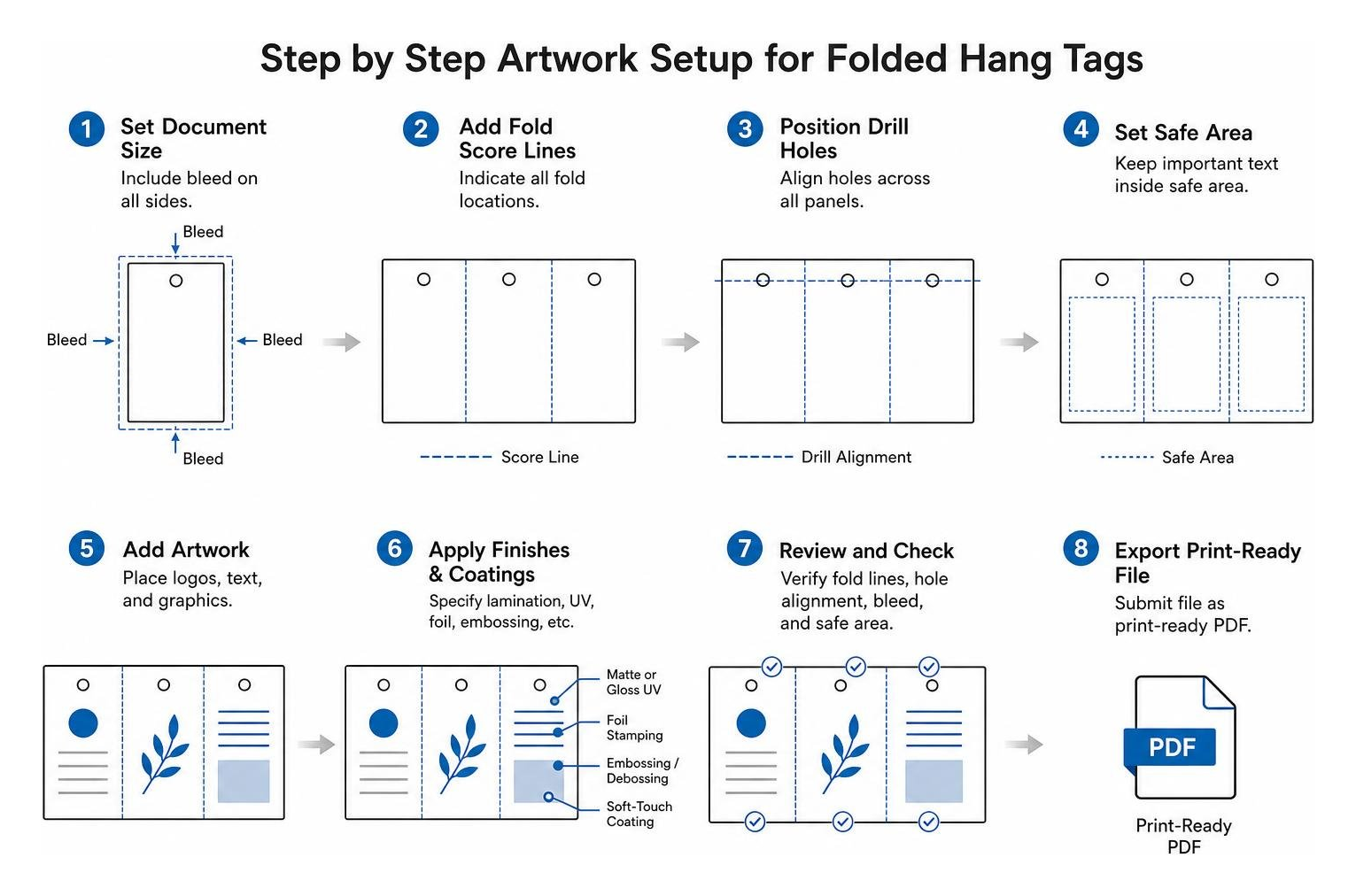
Creating print-ready artwork for a folded piece requires careful setup so that panels, folds, and drill holes align seamlessly across the finished piece. Understanding pre-press print preparation helps ensure your files move smoothly into production without delays.
Scoring, Folding, and Drill Hole Alignment
Because heavyweight cardstock can crack along the fold if folded raw, precision scoring is essential. An indentation rule compresses the paper fibers along the fold line prior to folding, ensuring a smooth, crisp edge without cracked ink.
When laying out your art, keep these structural mechanics in mind:
- Drill Hole Clearance: Standard drill holes are typically 1/8" or 3/16" in diameter. Keep text and essential graphics at least 0.25" away from the hole location so nothing gets punched out.
- Hole Placement Options: Tags can be punched at the top center fold, top-left corner, or through all panels simultaneously depending on how you intend to fasten them.
- Crease Registration: Center scores divide your unfolded document exactly in half. Ensure design elements intended for specific panels stay cleanly on their respective sides of the score mark. Learn more about our precision finishing through our custom bindery options.
Bleed Margins, Safe Zones, and Vector Color Modes
To prevent unwanted white slivers or cut-off text during the mechanical trimming process, configure your artboard correctly:
- Bleed Margins: Extend any background colors or patterns at least 0.125" (1/8 inch) past the final trim line. Review why crop and bleed marks are crucial for edge-to-edge printing.
- Safety Margins: Keep all body text, logos, and critical information at least 0.125" inside the trim edge and fold line.
- Color Mode: Always build your artwork in CMYK rather than RGB to ensure color accuracy on the press.
- Image Resolution: Ensure all embedded imagery is rendered at 300 DPI at 100% scale to maintain sharp reproduction. If you are new to commercial file setup, brush up on key terms with our guide to printing terms and definitions.
Production Timelines and Order Quantities
Planning your packaging production around seasonal rollouts, product launches, or regional trade events requires understanding typical shop timelines and batch planning.
Turnaround Times and Minimum Order Volumes
Custom printed tags can accommodate both focused boutique runs and large-scale product rollouts:
- Batch Sizing: You can produce short-run boutique collections starting around 150 units, or scale up to multi-thousand runs for wider retail distribution.
- Production Speed: Standard digital runs are often completed in 2 to 4 business days once prepress proofs are approved.
- Seasonal Scheduling: For major autumn or spring seasonal rollouts, we recommend submitting print-ready files two to three weeks in advance to allow adequate time for proofing, scoring, and specialty finishes.
Frequently Asked Questions About Retail Tags
How are folded tags attached to boutique merchandise?
Folded tags can be attached using several distinct fastening methods depending on your product type and brand style:
- Waxed Cotton or Jute String: Perfect for artisanal, natural, or heritage apparel lines.
- Satin Ribbon or Grosgrain Ties: Excellent for luxury boutique garments, bridal wear, and premium gifts.
- Safety Pins or Pear Pins: Vintage-style metal bulb pins attach neatly to garment care labels without piercing delicate fabrics.
- Elastic Barbed Cords: Fast, flexible loops commonly used on specialty bottles, jars, and boxed goods.
- Standard Tagging Gun Fasteners: Efficient plastic barbs designed for high-volume apparel manufacturing.
What is the most popular folded hang tag size for retail?
Popular finished (folded) dimensions include:
- 2" x 3.5" (Standard Business Card Size): Compact, familiar, and proportional on everyday apparel and accessories.
- 3" x 4" (Vertical Rectangle): Offers generous interior room for multi-paragraph brand narratives, sizing charts, and warranty terms.
- 2.5" x 2.5" or 3" x 3" (Square Format): A contemporary, balanced shape favored by modern lifestyle brands, cosmetics, and jewelry lines.
- Custom Folded Formats: Sizes extending up to 5" x 5" or larger for specialized items, equipment, and deluxe display packaging.
Can folded tags include interactive elements like QR codes?
Yes. Folded tags are an ideal medium for interactive digital touchpoints. Because the inside panels are shielded from shelf scuffs, QR codes stay crisp and easy to scan. Direct shoppers to:
- Product Authenticity & Provenance: Verify limited-edition batch numbers or sustainable sourcing origins.
- Styling & Care Video Guides: Show customers how to wear, style, or care for the item.
- Client VIP Registration: Invite shoppers to join an exclusive loyalty circle or leave a review.
Pro tip: Ensure high contrast (such as dark ink on a light, solid background) and leave at least a 0.25" quiet margin around the QR code so smartphone cameras scan it instantly.
Conclusion
Elevating your retail packaging with custom folded tags gives your products the stage they deserve. By pairing engaging visual branding on the outside with thoughtful storytelling, care guides, and compliance notes on the inside, you create an unboxing and shopping experience that builds customer trust.
At Swift Printing, we are a high-end print shop setting the standard for printing in the boutique business. Whether you are launching a new fashion line, outfitting corporate gifts, or refining product displays for your professional practice, we ensure every score, fold, and finish is executed with precision. Connect with us today for high-end boutique printing services and let's craft tags that make your brand stand out.