Get Flawless Coil Bound Booklet Printing with Swift Quality
What Is Coil Bound Booklet Printing and Why Choose It?
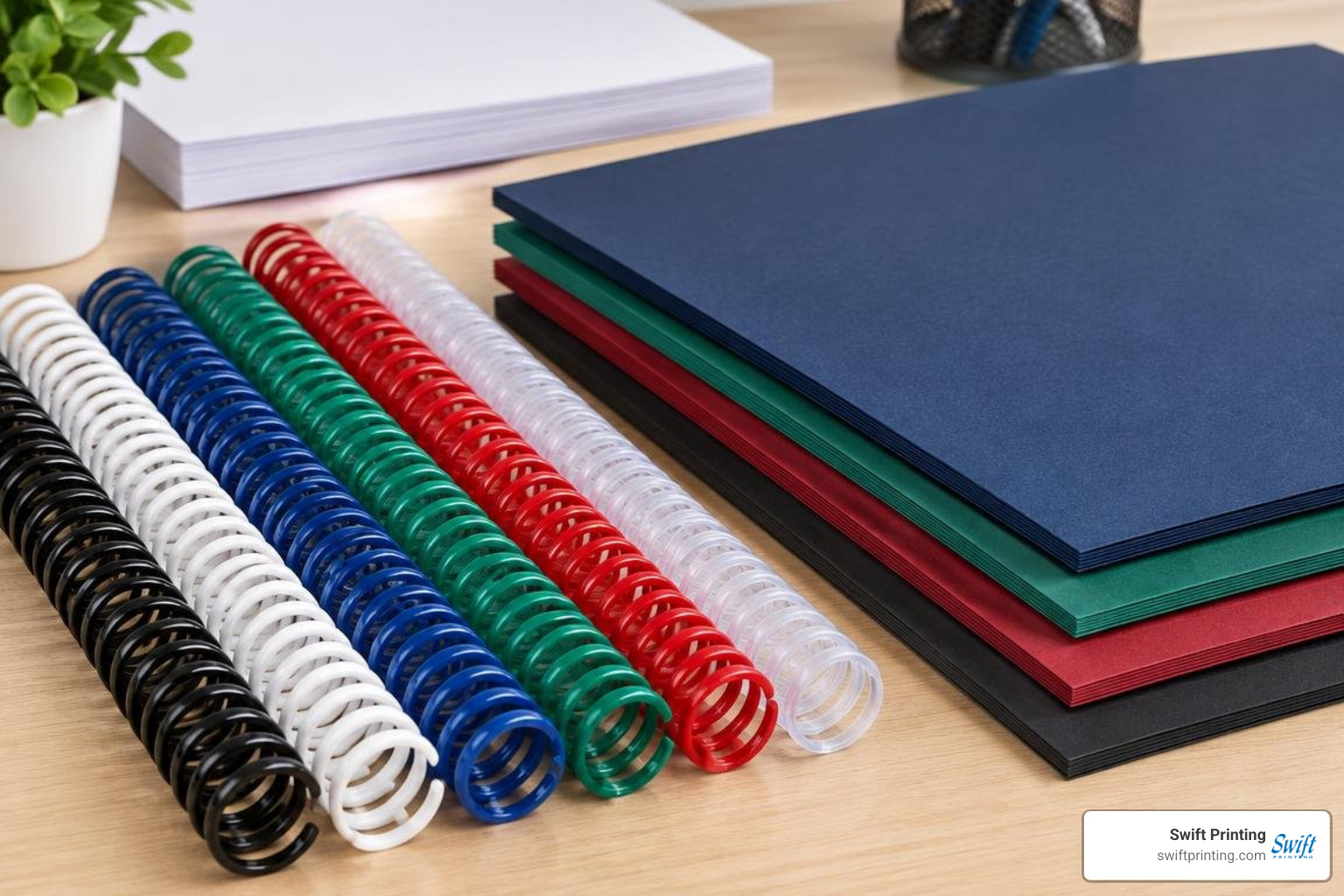
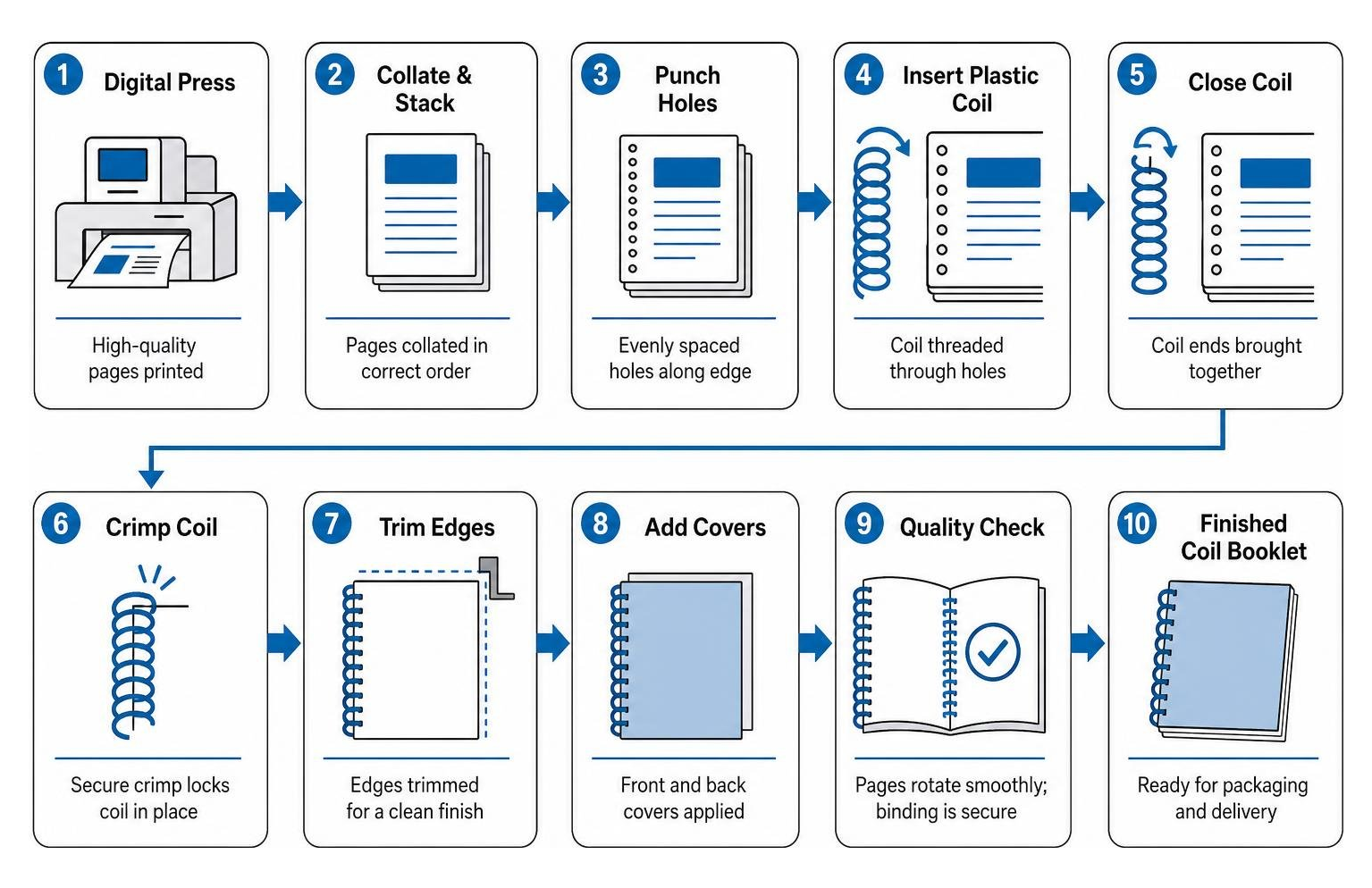
Coil binding—often called spiral binding—uses a continuous, flexible plastic filament spun through evenly spaced holes punched along the edge of your document. Unlike traditional binding styles where glue or metal staples fix the spine in place, a plastic coil creates an independent mechanical hinge for every single leaf. This construction lets pages spin smoothly around the spine without pinching, creasing, or fighting to snap shut while you read.
For organizations that rely on dense documentation, understanding the differences across commercial book binding methods ensures your documents hold up under heavy, repetitive use. While saddle-stitching works well for slim pamphlets and perfect binding delivers a square, bookstore-style spine for retail volumes, neither format can match the hands-free utility of a spiral coil.
| Binding Feature | Continuous Plastic Coil | Wire-O (Twin Loop Wire) | Perfect Binding (Adhesive) | Saddle Stitching (Stapled) |
|---|---|---|---|---|
| Lay-Flat Ability | 100% True Lay-Flat | 100% True Lay-Flat | Resists lying flat; needs hand weight | Lies flat only on low page counts |
| 360-Degree Fold-Back | Yes (Complete wrap-around) | Yes (Complete wrap-around) | No (Spine will crack) | No (Spine will distort) |
| Spine Durability | Resilient PVC; bounces back if crushed | Elegant metal; can bend under heavy force | Rigid glue spine; can crack over time | Wire staples; pages tear under strain |
| Ideal Page Counts | 60 to 400 pages (up to ~300+ sheets) | 16 to 250 pages | 40 to 600+ pages | 8 to 64 pages |
| Typical Best Use | Workbooks, field manuals, training logs | Executive board decks, luxury proposals | Catalogs, annual reports, paperbacks | Event programs, simple brochures |
Key Advantages of Coil Bound Booklet Printing
When an administrative director, legal partner, or clinical director comes to us for advice on multi-page projects, they usually have one main goal: functionality under pressure. The mechanical benefits of plastic coil binding include:
- Complete 360-Degree Rotation: A coil bound document folds completely back on itself, cutting its desk footprint in half. This makes it an ideal companion for crowded workstations, lab benches, and podiums.
- Crush-Resistant Memory: Unlike metal wire that bends out of shape when tossed into a briefcase or storage tote, durable PVC coil springs back to its original shape. A coil can take more twists than a pretzel and keep working smoothly.
- Superior Page-Turn Dynamics: Because the coil threads continuously through clean mechanical punches, pages glide without binding or catching on staples.
- Flexible Bindery Configurations: Our versatile bindery options accommodate booklets from pocket-friendly 4.25 x 4.25-inch reference guides up to 12 x 14-inch oversized architectural portfolios.
High-Impact Use Cases for Professional Organizations
In the B2B and institutional sectors, a booklet represents your standard of service. Coil binding is standard practice for documents requiring frequent handling:
- Healthcare Protocols and Clinical Guides: Hospital networks, nursing departments, and surgical clinics need reference books that lie flat on examination counters without user intervention.
- Legal and Municipal Compliance Handbooks: Court reporters, municipal authorities, and corporate legal teams turn to coil binding for compliance manuals, safety logs, and bylaws that undergo constant review.
- Executive Training Workbooks & Onboarding Guides: Corporate consultants and human resource departments use coil bound workbooks so participants can write notes easily on both sides of the page without fighting the spine.
- Specialty Portfolios and Archival Projects: Fine-art institutions and design teams—such as those featured in the Michigan State University Libraries Artists' Books Collection—frequently use mechanical bindings to pair varied paper stocks, transparent overlays, and heavyweight inserts in a single volume.
Selecting Materials, Dimensions, and Custom Specifications
Getting a coil bound project right means balancing sheet thickness, cover rigidity, and coil diameter so the finished book feels balanced and turns smoothly.
Selecting the Right Specs for Coil Bound Booklet Printing
The sweet spot for coil binding spans from 60 to 400 pages (roughly 30 to 200 physical sheets). To select the right coil, calculate the total book thickness including covers, then add 1/8 inch (3mm to 4mm) of clearance so the pages can turn freely.
- Coil Diameter Range: Coils range from 6mm (for slim handbooks) up to 50mm or larger for thick technical manuals.
- Pitch Selection (Hole Spacing): Standard coil binding uses a 4:1 pitch (4 holes per inch), which provides a clean layout and smooth page turns for most standard book sizes. For denser or oversized projects, a 3:1 pitch offers heavier-gauge filament options.
- Coil Colors: While classic black, white, and navy remain the gold standard for executive presentations, you can pick royal blue, forest green, clear, red, or custom-matched colors to reinforce brand palettes.
Our commercial finishing options for printing ensure that every component, from the coil gauge to corner rounding, matches your brand standards.
Premium Cover Stocks and Specialty Enhancements
Your cover sets the tone for your presentation. For high-end corporate workbooks, we combine aesthetic appeal with durable protective layers:
- Heavy Cover Stocks: 100lb to 130lb silk, gloss, or uncoated cover stocks provide structural support and a solid feel.
- Protective Lamination: Soft-touch velvet, scratch-resistant matte, or high-gloss thermal laminations protect covers against daily wear, fingerprints, and spills.
- Synthetic Poly Covers: Heavyweight frosted or opaque poly covers give field guides and technical manuals tear-proof, moisture-resistant protection.
- Foil Stamping and Spot UV: Adding metallic foil or dimensional gloss highlights to your logo upgrades a standard handbook into a distinctive executive asset.
For a deeper dive into cover weights and finishing selections, review our complete booklet printing guide.
File Preparation, Margins, and Precision Prepress
Precision prepress preparation keeps your text, graphics, and charts legible once the spine holes are punched.

Setting Gutter Margins and Bleed Tolerances
Because coil binding requires physical holes punched through the binding edge of every page, your interior margin (the gutter) needs more breathing room than a standard stapled document.
- Gutter Margin (Spine Edge): Maintain at least 12mm (0.5 inches) of clear space from the binding trim edge to all body text, page numbers, and critical graphics. This keeps your content safe from the punch line.
- Outside Margins: Keep at least 0.25 inches (6mm) of margin along the top, bottom, and outer edges.
- Bleed Area: For images or color blocks that extend to the edge of the sheet, add a standard 0.125-inch (3mm) bleed on all outside edges.
- File Format: Export your print files as a single, multi-page PDF in reading order (page 1, 2, 3...) rather than pre-imposed spreads. This lets our prepress workflow align pages accurately for our digital short run printing systems.
Our commercial book printing guide explains additional details on file prep and image resolution.
Avoiding Common Prepress and Binding Pitfalls
- Placing Footers in the Punch Zone: Make sure page numbers on odd and even pages account for alternating left and right binding edges.
- Ignoring Paper Caliper: Using ultra-heavy cover stock throughout a 300-page book can make the spine too thick for standard coils. We evaluate paper weight and bulk beforehand to pair your document with the correct coil diameter.
- Mismatched Cover and Interior Sizing: If you use oversized clear poly frost covers, make sure your artwork trims correctly so the plastic overhangs the interior pages evenly.
- Skipping a Physical Proof: We always recommend reviewing an un-punched or fully assembled physical proof for high-stakes projects to check alignment and read order before running the full job.
Frequently Asked Questions About Coil Binding
Can coil bound booklets fold back on themselves without damaging the spine?
Yes. The continuous spiral lets pages rotate a full 360 degrees without distorting the spine or cracking the binding. This makes coil binding the standard choice for training materials, lab manuals, and desktop reference guides.
What is the ideal margin clearance needed on the binding edge?
We recommend a minimum binding-side margin of 12mm (0.5 inches). This safety zone keeps your text, tables, and headers well clear of the punched holes and coil spine.
What is the difference between coil binding and Wire-O binding?
Coil binding uses a flexible, single continuous PVC plastic spiral that resists crushing and bounces back when handled roughly. Wire-O uses paired metal wire loops (C-shaped combs crimped into circles) for a sleek, contemporary aesthetic. While Wire-O offers a polished corporate look, plastic coil provides better long-term durability in high-use environments.
Partner with Swift Printing for Your Professional Booklet Projects
Delivering dependable, executive-ready documentation requires careful attention to paper weight, prepress tolerances, and bindery execution. At Swift Printing, we work with professional service firms, healthcare institutions, municipal departments, and corporate teams across West Michigan and beyond to produce clean, durable coil bound booklets on time and on budget.
Whether you need a quick run of 50 onboarding workbooks or several thousand compliance handbooks, our team helps you select the right stocks, protective finishes, and coil specifications for the job. Reach out to our Grand Rapids team today to review your project specs, request physical material swatches, or receive a fast, detailed estimate.