When most people think about printing, they picture a simple process: upload a file, press a button, and watch the finished product roll out.
If only it were that easy.
At Swift Printing in Grand Rapids, Michigan, a tremendous amount of work happens before a single sheet of paper ever reaches the printing press. Whether you're ordering business cards, brochures, booklets, postcards, direct mail pieces, or marketing materials, there are dozens of steps that take place behind the scenes to ensure your project looks professional and performs exactly as expected.
As a commercial printer, we often joke that printing is equal parts craftsmanship, technology, troubleshooting, and magic.
Today, we're pulling back the curtain to show you what happens before your project ever makes it onto press.
It Starts Before We Ever See Your Files
Before your artwork even arrives at our shop, our team is already preparing equipment and materials for production.
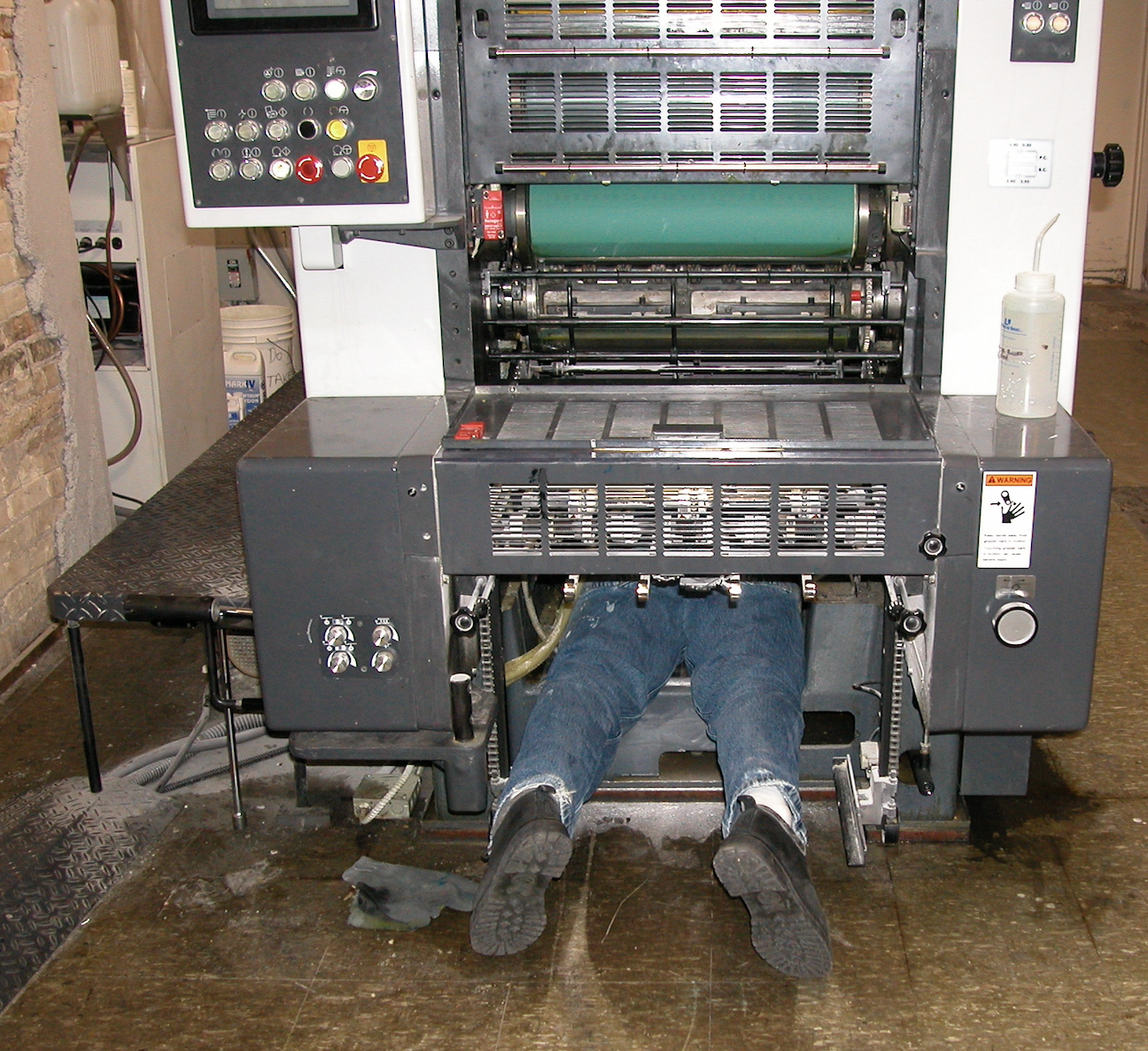
Commercial printing presses are sophisticated pieces of machinery that require regular maintenance and attention. Our press operators begin by making sure presses are properly lubricated, calibrated, and ready for production. Ink levels are checked, rollers are inspected, and color standards are verified.
Depending on the type of project being produced, test sheets may be run to confirm color consistency and ensure the equipment is operating at peak performance.
A well-maintained press is one of the biggest factors in producing consistent, high-quality printed materials.
While technology has advanced tremendously over the years, there is still a great deal of skill and experience involved in preparing a press for a production run.
Welcome to Prepress: The Most Important Department You've Never Heard Of
Once your files arrive, they don't immediately go to the pressroom.
Instead, they make a stop in one of the most critical departments in the printing industry: Prepress.
Think of prepress as quality control for your artwork.
At Swift Printing, every file undergoes a comprehensive review before it is approved for production. While many of these checks are automated, we still believe in having trained professionals review files multiple times.
Why?
Because computers are smart, but they don't catch everything.
Our team often says we like to "triple check" files before moving forward.
The 27-Point Preflight Check
Every print file goes through what is called a preflight check.
This process helps identify potential problems before they become expensive mistakes.
Some of the items we're reviewing include:
Is the document the correct size?
Are bleeds included where necessary?
Are all fonts embedded properly?
Are images linked correctly?
Is the color mode correct?
Are there transparency issues?
Are crop marks positioned properly?
Are any elements sitting too close to the trim edge?
Are spot colors defined correctly?
And that's just the beginning.
Our internal checklist contains 27 different items that help ensure files are production ready before they ever move forward.
Finding issues at this stage saves time, money, and frustration later.
Resolution Matters More Than Most People Realize
One of the most common issues we encounter involves image resolution.
This is where print and digital media differ significantly.
For websites, social media, and email marketing, smaller image files are preferred because they load swiftly and improve user experience.
For printing, however, higher resolution is essential.
As a general rule, printed images should be at least 300 DPI (dots per inch) at their final printed size.
Images pulled directly from websites are often only 72 DPI and may appear blurry, pixelated, or fuzzy when enlarged for print.
We frequently help customers determine whether their artwork and photos are suitable for production before a project moves forward.
A beautiful design can quickly lose its impact if the images aren't sharp enough to reproduce properly on paper.
The Paper Gets a Final Check
Once artwork has been approved, the next step is confirming materials.
Paper selection plays a major role in how a finished piece looks and feels.
The same design can appear dramatically different depending on whether it is printed on:
Gloss paper
Matte paper
Uncoated paper
Cover stock
Text stock
Specialty papers
Before production begins, our team verifies that the correct paper has been ordered, received, and assigned to the project.
This extra step helps eliminate production delays and ensures the final product matches customer expectations.
Proof Approval: Your Last Opportunity for Changes
Before many projects move into full production, a proof is generated.
A proof gives customers the opportunity to review their project one final time.
This is often the last chance to catch:
Typographical errors
Incorrect phone numbers
Website mistakes
Address issues
Missing information
What are these terms? Read this for a printers terms guide
While our team reviews files carefully, customers know their content best.
That's why proof approval remains one of the most important steps in the printing process.
As we like to remind clients, once thousands of copies have been printed, changes become significantly more expensive.
What Does "Ripping a File" Mean?
One of the most misunderstood terms in commercial printing is "ripping."
No, we're not tearing anything apart.
RIP stands for Raster Image Processing.
This process converts digital artwork into information that printing equipment can understand.
For offset printing, the RIP software separates artwork into four distinct color channels:
Cyan
Magenta
Yellow
Black
Together, these four colors are commonly referred to as CMYK.
Every image, photo, logo, and graphic is analyzed and separated into these individual color components.
The result is a set of files that can be used to create printing plates.
Making the Plates
For offset printing projects, plates are created after the RIP process is complete.
Each color receives its own plate.
That means a standard four-color process job will typically require four separate plates.
When these plates run through the press, tiny amounts of cyan, magenta, yellow, and black ink combine to create the full-color images we see on the finished sheet.
It's a remarkable process that has evolved over centuries while still relying on many of the same printing principles developed long before computers existed.
Finally: The Project Reaches the Press
After all of the preparation, approvals, checks, and setup work are complete, the project is finally ready for production.
The job enters our production queue and is scheduled on press.
For two-sided printing, the process often requires multiple passes.
One side of the sheet is printed first.
The sheets then rest for a period of time before being flipped and run through the press again to print the second side.
Proper drying time is critical to maintaining image quality and preventing issues during finishing.
Patience during this stage helps ensure a cleaner, more professional final product.
More Than Just Pressing Print
Commercial printing is a blend of technology, craftsmanship, experience, and attention to detail.
What may appear to be a simple brochure, postcard, booklet, or business card actually represents dozens of individual steps completed by multiple skilled professionals.
From press preparation and preflight inspections to plate creation and production scheduling, every stage plays a role in creating a finished piece that looks great and performs as intended.
The next time you pick up a printed piece, remember that a lot happened before ink ever touched paper.
And believe it or not, we're only halfway through the journey.
In next week's blog, we'll explore what happens after printing is complete, including cutting, folding, binding, scoring, perforating, packaging, and the many finishing services that transform printed sheets into polished marketing materials.
Because in the world of printing, getting ink on paper is only the beginning.
About Swift Printing
Swift Printing has been helping businesses, nonprofits, schools, and organizations with commercial printing in Grand Rapids, MI since 1950. From business cards and brochures to direct mail campaigns, booklets, labels, and specialty print projects, our team combines modern technology with generations of printing expertise to help clients make a lasting impression.