An Essential Guide to 14 pt Cardstock Thickness & Usage
Understanding 14 pt Cardstock Thickness and Specs
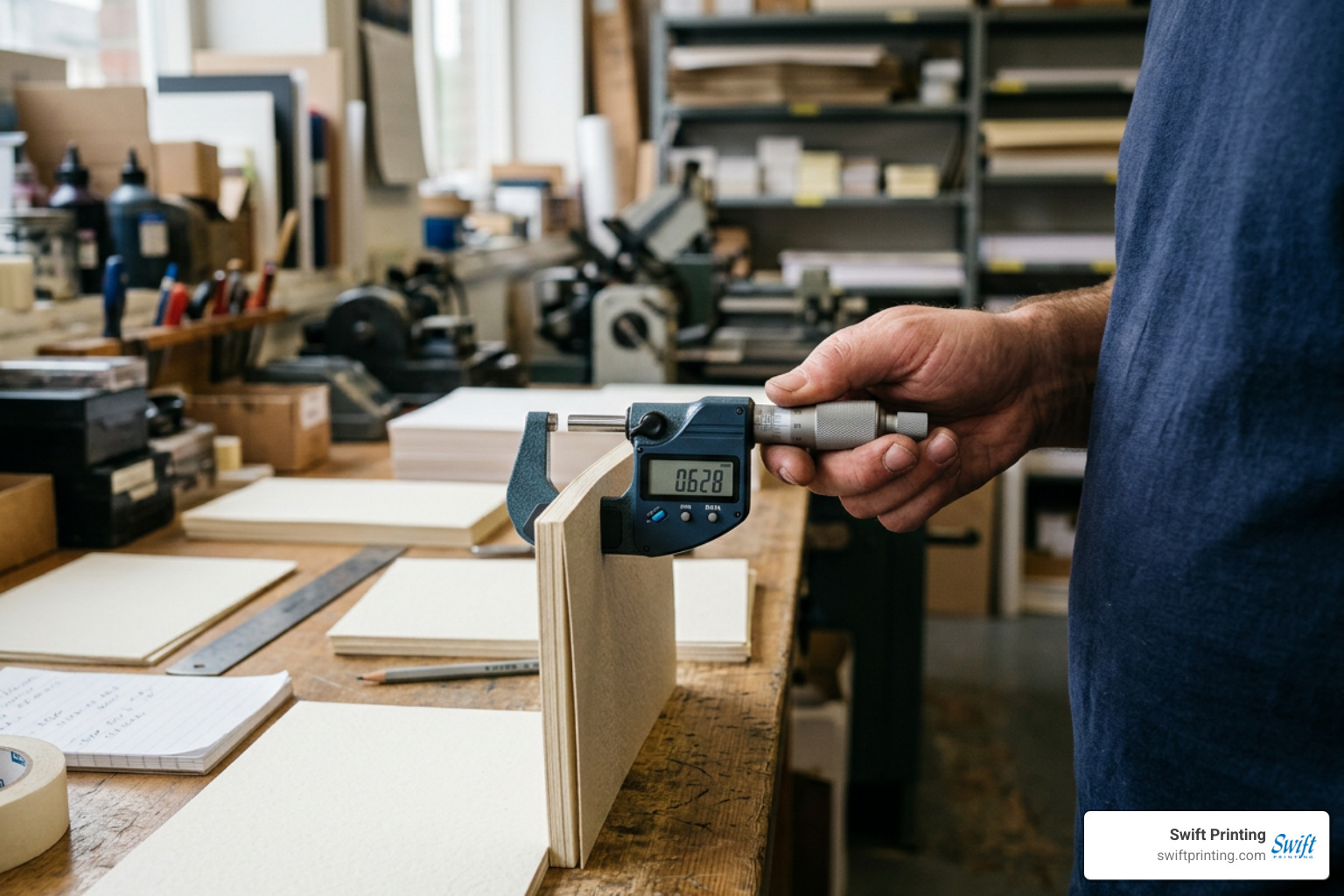
When you hold a sheet of 14 pt cardstock, the first thing you notice is its satisfying heft. In the printing industry, "pt" stands for point, a unit of measurement used specifically to define paper caliper (thickness). One point equals one-thousandth of an inch (0.001 inches), which means 14 pt paper measures exactly 0.014 inches thick.
This specific caliper strikes a wonderful balance between structural stiffness and flexibility. In terms of weight equivalency, a standard 14 pt sheet typically falls between 120-130 lb cover stock and registers around 325 gsm (grams per square meter). This density provides impressive sheet durability, making it feel like a superhero among paper stocks—sturdy enough to resist bending in transit, yet delicate enough to yield clean creases when properly scored.
Comparing 14 pt Cardstock to Other Paper Weights
To really understand where 14 pt cardstock fits into the paper universe, it helps to compare it directly against lighter and heavier alternatives.
| Paper Stock | Caliper / Weight | Relative Density & Stiffness | Best Typical Uses |
|---|---|---|---|
| 65 lb Cover | ~0.008 inches (~176 gsm) | Lightweight, highly flexible | Crafting, light flyers, layered scrapbooking |
| 110 lb Index | ~0.009 inches (~199 gsm) | Medium weight, smooth finish | Index cards, file folders, classroom materials |
| 100 lb Cover | ~0.011 inches (~270 gsm) | Heavyweight, moderate rigidity | Booklet covers, premium flyers, light postcards |
| 14 pt Cardstock | 0.014 inches (~325 gsm) | Extra thick, firm, premium feel | Business cards, durable menus, direct mail |
| 16 pt Board | ~0.016 inches (~350+ gsm) | Maximum rigidity, heavy board | Ultra-heavy business cards, point-of-sale displays |
As you can see, lightweight option like 65 lb cover (often sold in vibrant crafting packs of 125 sheets) is great for delicate die-cutting, but it lacks the structural backbone needed for standing menus or rugged mailers. On the flip side, a 16 pt board is extremely rigid. For most everyday professional applications, 14 pt acts as the "Goldilocks" choice. You can learn more about how these weights interact in Swifts Official Guide to Paper.
Caliper vs. Basis Weight: How Paper Thickness Works
It is easy to get confused by paper terminology because the industry uses two distinct measuring systems: caliper (thickness) and basis weight (pounds or GSM).
Caliper measures physical thickness directly using a micrometer. The 1-point-to-0.001-inch ratio gives an exact physical dimension. Basis weight, on the other hand, measures how much a ream (500 sheets) of paper weighs at its standard uncut base size. Because different paper types (like text, index, or cover) have different base sizes, basis weight numbers can sometimes be misleading!
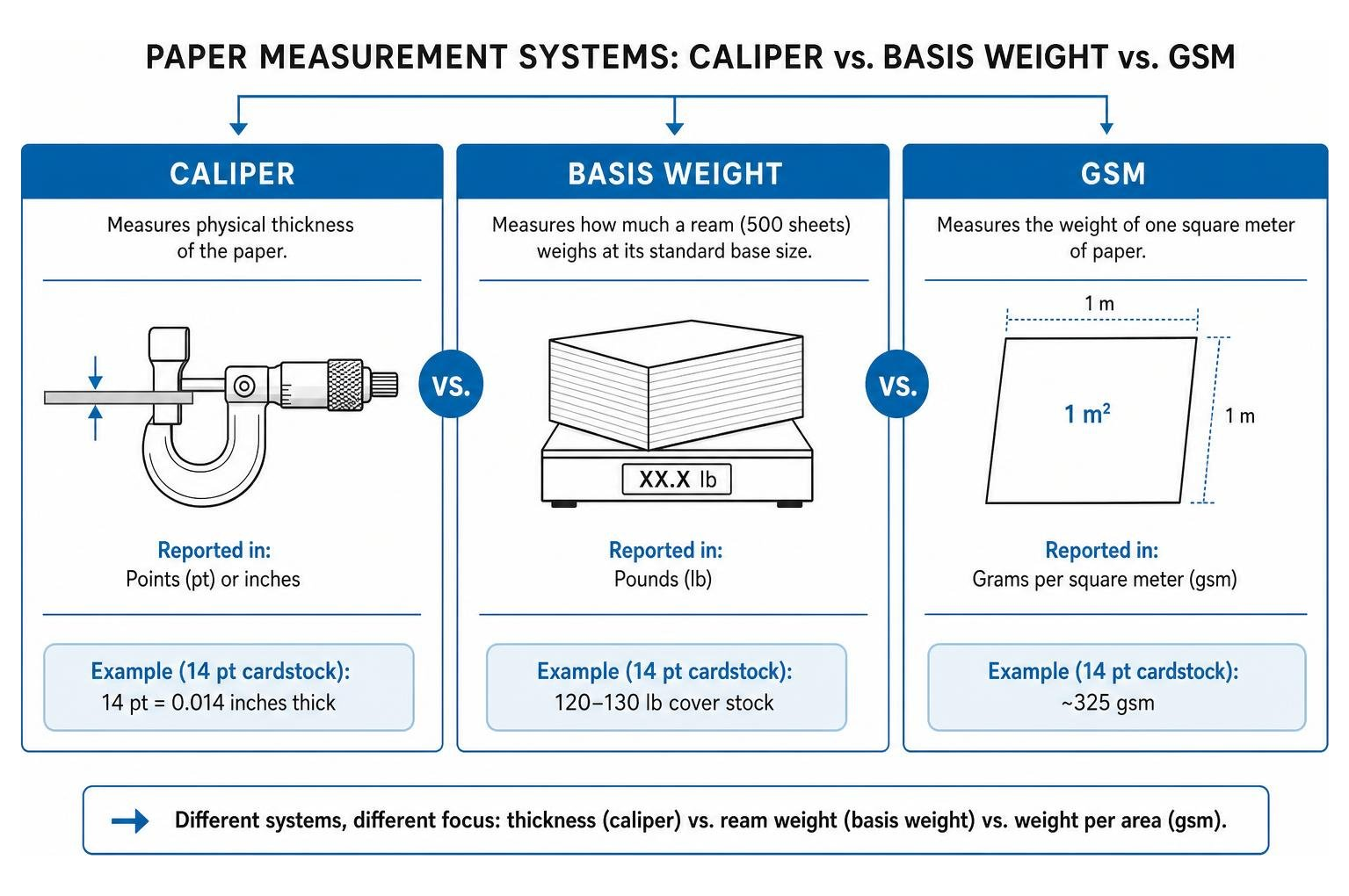
This is why metric GSM (grams per square meter) and point thickness are so helpful. A sheet of premium 14 pt cardstock at 325 gsm ensures high paper density and archival quality. High-grade cardstock is also acid-free and lignin-free, which prevents your printed materials from yellowing or becoming brittle as time passes. For a deeper dive into real-world testing of these characteristics, check out Tested Insights on 14 Pt Cardstock.
Practical Uses for Heavy Cardstock in Print and Crafting
Because 14 pt paper provides such a solid physical foundation, its practical uses span across commercial marketing, event planning, and detailed paper crafting.
Here are some of the top practical applications for heavy cardstock:
- Professional Business Cards: Delivers a firm handshake in paper form.
- Double-Sided Restaurant Menus: Holds up to frequent handling and spills (especially with a protective coating).
- Direct Mail Postcards: Meets USPS requirements while resisting postal sorting machine wear.
- Greeting Cards & Invitations: Stands upright on a display mantel without slouching.
- Cricut & Craft Projects: Perfect for 3D paper structures, gift tags, and custom cake toppers.
When working with heavy cardstock for folded items, always remember to score the sheet first. Scoring creates a clean indentation line that prevents the thick paper fibers from cracking along the fold, giving your finished project a smooth, polished edge.
Commercial Marketing Materials
When you hand a prospective customer a piece of print, the physical feel of the paper instantly communicates your brand's attention to quality. Thinner papers can feel rushed or temporary, but 14 pt cardstock makes an immediate, positive impression.
It is an exceptional choice for presentation covers, corporate announcement cards, and high-impact direct mail. If you are designing promotional pieces, reviewing How to Design the Perfect Brochure for Your Grand Rapids Business can help you maximize your layout for heavier stock options.
Invitations and Craft Projects
For DIY crafters and event planners, heavy cardstock is a absolute dream to work with. Whether you are assembling wedding stationery, crafting custom gift tags, or building intricate die-cut designs on a cutting machine, 14 pt paper provides structural integrity that thinner sheets simply cannot match. It cuts cleanly and holds adhesive well without warping or buckling.
Choosing Paper Finishes and Print Options
The finish you choose for your cardstock shapes both how it looks under lights and how it feels in the hand.
Coated vs. Uncoated Finishes
Understanding coatings helps you pick the right surface for your project's goals:
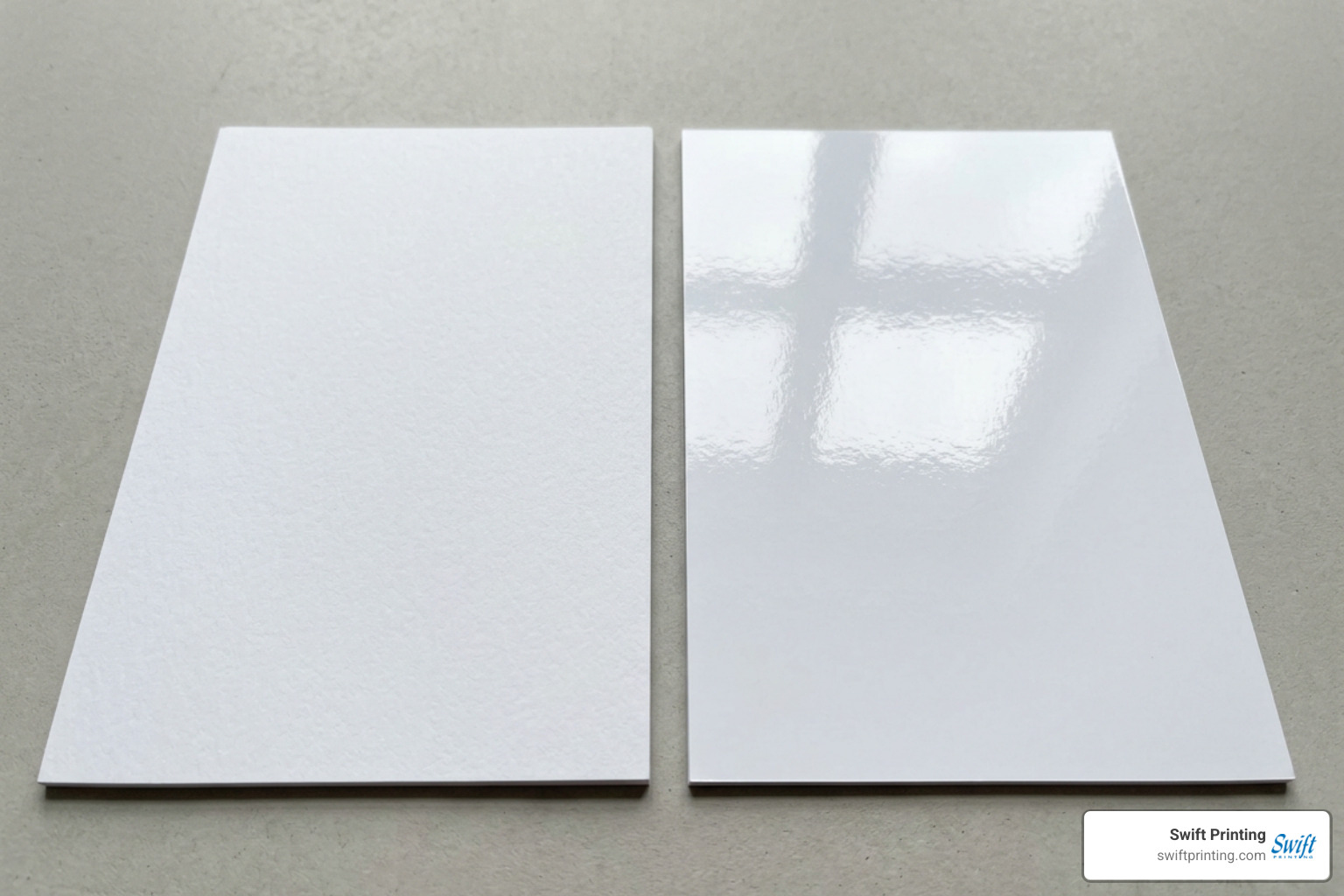
- Glossy Finish (C2S): C2S stands for "Coated 2 Sides." Double-sided heavyweight gloss digital C2S cardstock features a smooth, reflective coating on both sides. This coating keeps ink on the surface, producing vibrant colors, sharp contrast, and glowing photo prints.
- Matte Finish: Matte coatings offer a smooth, non-glare surface. Colors remain rich and elegant, and the surface is much easier to write on with standard pens.
- Uncoated / Textured Stock: Uncoated 14 pt paper has a natural, tactile feel with zero shine. It absorbs ink slightly more than coated sheets, creating a warm, organic aesthetic that is ideal for write-on appointments cards or rustic invitations.
To explore all the ways you can enhance your final prints, take a look at our guide to Finishing Options for Printing.
How to Print 14 pt Cardstock on Home Printers
Can you print on 14 pt cardstock using a home desktop printer? The short answer is: sometimes, but be careful!
Because 14 pt stock weighs roughly 325 gsm, it is significantly thicker than standard 20 lb copy paper (around 75 gsm). Many standard home printers struggle to pull such thick sheets around tight internal rollers, which can cause frustrating paper jams or motor stress.
If you are printing at home, follow these tips:
- Check Your Printer Specs: Look at your printer manual to find the maximum media thickness and GSM rating supported.
- Use the Manual Bypass Tray: Feed cardstock through a straight paper path (usually a rear feed tray or front bypass slot) rather than the main bottom drawer.
- Adjust Printer Settings: Select "Heavyweight," "Cardstock," or "Thick Paper" in your print driver settings to adjust print head speed and fuser heat (for laser printers).
- Inkjet vs. Laser: Color laser printers usually excel with C2S glossy stock, while inkjet printers perform best on uncoated or specialty inkjet-coated matte cardstock.
Buying Guide: Sheet Sizes, Weight, and Pricing Considerations
When purchasing cardstock for in-house printing or crafting, you will encounter a variety of sheet sizes and pack quantities:
- 8.5" x 11" (Letter): The standard size for desktop printers, ideal for small runs of cards, signs, or craft cuts. (A typical pack of 24 sheets of 110 lb cover cardstock often runs around $10 to $15 USD, while specialty 50-sheet packs of 14 pt C2S gloss run approximately $20 to $30 USD).
- 8" x 10": A convenient cut size for photo prints and framing, frequently sold in 100-sheet bulk packs ($25 - $35 USD).
- 11" x 17" (Tabloid): Excellent for small posters, folded menus, and commercial digital presses, usually priced around $35 to $50 USD for a 50-sheet pack.

When ordering in bulk, always account for flat storage in a dry, climate-controlled space to prevent sheet warping from humidity. Additionally, if you are planning a direct mail campaign, keep in mind that heavy cardstock pieces can affect mailing weight and postage rates—so factoring paper weight into your budget early is always a smart move!
Frequently Asked Questions About Cardstock Paper
Is 14 pt cardstock thick enough for professional business cards?
Yes, absolutely! 14 pt cardstock is considered an industry standard for professional business cards. It provides a firm, premium feel that holds up well in wallets and business card holders without feeling flimsy or cheap.
Will 14 pt cardstock pass through standard desktop printers?
It depends on your printer's feeder design. While some desktop printers with a straight rear feed path can handle 325 gsm stock, many standard office printers maximum out around 220–270 gsm. Always check your printer's maximum gsm specification before loading 14 pt stock to avoid paper jams.
What is the difference between 14 pt cardstock and 100 lb cover stock?
The main difference comes down to thickness and overall density. While 100 lb cover stock measures approximately 0.011 inches thick (~270 gsm), 14 pt cardstock measures 0.014 inches thick (~325 gsm). The 14 pt cardstock is noticeably stiffer, heavier, and more durable.
Conclusion
Choosing the right paper stock transforms a simple design into a memorable physical experience. 14 pt cardstock delivers an impressive combination of durability, crisp print quality, and professional weight that elevates everything from business cards and menus to wedding invitations and marketing flyers.
As a Certified B Corporation, our team at Swift Printing is dedicated to helping you find the perfect eco-friendly paper solutions for every project. Whether you need expert advice on paper weights or want to print stunning high-quality business cards in West Michigan, we are always here to help your vision come to life on the very best paper stock!