10 Easy Habits for Success with Restaurant Menus
Restaurant Menus That Help Guests Choose and Businesses Grow
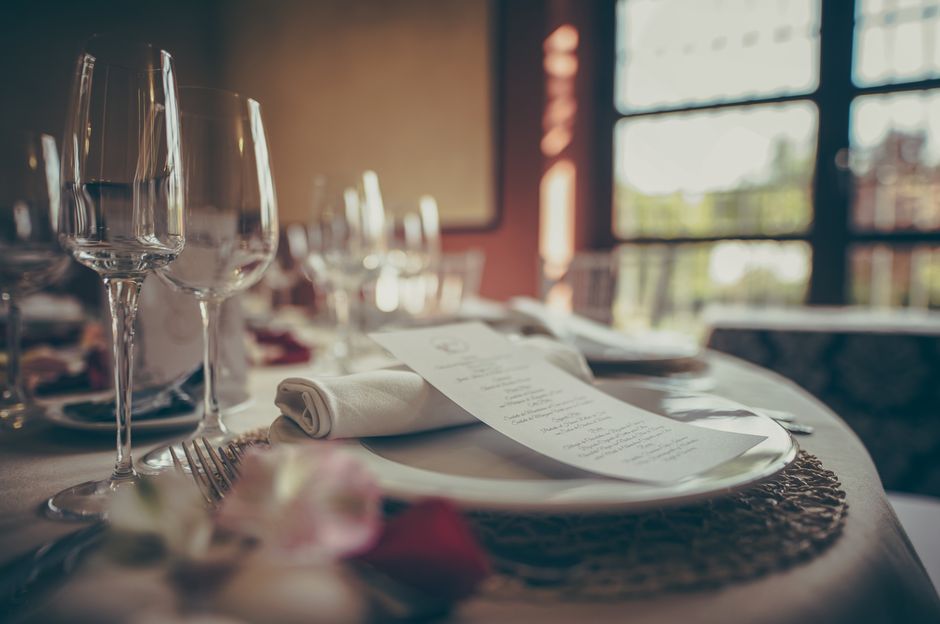
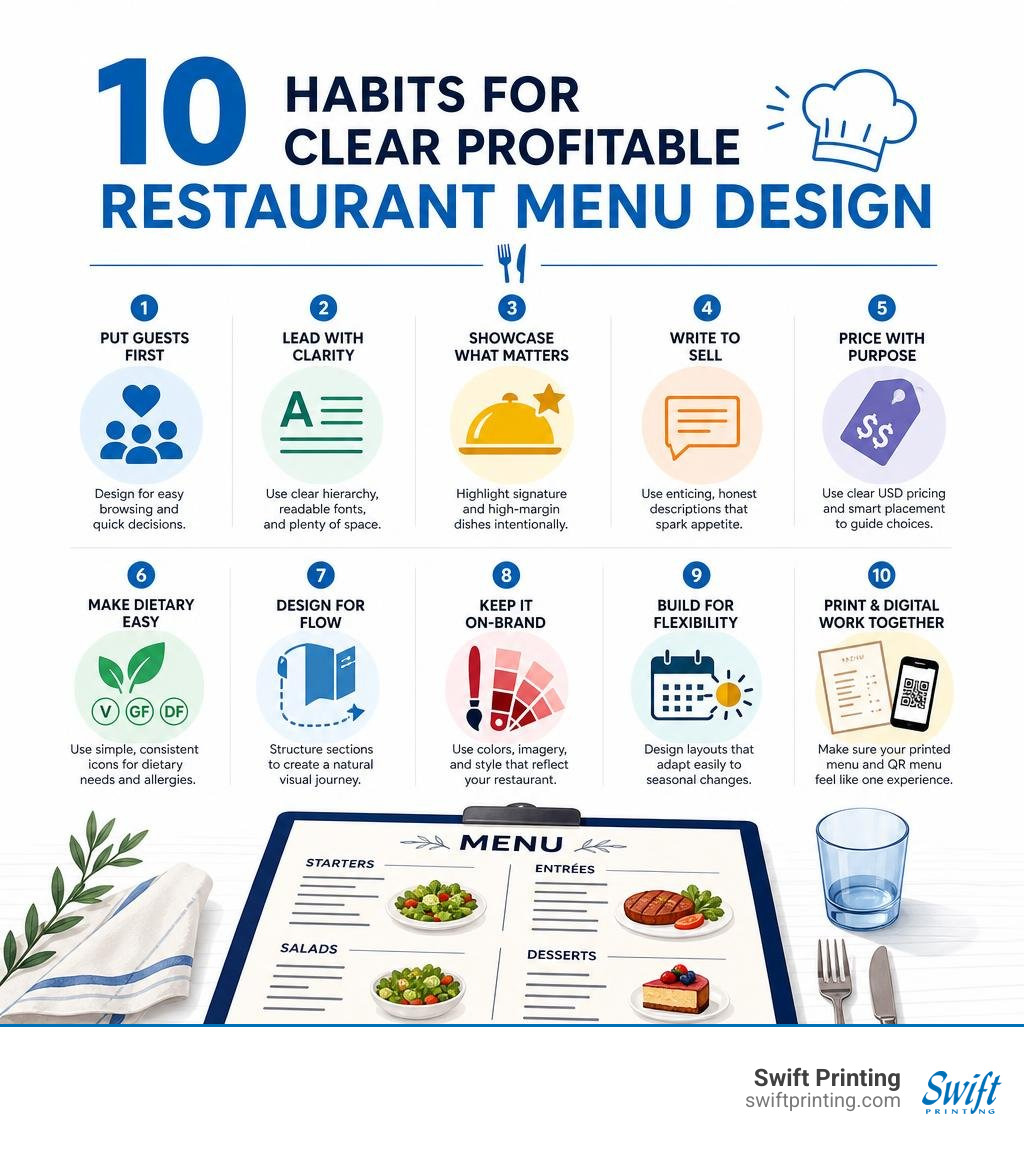
The best restaurant menus make ordering easy, reflect your brand, and guide attention toward dishes that support healthy margins. Start with a clear section order, readable type, brief descriptions, accurate USD prices, and obvious dietary notes. Then use a few visual highlights for signature or high-margin items instead of crowding every page with competing calls to action.
A strong menu is more than a list of food. It is a working sales tool, a brand touchpoint, and a practical document your staff and guests rely on every day. The 10 habits in this guide will help independent restaurants create menus that look polished in print, adapt to seasonal changes, work alongside QR versions, and stay easy to use during a busy service.
I am Jessica Gutowski-Slaydon, president of Swift Printing and a third-generation print leader who helps local organizations create reliable, high-quality printed materials. I bring a practical print-production perspective to restaurant menus, from choosing a durable format to keeping each update clear, on-brand, and ready on deadline.
Historical Evolution: From Late-19th Century Bills of Fare to Strategic Merchandising
Looking back across culinary history reveals how much the role of dining collateral has shifted. Academic archives, such as the famous collection of 5,000 restaurant menus spanning 1880 to 1920, demonstrate that early bills of fare were often dense, text-heavy rosters designed merely to catalog every ingredient the kitchen had on hand. In those decades, dining out was largely an elaborate, multi-course ritual for banquets and hotels, or an utilitarian daily meal at a local tavern.
By the late 20th century, menus transitioned into genuine marketing assets. The National Restaurant Association Menu Collection at Johnson & Wales University preserves hundreds of vibrant print menus from the 1980s and 1990s, when nationwide menu design contests celebrated creative typography, bold color palettes, and artistic physical layouts. Today, crafting tailored culinary identities involves combining graphic design, consumer psychology, and precision printing to drive operational profitability.
Key Differences Across Decades of Restaurant Menus
The differences between historical menus and contemporary layouts come down to three core areas: structure, visual hierarchy, and strategic pricing.
- Item Density and Curation: Late-19th-century menus frequently featured dozens of small, unorganized lines of text listing basic items like roasts, boiled fowl, game, and side relishes. Modern menus curate offerings tightly into structured categories to reduce choice overload.
- Typographic Hierarchy: Historical bills of fare relied on uniform, single-column typesetting. Contemporary designs use varying font weights, intentional white space, and distinct column breaks to direct guest attention.
- Pricing Presentation: In the 1880s, fixed-price multi-course feasts or simple whole-dollar notations dominated. Today, pricing is carefully integrated into item descriptions to keep guests focused on dish appeal rather than cost.
The Shift from Descriptive Novelty to Brand Storytelling
Modern diners want to understand where their food comes from and how it is prepared. Instead of listing generic items, modern menus use culinary storytelling to highlight wood-fired techniques, local farm sourcing, and signature flavor profiles.
We see this dynamic approach in thriving hospitality concepts every day. For example, our client feature Nonla Burger highlights how a focused, high-energy layout reinforces a casual brand identity. Similarly, our client feature Broad Leaf Westside showcases how creative beverage and food menus can express community roots and experimental brewing culture simultaneously. Authenticity on the page builds trust at the table.
Menu Engineering: Designing Modern Restaurant Menus for Higher Margins
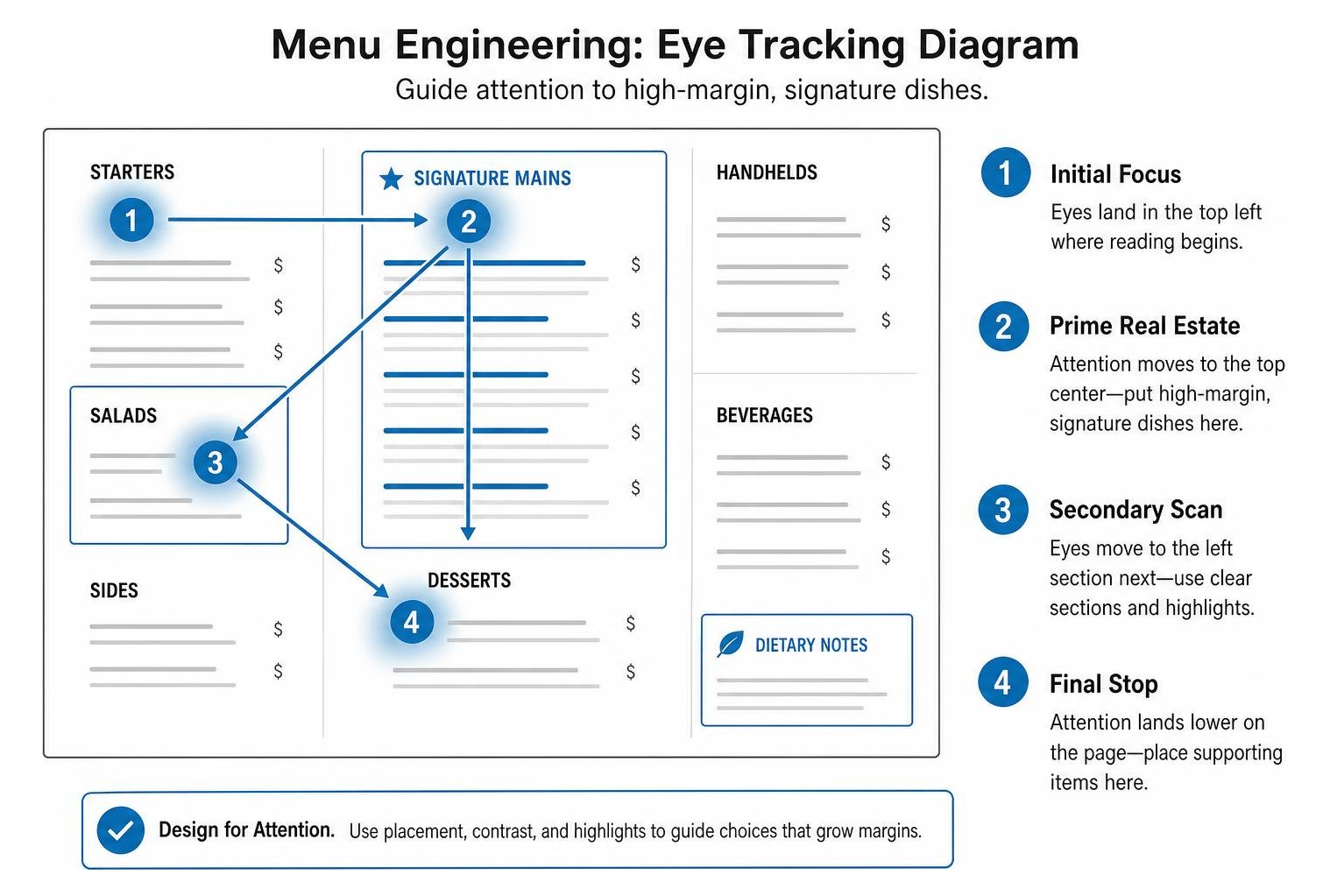
Menu engineering is the practice of evaluating menu items by profitability and popularity to organize layouts strategically. A well-engineered menu subtly guides diners toward signature dishes that deliver excellent guest satisfaction while protecting your kitchen's bottom line.
Using intentional graphic elements and expert print and layout strategies, independent operators can increase average check sizes without altering their base prices.
Strategic Eye-Tracking and Highlighting High-Margin Dishes
When diners open a multi-panel menu, their eyes naturally travel across specific visual paths—often referred to in menu design as the "Golden Triangle" (moving from the center to the top right, then across to the top left). Placing high-margin signature entrees in these high-visibility zones naturally increases their selection rate.
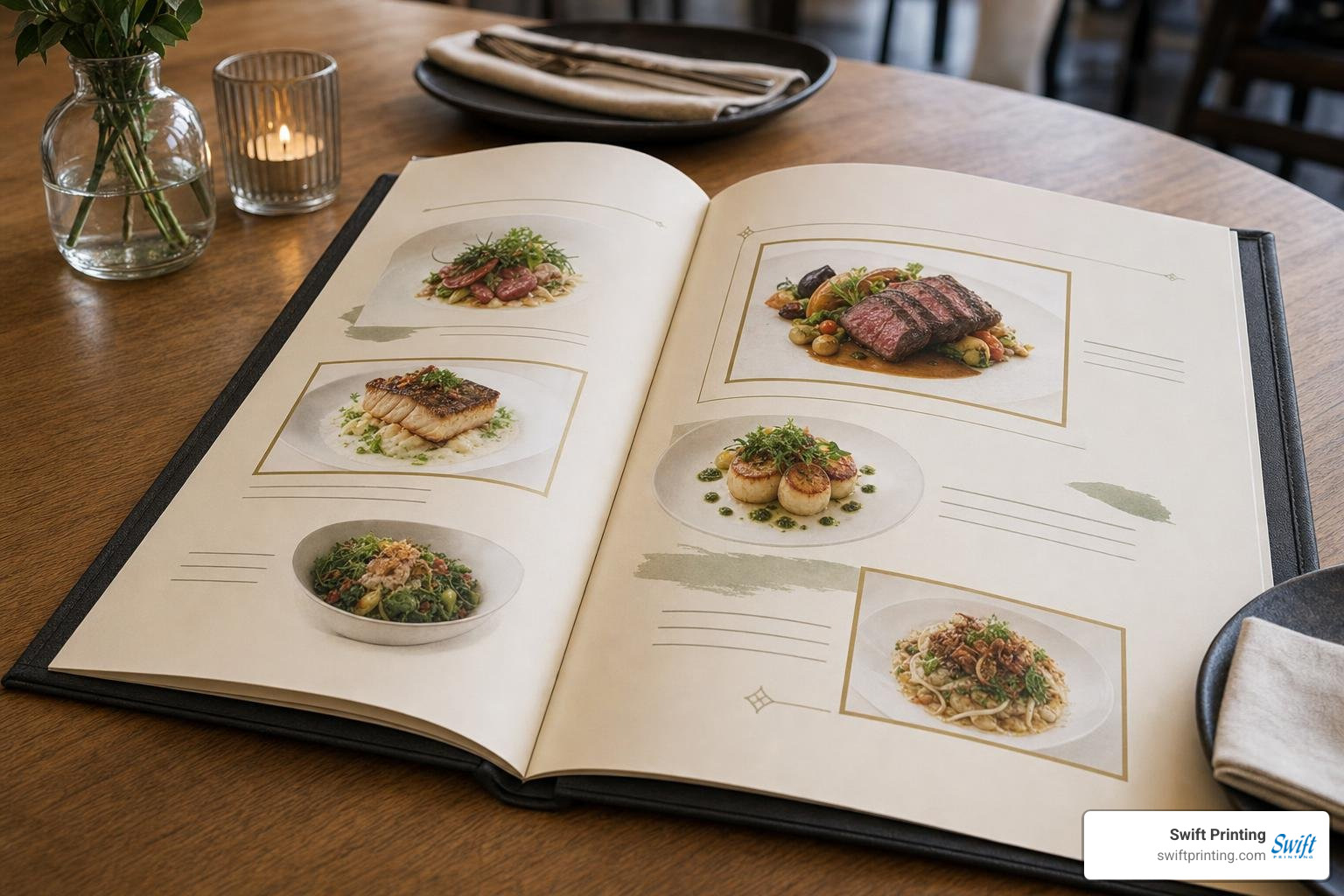
Techniques to emphasize your best dishes include:
- Framing and Shading: Surrounding high-margin plates with delicate line borders or soft background shading.
- Descriptive Callouts: Highlighting specialized cooking methods or premium pairings, such as the curated multi-course seafood presentation at Marea, where luxury raw bar tiers and handmade pastas are distinguished through clean typographic hierarchy.
- Signature Badging: Adding modest graphic icons for house specialties or chef recommendations without cluttering the page.
Clean Pricing Formats and Anchoring Techniques
How you display prices matters just as much as what you charge. Research in hospitality design shows that formatting prices cleanly prevents guests from scanning down a right-aligned column searching exclusively for the lowest number.
Best practices for pricing presentation include:
- Omit Dollar Signs: Use simple numerals (e.g.,
24instead of$24.00) to soften the immediate psychological sting of spending. - Nest Prices at the End of Copy: Place the price at the end of the item description rather than trailing dots across the page to an isolated price column.
- Price Anchoring: Position a high-end luxury entree (like a 40-day dry-aged Tomahawk ribeye for $185) at the top of a category, which makes adjacent $38 and $46 entrees feel like accessible, moderate choices.
- Transparent Sourcing for Market Pricing: When featuring volatile items like seasonal caviar or fresh catch, use clear "MP" notations alongside transparent verbal communication from service staff.
Dietary Inclusivity and Modern Ingredient Transparency
Modern menus must accommodate guests with varied dietary preferences, lifestyle habits, and food allergies. Transparency is essential for hospitality, guest safety, and operational efficiency.
Symbol Legends and Dedicated Plant-Based Sections
Clear iconography allows diners to navigate options quickly without having to question their server about every ingredient. Rather than scattering ambiguous notes across the layout, top restaurants implement unified symbol legends at the bottom of the page (e.g., [V] for Vegan, [VG] for Vegetarian, and [GF] for Gluten-Free).
For establishments with extensive plant-based culinary programs, dedicated sections work best. For example, the dedicated plant-based menu program at Koi gives vegan sushi rolls and plant-based proteins their own focused real estate, making plant-forward dining effortless for guests.
Health Advisories and Cross-Contact Disclaimers
Communicating kitchen safety policies protects both diners and your business. Standard FDA consumer advisories regarding the consumption of raw or undercooked meats, seafood, shellfish, and eggs belong in a neat, legible footer.
If your kitchen handles tree nuts, soy, dairy, or gluten on shared equipment, include a straightforward cross-contact disclaimer. Additionally, transparently list any operational house policies—such as automatic 18% to 20% gratuity on parties of six or more or check-splitting limits—directly on the printed page to prevent misunderstandings when the check arrives.
Print Craftsmanship, Digital QR Integration, and Operational Agility
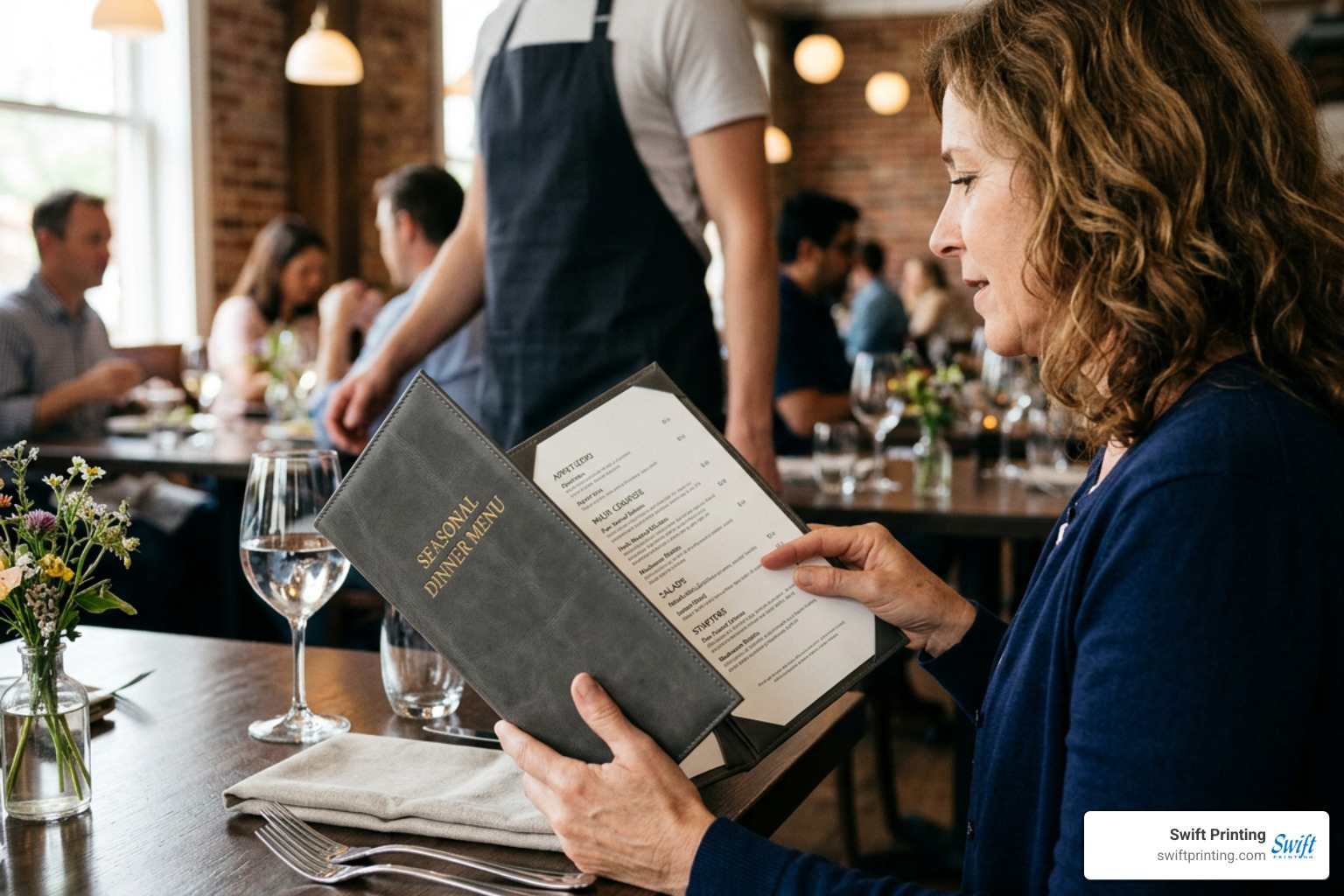
A beautifully designed menu only succeeds if the physical piece feels right in the diner's hands and remains durable under daily dining room conditions. The weight, texture, and finish of your paper create an immediate sensory impression before the first drink order is taken.
Specialty drink programs require particular agility. Dedicated, compact layouts like the craft cocktail programs at Drip Drop Cocktail Room or curated spirits lists like the whiskey selections at One Bourbon benefit from formats that can be updated quickly as bottles rotate.
Balancing Physical and Digital Restaurant Menus
While digital QR codes expanded rapidly in recent years, guests consistently prefer the tactile experience of a tangible printed menu in full-service dining environments. The most effective approach is a coordinated hybrid strategy:
| Feature / Metric | Tangible Print Menus | Digital QR Menus |
|---|---|---|
| Guest Engagement | High tactile focus; immersive brand storytelling | Variable; prone to mobile screen distraction |
| Legibility & Accessibility | Immediate; high contrast; easy for all ages | Dependent on device size, battery, and lighting |
| Update Agility | Batch print cycles or modular inserts | Instant updates for real-time item availability |
| Operational Setting | Ideal for seated dining, bars, and wine lists | Great for patio overflow, tap takeovers, and events |
| Privacy & Comfort | Completely private; zero digital footprint | Requires mobile data or venue Wi-Fi access |
Many venues pair physical dining menus with web-accessible digital layouts. The structured multi-service menu at Battello illustrates how categorizing Lunch, Dinner, Brunch, and Cocktails into organized online formats complements an elegant on-table print experience.
Substrate Durability, Paper Weights, and Sustainable Finishes
Selecting the right paper stock ensures your menus remain crisp throughout lunch and dinner rushes:
- Synthetic Waterproof Substrates: Tear-resistant, wipeable synthetic papers eliminate the need for thick plastic lamination edges while repelling grease, sauces, and spills.
- Heavyweight Uncoated & Matte Cardstock: 100# to 130# cover stocks deliver a luxurious, tactile feel for high-end dining, cocktail lounges, and wine books.
- Sustainable Inks and Recycled Fibers: Choosing FSC-certified recycled paper stocks and low-VOC inks reduces environmental footprint while supporting sustainable business values.
Frequently Asked Questions
How often should an independent restaurant update its printed menu?
Most independent restaurants benefit from full printed menu refreshes two to four times per year to align with seasonal produce and wholesale price adjustments. To manage weekly features or craft beverage rotations without reprinting the entire menu jacket, use matching single-sheet menu inserts.
What is the most effective way to format prices on a menu?
Place prices one space after the dish description using the same font weight and color as the body copy. Omit dollar signs and avoid aligning prices in a straight right-hand column with leader dots, which encourages price-shopping over culinary exploration.
Are QR codes completely replacing printed restaurant menus?
No. While QR codes provide convenient digital backups and online ordering options, physical printed menus remain the gold standard for full-service hospitality. Tangible menus encourage longer table conversations, higher average orders, and an elevated dining experience free from smartphone distractions.
Conclusion
A well-crafted menu balances culinary passion with smart business design. By applying these 10 habits—establishing clear categories, highlighting your highest-margin plates, maintaining ingredient transparency, and selecting durable, tactile paper stocks—you create an effortless ordering experience that builds lasting customer loyalty.
At Swift Printing, we help restaurants throughout Grand Rapids and beyond produce beautiful, hard-working print collateral. As a family-owned commercial printer and one of only two Certified B Corporations in the printing industry worldwide, we combine dependable craft with responsible environmental practices. Whether you are launching a brand-new dining concept or refreshing your seasonal list, you can explore culinary inspiration and excellence across the top 5 places to eat on Bridge Street to see how great food and great presentation come together. Reach out to us today to craft menus your guests will love holding.