Upgrade Your Professional Image with Heavy Metal QR Code Cards
The Strategic Power of Metal Business Cards QR Code Technology
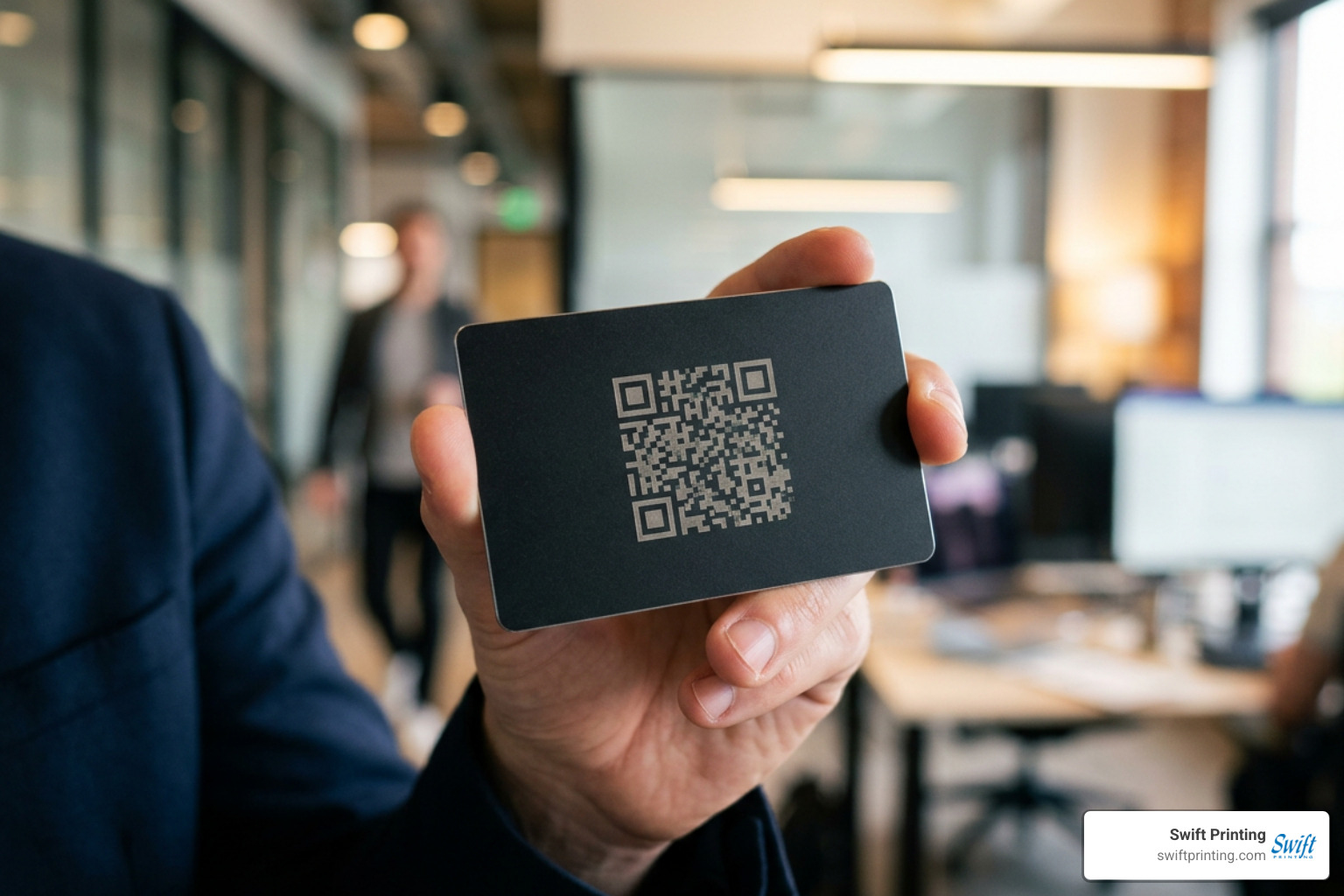
When you hand an executive or prospective client a card made of surgical-grade 304 stainless steel, the reaction is immediate. The unexpected weight, cool metallic touch, and rigid structure communicate permanence and prestige. In corporate boardrooms and high-stakes negotiations, a flimsy paper card can easily get lost in a stack of conference clutter. A heavy metal piece commands respect and creates a physical pause, turning an everyday introduction into a memorable branding moment.
Beyond luxury aesthetics, these pieces solve a modern business challenge: converting an in-person conversation into an immediate digital relationship. By incorporating high-contrast, laser-etched matrix codes, metal cards seamlessly link offline meetings to cloud-based assets. Over 99% of modern smartphones scan these codes natively through standard camera applications—no proprietary apps required. This high level of compatibility ensures that managing behind the print crafting the perfect business card delivers a reliable digital payoff.
| Feature / Metric | Traditional Cardstock | PVC Plastic Cards | Heavy Metal Cards (304 Stainless) |
|---|---|---|---|
| Typical Thickness | 0.35 mm – 0.45 mm (16pt–18pt) | 0.76 mm (Standard Credit Card) | 0.80 mm – 1.0 mm (Rigid Executive Weight) |
| Average Lifespan | Days to weeks (easily creased/lost) | Months (scratches, bends over time) | Indefinite (resistant to water, bending, wear) |
| Tactile Impression | Standard / Familiar | Synthetic / Mid-tier | Heavy, cool, executive luxury |
| Digital Integration | Surface-printed ink | Surface or thermal print | High-precision fiber laser ablation |
| Cost Range (USD) | $0.20 – $0.80 per unit | $1.50 – $4.00 per unit | $40.00 – $95.00+ per custom unit |
| Best Audience | High-volume general trade | Membership & loyalty programs | Partners, surgeons, senior consultants, executives |
Premium Materials and Surgical-Grade Craftsmanship
High-end metal business cards are engineered from 304 stainless steel, an alloy prized in medical and aerospace manufacturing for its corrosion resistance and tensile strength. Standard executive cards are milled to a rigid 0.8 mm thickness—substantially thicker than standard paper stock—giving them a solid feel without adding bulk to a wallet or pocket.
Surface finishes define the overall character of the card. Matte black coatings provide a glare-free, velvety surface that provides crisp optical contrast against laser-etched elements. Brushed gunmetal, natural silver, and brushed copper finishes provide distinct, sophisticated looks suited for law partners, senior management consultants, and specialized medical practitioners looking for unique creative visiting card guide 2026 styles.
Universal Digital Access via Dynamic QR Routing
Static contact cards lock your data into a fixed pattern. If your direct office line changes or your firm updates its domain, a static code can quickly become obsolete. Dynamic QR routing eliminates this risk by pointing the etched matrix to a centralized, editable URL redirect.

When a recipient scans the card, the dynamic link routes them through a responsive landing page or directly initiates a comprehensive vCard download. This landing page can host direct calendar booking links, secure client onboarding portals, practice area overviews, or video introductions. Because the URL redirects at the server level, you can update your contact numbers, office addresses, and booking links on the fly without ever replacing the physical metal card. Learning how to make a qr code with dynamic routing gives your firm long-term flexibility and actionable engagement analytics.
Technical Production: Laser Engraving, Sizing, and Contrast
Producing a high-end metal card requires precise calibration. Unlike paper, where ink absorbs directly into fiber matrices, metal surfaces reflect light and require specialized contrast techniques. Industrial fiber laser ablation removes the top oxidized or coated layer to expose the contrasting base metal beneath, yielding a clean, frosted matrix that reads clearly on smartphone cameras.

Optimizing Dimensions for Metal Business Cards QR Code Scannability
Optical legibility depends on three variables: module density, scanning distance, and quiet zone isolation. For URLs containing fewer than 25 characters, a minimum QR size of 0.5 inches (13 mm) square provides crisp readability. When encoding dynamic URLs between 25 and 40 characters, we scale the code footprint to 0.75 inches (19 mm). Highly complex matrices or dense text strings should occupy at least 1.0 inch (25 mm) to prevent macro-focus errors on older mobile cameras.
To ensure seamless scanning in all lighting conditions:
- Maintain a 4-Module Quiet Zone: Keep the area immediately surrounding the matrix completely free of typography, logos, or deep etch textures.
- Shorten URL Character Counts: Use clean, shortened URL strings to reduce the total number of black-and-white grid blocks (modules) within the matrix.
- Calibrate for Focal Distance: A larger matrix allows recipients to scan from a comfortable 6- to 10-inch distance rather than having to push their phone camera uncomfortably close.
Laser Etching vs. Silkscreen on Metal Business Cards QR Code Surfaces
Two primary methods exist for applying digital matrix graphics to metal surfaces: fiber laser etching and silkscreen printing.
- Fiber Laser Ablation: The laser beam vaporizes the surface coating (such as matte black PVD) to reveal the natural bright steel underneath. This creates a frosted, permanent finish that cannot chip, peel, or rub away in a pocket or briefcase.
- Silkscreen Printing: Specialized epoxy-based inks are screened directly onto the metal substrate. While silkscreening allows for specific spot PMS brand colors, high-contact use over several years can wear down surface-printed ink layers.
For long-term reliability and an upscale feel, laser etching remains our top recommendation for executive collateral and creative business cards.
Dual-Interface Networking: Combining NFC Chips with QR Backup
Many modern metal cards now feature dual-interface connectivity by pairing an embedded Near Field Communication (NFC) microchip with a laser-etched QR code. This combination provides a versatile physical-to-digital bridge for any networking scenario.
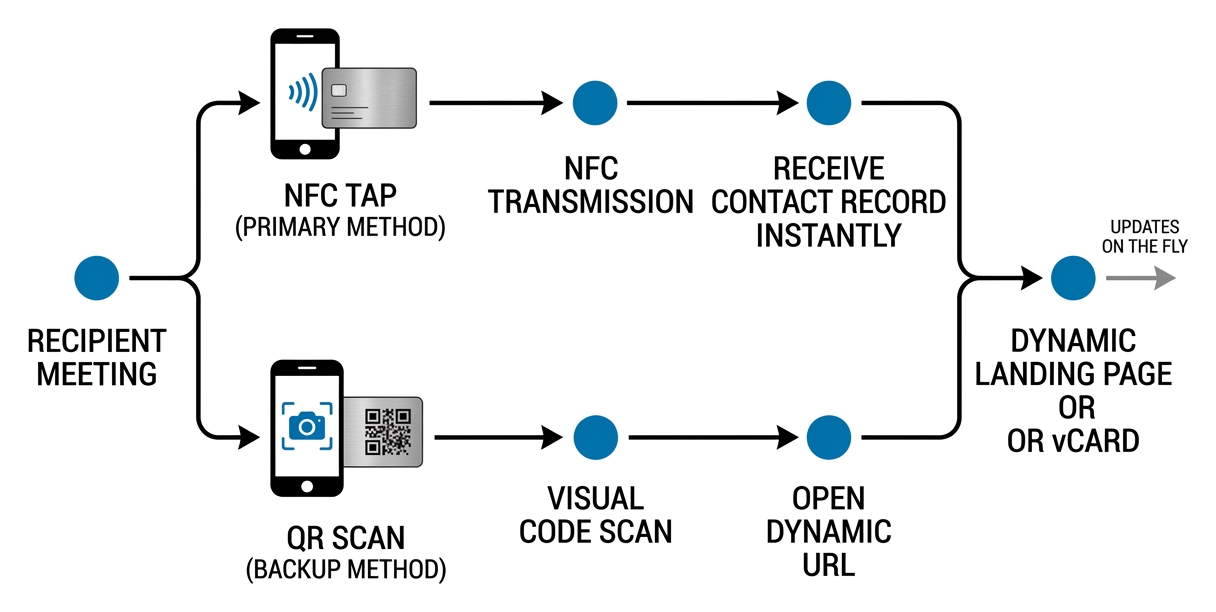
When meeting colleagues equipped with modern iPhones or Android devices, a simple tap to the top of the handset transmits your full contact record instantly. However, older devices, strict corporate device management profiles, or thick protective phone cases can occasionally block radio frequency signals. In these situations, the laser-etched QR code acts as an immediate, reliable visual backup. Any smartphone camera can scan the code instantly without requiring the recipient to adjust their settings or download third-party software.
Tailoring Digital Profiles for Legal, Medical, and Consulting Executives
For high-end professional service providers, a digital business card landing page serves as an extension of their firm's brand:
- Attorneys and Law Partners: Direct clients to encrypted file upload portals, detailed practice summaries, or instant consultation retainers.
- Physicians and Medical Specialists: Provide immediate links to patient portal registrations, specialized referral forms, and clinic scheduling systems.
- Management and Financial Consultants: Showcase verified client case studies, secure Zoom discovery links, or white papers that pair well with 3d business cards ultimate guide design principles.
Frequently Asked Questions About Metal QR Code Cards
Do QR codes scan reliably on reflective metal surfaces?
Yes, provided the card design manages specular reflection. High-gloss raw steel surfaces can sometimes bounce camera flash and ambient glare back into the sensor, confusing barcode algorithms. To guarantee consistent scannability, we apply matte black, gunmetal, or satin brushed finishes combined with high-contrast laser ablation, creating diffuse reflection that smartphone lenses can read effortlessly.
What information is best to encode on an executive metal card?
We strongly recommend encoding a short, dynamic URL that directs the user to a branded mobile landing page or an auto-prompting vCard file. Encoding static, long-form contact data directly creates an overly dense matrix that requires precise camera positioning. A dynamic link keeps the matrix simple, clean, and scannable while allowing you to edit contact data, social profiles, and booking calendars anytime.
How durable are metal QR cards compared to standard cards?
A surgical-grade 304 stainless steel card with laser-engraved details is essentially permanent. Unlike paper cards that wrinkle, dog-ear, or smudge, or plastic cards that crack and fade, a laser-etched metal card is impervious to water, temperature changes, and daily pocket friction. It represents a durable, multi-year asset for senior executives.
Conclusion
Making a memorable impression requires thoughtful design and tactile impact. Precision-crafted metal cards paired with scannable QR technology offer an effective blend of physical weight and digital convenience. By selecting surgical-grade 304 steel, matte low-glare finishes, and dynamic routing, your firm's introduction will feel just as refined as the services you deliver.
At Swift Printing, we operate as a high-end commercial print shop dedicated to helping established organizations communicate their value through exceptional physical media. Whether you are outfitting your practice partners with heirloom-grade metal networking pieces or leveraging QR codes in high-end corporate print, our team brings the technical precision and craftsmanship required to elevate your brand. Connect with us today to explore custom finishes, precision engraving options, and bespoke executive print solutions.