All About À La Carte Menus: Customizable Dining Options (from $10 USD)
Understanding the A La Carte Menu: Definition, Origins, and Meaning

When you walk into a restaurant and sit down with a printed bill of fare, having the freedom to pick and choose your exact dishes feels completely natural. That culinary independence is the entire foundation of the à la carte dining experience.
Linguistically, the phrase à la carte translates literally from French as "at the card" or "according to the card." In historic European dining tradition, la carte referred to the printed card or booklet containing every individual dish prepared in the kitchen, along with its specific price. By contrast, le menu originally referred to a predetermined bill of fare where the host or chef decided the exact progression of courses for the entire room.
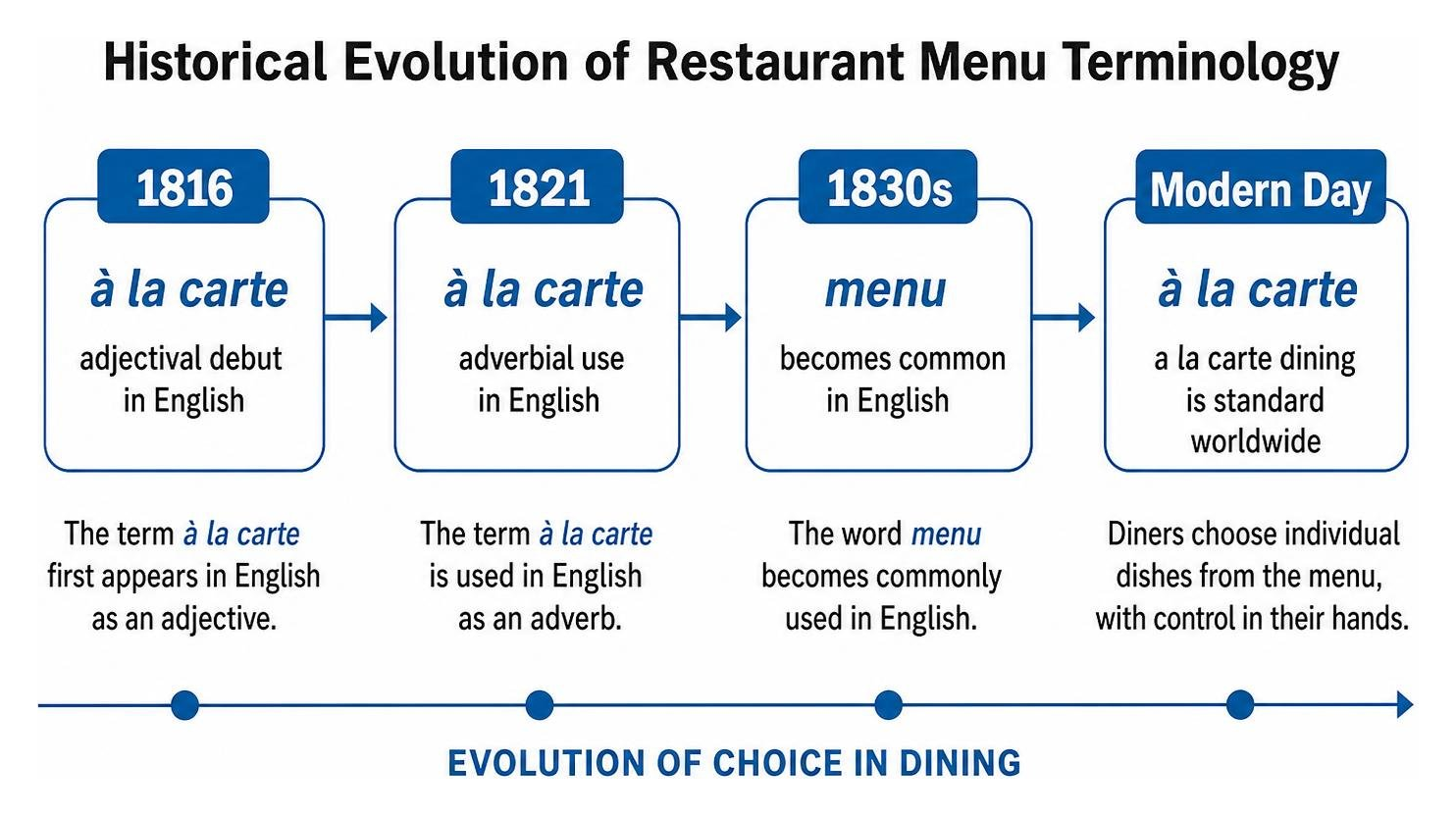
The historical timeline of these terms is fascinating. Linguistic records show that the term à la carte made its adjectival debut in the English language in 1816, followed by its adverbial use in 1821. Remarkably, this terminology predates the general adoption of the word "menu" into English, which did not become common until the 1830s.
Before individual dish ordering became standard practice, travelers and restaurant patrons ate whatever the kitchen had roasted or stewed that day. The rise of à la carte service revolutionized hospitality by placing control directly into the diner's hands. Today, you can see this concept elevated in modern establishments worldwide, such as the curated cocktail and dining experience found on the Food a La Carte at Dante NYC selections, where every single dish stands proudly on its own merit.
Comparing Restaurant Menu Formats: À La Carte vs. Prix Fixe vs. Table d'Hôte
To understand why restaurants format their dining programs the way they do, it helps to compare the three traditional French dining frameworks. Each model serves a distinct dining purpose, and knowing the difference will keep you from being surprised when the bill arrives.
The oldest structured dining style is table d'hôte (literally "table of the host"). Historically, guests at an inn or boarding house sat together at a communal table and ate a shared multi-course meal at a fixed hour for a single set price. Over time, this evolved into the contemporary prix fixe ("fixed price") format, where a restaurant offers a curated package—such as two, three, or four courses—for a flat dollar amount per guest.
| Menu Format | Pricing Model | Course Flexibility | Best For | Typical Pacing |
|---|---|---|---|---|
| À La Carte | Individually priced per item (e.g., $10 USD starter, $38 USD entree) | Complete freedom to order 1, 3, or 5 courses | Diners with specific cravings, smaller appetites, or strict diets | Highly customizable |
| Prix Fixe | Single flat rate for a set number of courses (e.g., $75 USD for 3 courses) | Choice of one dish per category (Appetizer, Main, Dessert) | Diners seeking a complete, structured meal at predictable costs | Standard kitchen pacing |
| Table d'Hôte / Tasting | Flat fee per person (e.g., $185 USD for 6 to 8 courses) | Minimal to no substitutions; preset progression | Special occasions, culinary explorations | Extended (2 to 3+ hours) |
Many high-end culinary destinations operate hybrid programs to give guests the best of both worlds. For instance, you can Create Your Perfect Taste Adventure at La Toque, where diners who want fewer or more courses than a traditional multi-course chef's sequence can construct their own meal course by course.
How Restaurants Structure an A La Carte Menu
A well-engineered itemized menu is arranged to guide your palate through a logical sequence of flavors and textures. Restaurants generally organize their selections into several intuitive courses:
- Antipasti, Starters, and Raw Bar: Light bites, charcuterie, crudo, soups, and oysters (often priced between $10 USD and $22 USD) intended to stimulate your appetite.
- Primi / Intermediate Courses: Handmade pastas, small risottos, or warm vegetable preparations that serve as a bridge before heavier proteins.
- Secondi / Main Entrees: Center-of-the-plate proteins including pan-seared fish, roasted fowl, and prime beef cuts.
- Contorni / Sides: Vegetable dishes, grains, and starches designed to accompany the mains.
- Dolci / Desserts: House-made pastries, artisan cheeses, sorbets, and dessert cocktails.
You can see this clean course progression executed at venues like the Marea NYC Coastal Italian Menu, where raw seafood (crudi), house pastas (primi), and whole fish or steaks (secondi) are segmented with clear pricing and dietary labeling. Standardized indicators such as GF (Gluten-Free), VG (Vegan), and DF (Dairy-Free) ensure seamless ordering for every guest.
The Critical Role of Separate Side Dishes and Accompaniments
One defining characteristic of classic à la carte dining—particularly in American steakhouses and upscale seafood houses—is the separation of main entrees from their accompaniments. When you order a 16-ounce dry-aged ribeye for $65 USD, it typically arrives on a sizzling hot plate with nothing more than its natural juices or a light herb garnish.
If you want a starch or a green vegetable, you must order those accompaniments separately from the contorni or side dish list. Steakhouses do this deliberately: side dishes like roasted asparagus, truffle macaroni and cheese, or garlic mashed potatoes are prepared in generous portions meant to be shared family-style across the entire table.
Benefits and Cost Considerations for Diners
Ordering off an itemized bill of fare brings substantial advantages. First and foremost is complete dining autonomy. If you have a lighter appetite or a busy schedule, you are not forced into a three-hour, multi-course commitment. You can simply order a $12 USD bowl of soup and a side salad and be on your way.
Furthermore, it simplifies life for diners navigating allergies or lifestyle preferences. Selecting dishes individually allows you to bypass fixed-course ingredients without having to ask the kitchen for extensive modifications.
However, à la carte ordering requires attentive mental math. Because every item carries a separate charge, ordering an appetizer, a premium protein, two side dishes, a specialty cocktail, and dessert can quickly add up to a higher total than a standard prix fixe package. When evaluating value, quality and transparency are paramount—a truth we understand well in our print shop, where cutting corners upfront often illustrates Why Cheap Printing Costs Businesses More in the Long Run.
Pricing Dynamics: Why Dishes on an A La Carte Menu Cost More Individually
Have you ever wondered why ordering an appetizer ($18 USD), an entree ($48 USD), and a dessert ($14 USD) individually often totals $80 USD, while a three-course prix fixe at the same restaurant might cost only $65 USD?
The difference comes down to kitchen economics, food waste management, and inventory predictability:
- Inventory Forecasting: With set menus, the culinary team knows precisely how many portions of each ingredient they will prep and serve, drastically reducing food waste.
- Labor and Kitchen Pacing: Fixed menus streamline the kitchen line. Dishes can be fired in predictable waves, improving kitchen efficiency and table turnover.
- Risk Premium: À la carte ordering introduces operational unpredictability. A restaurant must purchase and hold inventory for twenty diverse menu items without knowing which dishes will sell on a given night. The slightly higher individual item pricing reflects that inventory risk.
How to Choose Between Ordering Individual Dishes and Set Menus
When sitting down at a restaurant offering both formats, ask yourself three quick questions:
- What is your appetite level? If you only want one or two dishes, ordering individually is almost always more economical. If you plan to eat three or more courses, the prix fixe will likely yield better financial value.
- Are you dining solo or with a group? Groups often benefit from ordering à la carte because they can order several shareable starters and family-style sides to sample a broad spectrum of the menu.
- How adventurous are you feeling? If the chef's tasting menu features items you are uncertain about, building your own course progression gives you complete quality control over your meal.
Engineering and Designing Physical Restaurant Menus
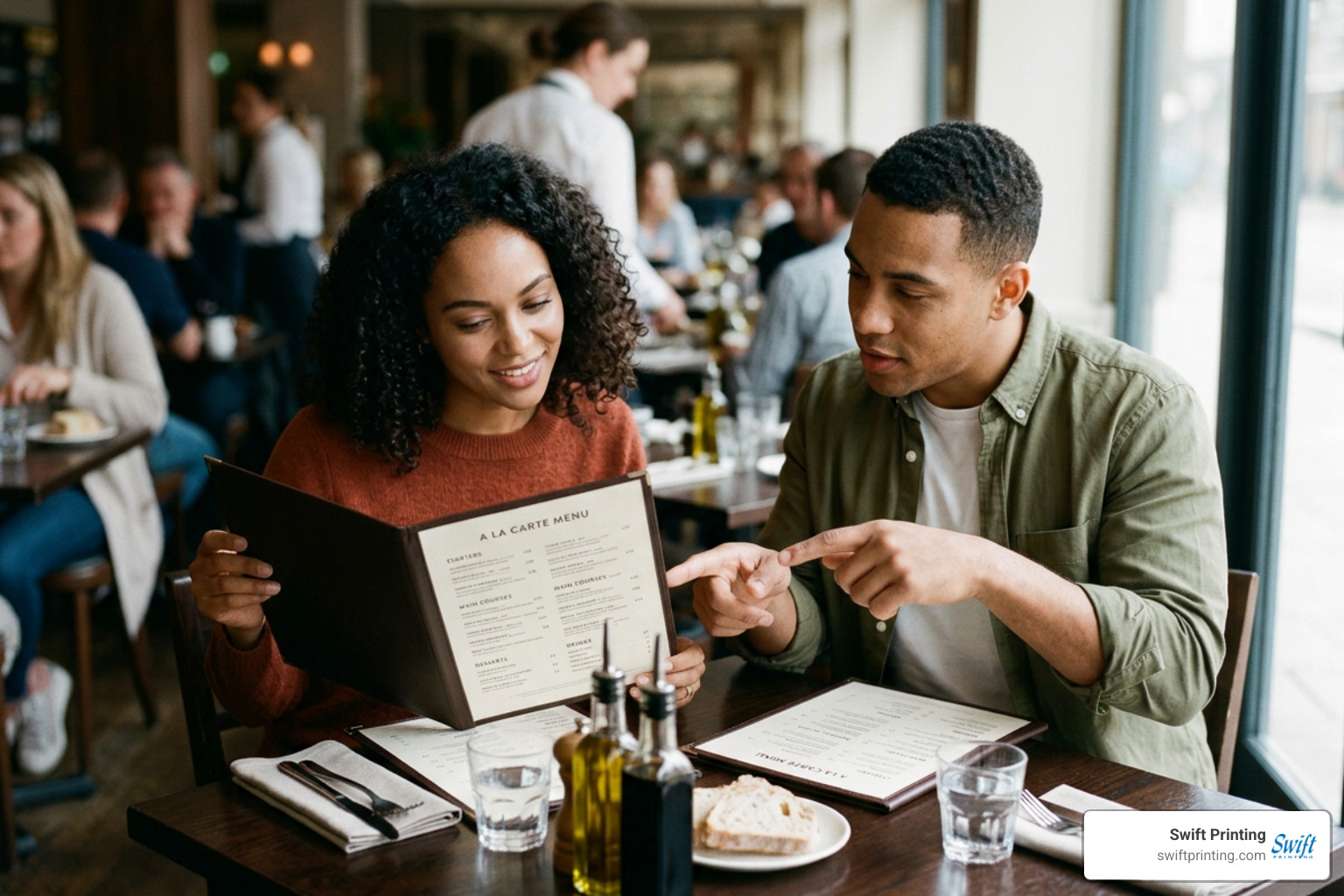
From a hospitality standpoint, a restaurant's physical menu is its most vital sales tool. In the printing world, we see how typography, paper texture, and layout design influence what diners decide to order.
Menu engineering uses visual hierarchy to direct a guest's eye. Placing high-margin signature items in the top-right corner of a bi-fold menu or highlighting chef selections with subtle decorative borders naturally draws attention. Clean, legible typography prevents visual fatigue, allowing diners to navigate courses with ease.
The physical material of the menu establishes the tone for the entire meal. A flimsy, poorly printed sheet immediately detracts from an upscale dining concept, showing Why Paper Matters More Than You Think. For high-turnover restaurants, selecting durable, soft-touch matte lamination or water-resistant synthetic stocks preserves the menu's pristine appearance against table spills, which you can explore further through various Finishing Options for Printing.
Frequently Asked Questions About À La Carte Dining
What does ordering food à la carte mean in simple terms?
Ordering à la carte means purchasing individual menu items separately rather than buying a pre-set, bundled meal package. You choose and pay for only the specific dishes you want to eat.
Are sides always charged separately on an à la carte menu?
In classic à la carte dining—especially at steakhouses and upscale seafood restaurants—side dishes such as potatoes, vegetables, and salads are unbundled and billed separately. However, casual dining establishments often bundle a standard side (such as fries or coleslaw) with an entree sandwich or burger. It is always wise to check the menu description or ask your server.
Is it cheaper to order à la carte or choose a prix fixe meal?
It depends on how much food you plan to order. If you only want a single entree or a light starter, ordering à la carte is cheaper. If you plan to enjoy a full three-course meal with an appetizer, main, and dessert, a prix fixe menu typically provides greater overall value per dish.
Conclusion
Understanding how to navigate an itemized bill of fare gives you the freedom to tailor every dining experience to your exact appetite, schedule, and budget. Whether you are stopping in for a quick $10 USD starter and a glass of wine or constructing an elaborate multi-course feast with shared sides, the flexibility of this dining style remains unmatched.
At Swift Printing, we love bringing restaurant visions to life on the printed page. As a Grand Rapids commercial printer and one of only two Certified B Corporations in our industry worldwide, we take tremendous pride in crafting sustainable, high-impact menus, table tents, and hospitality materials that elevate local dining rooms. If you are exploring our vibrant culinary scene right here in West Michigan, be sure to check out our guide to explore the best local dining spots on Bridge Street to see exceptional hospitality and menu design in action.