The Ultimate Guide to Choosing the Right Paper for Your Print Project

Why Paper Matters More Than You Think
When you think of printing, your first thoughts might be about design, layout, or color—but paper is what your customers physically hold. The look, feel, and weight of your paper instantly communicates something about your brand.
At Swift Printing, we’ve spent over 75 years helping clients choose the perfect materials to match their vision, budget, and audience. This guide dives deep into everything you need to know about paper: finishes, thickness, coatings, sustainability, and use cases. Whether you're printing business cards, brochures, menus, invitations, or marketing mailers, choosing the right stock can elevate your message from good to unforgettable.
What Is Paper Stock?
Coated vs. Uncoated Paper: What's the Difference?
Understanding Paper Weight: Text, and Cover Explained
Common Paper Finishes: Gloss, Matte, Simi-gloss/Satin & More
Best Paper Types by Project
How Paper Affects Print Quality and Ink Absorption
FAQs About Paper for Printing
Why Paper Is a Branding Tool
1. What Is Paper Stock?
Paper stock refers to the type and thickness of paper used for printing. Think of it as the foundation of your printed piece. Paper stock influences everything from how your colors appear to how long your item lasts.
Two main types:
Text Weight – Lighter, often used for letterhead, flyers, or inside pages of a booklet.
Cover Weight – Heavier, stiffer, and ideal for business cards, postcards, or posters.
2. Coated vs. Uncoated Paper: What's the Difference?
One of the first decisions you’ll make is whether to use coated or uncoated paper.
This can be confusing —people will often say they want a “matte” finish, thinking it means uncoated. In reality, matte is still a coated stock, just with a duller, non-glossy sheen.
If you're going for a more muted, natural look, uncoated is the way to go. It has no shine, and the ink absorbs into the fibers of the paper, creating a softer effect. In contrast, coated paper (including gloss, satin, and matte finishes) keeps the ink on the surface, which results in sharper images and bolder color.
Use uncoated stock if you want to write on it later—like for appointment cards, forms or stationary.
Use coated stock for photo-heavy designs or when you want rich, vibrant imagery.
Right now, both uncoated and matte finishes are trending—they offer a modern, elevated feel.
Pro Tip:
If you're using Pantone (PMS) colors, remember that colors look different on coated vs. uncoated stock. You can’t match a Pantone Uncoated swatch on coated paper and expect the same result (and vice versa).
It’s also easy to overthink this part—your best move? Ask your printer. Once we see your artwork and understand the purpose of your piece, we can recommend the ideal stock and finish. Our press team knows their stuff, and they’re here to help your project shine.

3. Understanding Paper Weight: Text and Cover Explained
Paper weight can also be confusing because it’s measured in different ways. Here's how to make sense of it:
Text Weight – Used for internal pages or lightweight materials.
Cover Weight – Used for sturdier print items like business cards or folders.
We like it thick around here—a nice, heavy-weighted business card makes a sharp impression. Depending on your quantity, upgrading to a thicker stock often doesn’t add much to the overall cost.
We carry a range of standard house stocks that balance quality and value.
Take a look at our [paper stock list here] for a more in-depth overview.
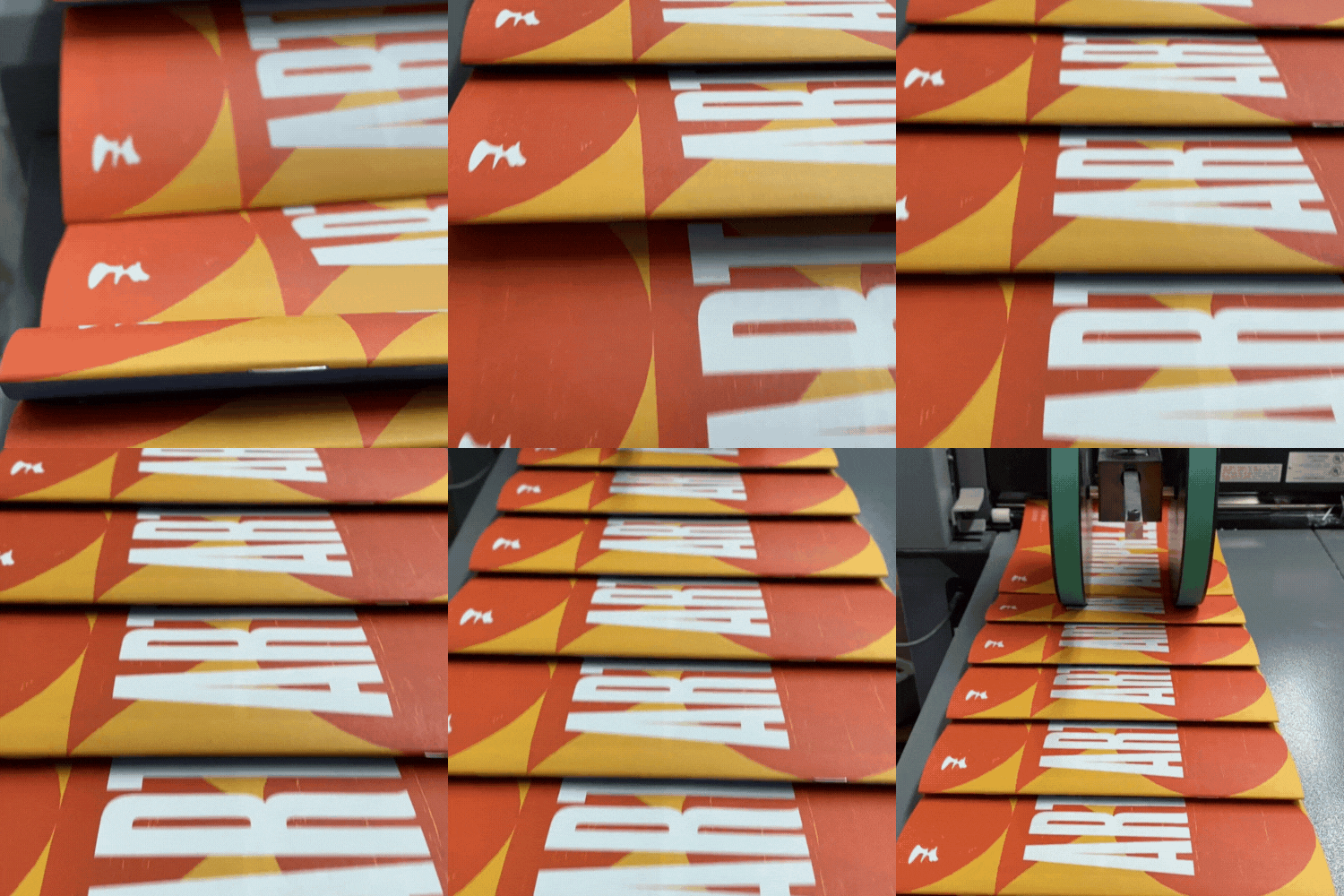
4. Common Paper Finishes: Gloss, Matte, Silk/Satin
Finish refers to the surface texture and sheen of the paper. Here are the most common:
Gloss: High shine, great for photo-rich pieces.
Matte: Smooth but no shine, excellent for readability and elegance.
Silk/Satin: A luxurious middle ground—smooth, soft, and semi-matte.
5. Best Paper Types by Project
At Swift Printing, we help our clients choose paper based on function + feel + brand alignment. Here are some of our go-to recommendations:
📇 Business Cards
130 lb. Uncoated Cover is my favorite for a premium feel
Our standard stock is 100 lb. uncoated cover, but if you're going with a coated paper, we recommend 130 lb. instead. That’s because coated stocks are actually thinner, even if the weight sounds higher.
It’s important to note: you can’t use paper weight (lbs.) interchangeably between coated and uncoated stocks. The weight classification refers to how the paper performs in bulk, not its actual thickness—so the feel in hand can vary significantly.
📬 Postcards & Direct Mail
100 lb. Gloss Coated Cover is the most common choice, but I always appreciate a well-done 100 lb. Uncoated postcard too—it just has a different, more tactile feel in your hand.
🧾 Letterhead
60-80 lb. Uncoated Text
Often paired with matching envelopes
📖 Booklets & Brochures
If you like more a shiny look or have a lot of photos
100 lb. Gloss Text for inside pages
100 lb. Cover Matte or Gloss for the outside
If your booklet is text-heavy or you want people to take notes, I personally recommend using uncoated stock—it’s easier to write on and has a softer, more reader-friendly feel.
Pro Tip: To keep things simple and cohesive, you can use the same stock for both the cover and inside pages. That’s called a self-cover.
However, I don’t recommend using 100 lb. cover stock throughout if your booklet has more than two sections—it can get bulky and hard to handle.
🍽️ Menus
Synthetic waterproof paper durable + wipeable and Laminated cover stock is a great option as well.
💌 Wedding Invitations
Linen, Pearlized, or Cotton Cover Stocks
Consider letterpress for a textured, high-end finish
7. How Paper Affects Print Quality and Ink Absorption
Paper choice directly affects how your design prints:
Coated papers keep ink on the surface, leading to sharp, vibrant colors.
Uncoated papers absorb more ink, resulting in softer edges and muted tones.
Photography-heavy project? Choose gloss.
Text-heavy document? Matte or uncoated improves legibility.
We’ve seen it all—let us guide you to the right match.
8. FAQs About Paper for Printing
Q: What’s the most professional paper for business cards?
A: 130 lb. cover stock gives a premium feel without being too flashy.
Q: Can I order recycled paper to print on?
A: After learning that producing post-consumer recycled stock can actually require more energy than some virgin papers, we’ve stepped back from actively promoting it.
Yes, we’re still happy to source it upon request—but we’re committed to being transparent and avoiding anything that could be considered “greenwashing.” Our goal is to make truly informed, sustainable choices.
Q: What's the best paper for folding?
A: Heavier cover stocks often require scoring to prevent cracking, but text weights can feel too thin for certain projects. It really depends. One thing for sure id that you need to score if you’re going to fold cover stock (even some text weight), or it will not be professional.
Q: How do I know if a paper will match my brand colors?
A: Make sure to send us your Pantone (PMS) colors. If you’re not sure what they are, check in with your marketing team.
And if you are the marketing team and have no idea what that means—know that what you see on screen can very from screen to paper.
Pro Tip: If it’s a one-time print project—like an event flyer—don’t stress about color matching.
But for something you'll print repeatedly, like business cards or envelopes, choosing a Pantone (PMS) color is a smart move. It ensures consistent, accurate color every time, even across different print runs and printers.
For those who are particular about color (we totally get it!), we offer press proofs and custom color matching to ensure your brand guidelines are spot-on.
Why Paper Is a Branding Tool
At Swift Printing, we believe every print decision is a branding opportunity—especially your paper choice. The right texture, weight, and finish can elevate your message, reflect your values, and turn a simple printed piece into a memorable experience.
Whether you’re printing for business, events, or personal celebration, we’re here to guide you every step of the way—from idea to final product. If you’re in the Grand Rapids, MI area, stop by our shop or schedule a consultation. And yes—we have samples!
Need help choosing the perfect paper?
📞 Call us at (616) 459-4263 or 📩 email thankyou@swiftprinting.com
📍 Visit us in Grand Rapids, MI
🔗 Learn our story | Request a custom quote