How to Choose the Best Water-Resistant QR Code Sticker Paper
Why Choosing the Right QR Code Sticker Paper Matters

QR code sticker paper is not all the same — and picking the wrong type can mean faded prints, failed scans, or stickers that peel apart after the first rainstorm.
Here is a quick look at the most common options and when to use each:
| Paper Type | Best For | Water Resistant? | Avg. Cost (25 sheets) |
|---|---|---|---|
| Matte white vinyl | Outdoor and indoor durability | Yes | $10–$50 |
| Standard paper label | Short-term indoor use | No | Budget-friendly |
| Glossy paper | Indoor display, crafts | No | Low |
| Thermal roll paper | Portable mini printers | No | Low per meter |
| Polyester/polypropylene | Harsh environments | Yes | Higher |
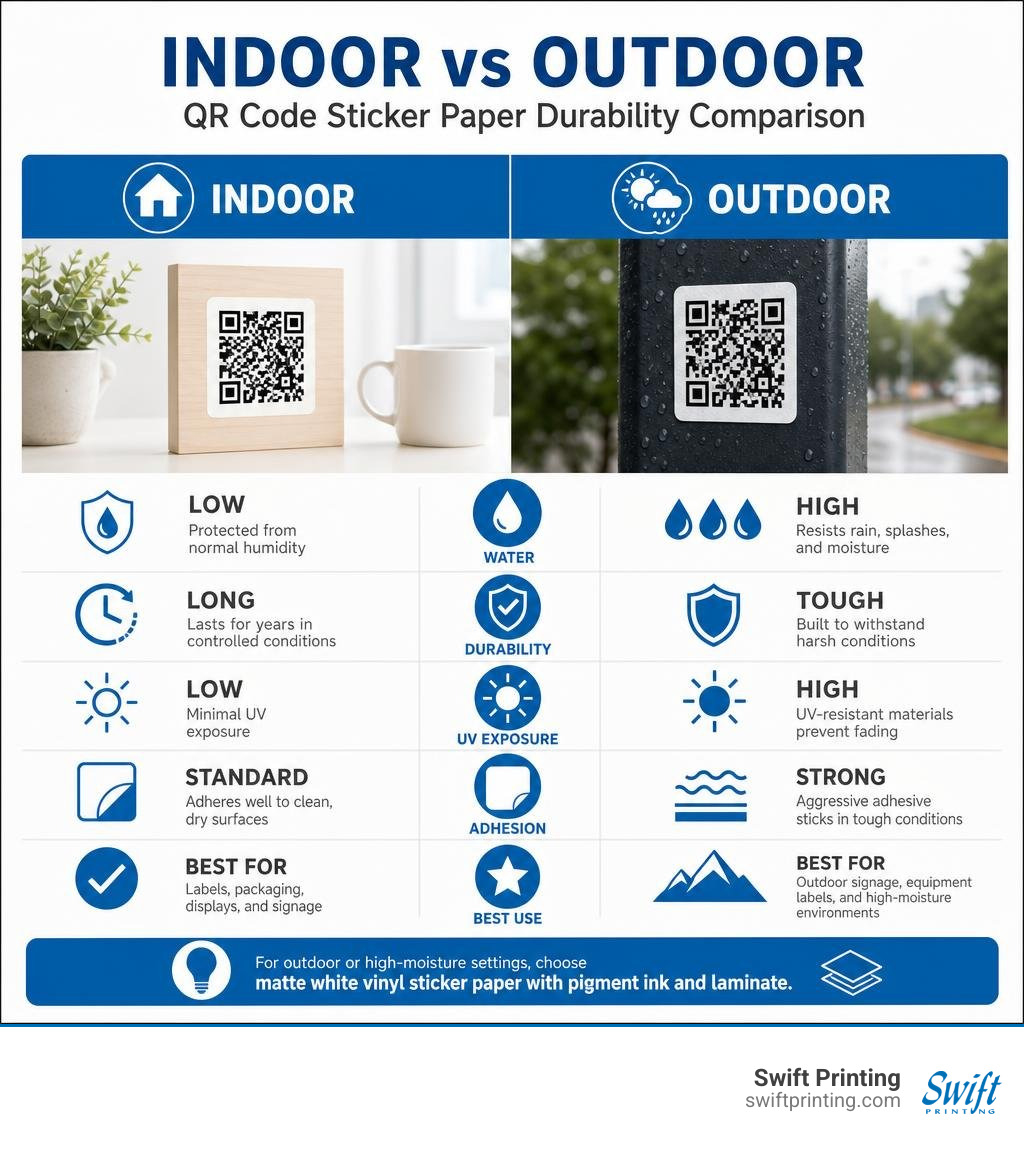
The core problem with standard paper stickers outdoors? They fail fast. Paper-based stickers without any protective coating can break down in as little as two to four weeks outside — and even indoors, humidity can cause warping within months.
Vinyl sticker paper with pigment ink, on the other hand, can last three to five years indoors and one to two years outdoors with proper lamination.
If you need a quick answer: for outdoor or high-moisture settings, use matte white vinyl sticker paper with pigment-based ink and a protective laminate layer. For short-term indoor use, standard paper label sheets work fine.
I'm Jessica Gutowski-Slaydon, president of Swift Printing in Grand Rapids, Michigan, and over the years I've helped hundreds of local businesses and nonprofits choose the right QR code sticker paper for everything from product packaging to outdoor event signage. In this guide, I'll walk you through exactly what to look for so your stickers scan reliably and hold up wherever you put them.
Types of QR Code Sticker Paper for Every Project
Selecting the ideal QR code sticker paper starts with understanding the core materials available on the market today. Whether you are running a short marketing campaign or labeling equipment destined for harsh weather, your substrate choice dictates both print quality and optical scannability.
When reviewing materials, cost factors vary significantly depending on whether you opt for entry-level consumer sheets or commercial-grade substrates. A budget-friendly pack of 25 A4 sheets of matte white printable vinyl usually costs between $10 and $18, while premium commercial-grade vinyl papers can reach up to $50 for the same sheet count. Full-sheet options like Avery® Sticker Project Paper offer acid-free and lignin-free white paper setups around $17.99 per pack, perfect for versatile indoor crafting and indoor label creation.
| Material | Primary Uses | Moisture Resistance | Ideal Printer | Cost Profile |
|---|---|---|---|---|
| Printable Synthetic Vinyl | Outdoor labels, bumper stickers, drink bottles | High (waterproof when sealed) | Inkjet (pigment ink) or Laser | $0.40 – $2.00 / sheet |
| Standard Uncoated Paper | Interior product packaging, filing, shipping boxes | Very Low ( warps easily ) | Inkjet, Laser, Copier | $0.10 – $0.35 / sheet |
| High-Opacity Paper Stock | Covering old barcodes or dark substrates | Low to Moderate | Inkjet, Laser, Copier | $0.20 – $0.50 / sheet |
| Direct Thermal Paper | Receipt tags, short-life logistics, mini prints | Very Low (heat sensitive) | Direct Thermal Printers | Low per roll ($0.05 / label) |
Water-Resistant Vinyl vs. Standard Paper Options
The structural difference between synthetic vinyl and standard wood-pulp paper is night and day. Standard paper sticker stock absorbs environmental moisture, leading to edge curling, fiber breakdown, and ink bleeding. Unprotected paper-based stickers fail within 2 to 4 weeks when exposed to rain, dew, or heavy ambient humidity outdoors.
Synthetic vinyl uses a flexible plastic matrix that will not absorb water or expand when exposed to liquids. Furthermore, when using high-opacity paper or vinyl options—such as opaque QR code labels from HERMA—you ensure that any dark text, graphics, or bright background colors beneath the sticker do not bleed through. Complete opacity is essential because underlying patterns can interfere with a smartphone scanner's ability to isolate the black and white modules of your QR code.
Matte vs. Glossy Finishes for Optical Scan Reliability
While glossy sticker paper delivers vibrant colors and deep blacks, high-gloss surfaces present significant optical challenges for QR codes. Sunlight or bright overhead indoor lighting creates sharp specular reflections (glare) across glossy finishes. When a smartphone camera encounters glare, the reflected white light drowns out dark modules, causing the camera's auto-focus and recognition software to fail.
Matte finish printable vinyl diffuses light evenly across the surface. This light diffusion maintains a consistent high-contrast ratio between the QR code modules and the white background space, preserving the essential quiet zone margin surrounding the code. For maximum scan reliability in variable lighting environments, matte finishes are almost always superior to high-gloss alternatives.
Direct Thermal Rolls vs. Standard Sheet Paper
Direct thermal printing eliminates the need for ink cartridges or ribbons by heating special chemical-coated thermal paper to form black marks. Compact rolls like Memoking T02 thermal sticker paper offer convenient 50 mm wide formats designed for small portable devices. Under ideal conditions away from UV light and humidity, thermal images maintain readability for up to two years.
However, direct thermal paper remains topically heat-sensitive. Exposure to direct sunlight, car dashboards, or warm equipment will turn the entire white background black, rendering the QR code completely unscannable. Standard sheet paper or printable vinyl printed via thermal transfer, inkjet, or laser does not suffer from thermal fading, making sheet paper far better suited for long-term branding or outdoor deployment.
Matching Your Printer Type to the Right Media
Not every printable sticker paper works in every printer. Matching your printer’s underlying imaging technology with the proper media formulation prevents ruined print runs, ink smudging, or severe equipment jams.

Best QR Code Sticker Paper Options for Inkjet Printers
Desktop inkjet printers function by spraying fine micro-droplets of liquid ink onto the paper. The key to printing sharp, water-resistant QR codes on an inkjet machine lies in understanding the difference between dye-based ink and pigment-based ink:
- Dye-Based Inks: Water-soluble colorants that deliver rich photo colors but immediately bleed and smear when touched by water.
- Pigment-Based Inks: Microscopic solid color particles suspended in liquid. Once dry, pigment ink forms a water-resistant bond on synthetic printable vinyl.
When running vinyl sheets through an inkjet printer, always adjust your driver software settings to "Photo Paper," "Glossy Sheet," or "Heavy Matte." These profile selections tell the machine to release the optimal volume of ink and extend drying time between sheets. Allowing freshly printed sheets to dry completely for 15 to 24 hours prevents smudging before you apply sealants or perform precision cutting.
Laser Printer Requirements for Water-Resistant QR Code Sticker Paper
Laser printers operate using extreme internal heat to fuse dry toner powder onto the substrate. Never put standard inkjet vinyl sheets into a laser printer; the intense fuser heat will melt standard vinyl, damaging your printer's internal drums and rollers.
Always select heat-resistant laser vinyl or polyester sheet stock specifically rated for laser printers. High-quality laser label sheets feature heat-stable adhesives and a protective border edge. This protective edge prevents adhesive from oozing out under heat and pressure, ensuring sheet flatness and eliminating frustrating paper jams. Because laser toner is essentially plastic powder melted onto the paper surface, laser-printed QR code stickers are naturally water-resistant right out of the printer.
For more technical guidance on matching digital files with physical print systems, explore our overview on Digital Printing techniques.
Key Factors for Waterproofing and Long-Lasting Durability
Achieving true long-term durability for QR code sticker paper requires an understanding of physical sticker construction. A fully durable sticker relies on a three-layer system: a durable substrate, weather-resistant ink, and a protective top layer.
Applying Protective Lamination and Spray Sealants
Even pigment-based inkjet prints on synthetic vinyl benefit from physical shielding against scratch damage, chemical cleansers, and UV radiation. To maximize outdoor lifespan, we recommend following established methods like those in QR Tiger's waterproof QR code guide or Royal Elements' DIY sticker tutorial.
You can apply three main protective topcoats:
- Cold Self-Adhesive Laminate Sheets: Clear vinyl sheets applied manually using a squeegee tool. This provides superior scratch protection and immediate waterproofing without heat equipment.
- Thermal Laminating Pouches: Passed through a heated laminator. Ideal for heavy-duty tags, costing roughly $0.20 per sheet compared to $0.75 for self-adhesive alternatives.
- Clear-Coat Aerosol Sprays: Acrylic sealant sprays applied in thin, even coats. Useful for complex shapes, though liquid sealants require careful application to avoid edge smudging.
Pro Tip: Always cut your laminating overlay with a 2 mm clear seal margin beyond the printed paper border. This outer clear margin seals the edges of the base paper, stopping liquid from seeping sideways into the substrate.
Indoor vs. Outdoor Lifespan Expectations
The choice of protective coatings dramatically impacts expected service life. Unprotected paper labels outdoors succumb to weather exposure in under a month. A bare vinyl print using pigment-based inkjet printing lasts 6 to 12 months outdoors before sunlight degrades color contrast. However, adding a clear protective laminate extends outdoor vinyl durability to 1 to 2 years, while indoor lifespan easily exceeds 5 years.
Commercial UV-cured inks applied directly to vinyl substrates yield the highest rating, lasting 3 to 5 years in full outdoor exposure without fading or losing scan performance. Investing in durable materials ensures your brand remains sharp and accessible over time. Learn more about strategic label durability in our guide on Stick With It: The Power of Labels and Stickers in Building a Bold, Memorable Brand.
Step-by-Step Guide: Printing, Sizing, and Cutting Your Stickers

Executing a flawless production run requires systematic attention to detail, from initial code dimension calculations down to final surface preparation.
Calculating Minimum Sticker Size for Scanning Distance
Scanning failures frequently stem from printing QR codes too small for the user's distance. To ensure reliable optical capture across dynamic camera hardware, apply the 10:1 distance-to-code-size ratio guideline.
$$\text{Minimum Code Width} = \frac{\text{Expected Scanning Distance}}{10}$$
Under this formula:
- A sticker scanned from a close distance of 20 cm (8 inches) requires a minimum code width of 2 cm (0.8 inches) square.
- A sticker scanned from a distance of 1 meter (approx. 3 feet) requires a minimum width of 10 cm (4 inches) square.
Never resize a raster PNG or JPG image down within print layout software, as pixel resampling creates blurred edges along the finder patterns. Always export your original QR code graphic as a high-resolution vector format (SVG or PDF) or generate it at 100% of its target physical print size at a minimum of 300 DPI. For an in-depth breakdown on code generation mechanics, read How to Print QR Code Stickers (So They Scan Reliably) and our companion guide on How to Make a QR Code.
Best Practices for Cutting and Applying Custom Stickers
Whether you are using manual craft shears or desktop vinyl cutting plotters (like Cricut or Silhouette machines), follow this production sequence:
- Print & Cure: Print your design onto matte white vinyl and allow the ink to dry completely for up to 24 hours.
- Laminate: Carefully overlay your clear laminating sheet, working from the center outward with a vinyl squeegee or felt blade to eliminate air bubbles.
- Precision Cut: Cut your stickers, leaving a distinct quiet zone border around the QR code and an outer laminate seal margin.
- Surface Prep: Clean the physical target application surface thoroughly using 70% isopropyl alcohol to eliminate dust, grease, and silicone residues.
- Application: Peel the backing paper, position the sticker, and press firmly from the center toward the edges to activate the pressure-sensitive acrylic adhesive.
For large runs requiring complex die-cuts or specialized roll stock, commercial Label Printing services streamline production while ensuring professional-grade adhesive consistency.
Frequently Asked Questions About Water-Resistant Stickers
What size should my QR code sticker be for easy scanning?
A practical minimum functional size for close-range scanning (such as product packaging held in hand) is 2 cm x 2 cm (0.8 in x 0.8 in). For general signage, menus, or tabletop displays, aim for 2.5 cm to 5 cm (1 to 2 inches) wide. Always maintain a clear quiet zone margin (white border space equal to at least 4 module widths) around the exterior of the code pattern.
How do I stop optical glare from blocking QR code scans?
To eliminate scan-blocking optical glare:
- Use matte white vinyl sticker paper instead of high-gloss stock.
- Apply anti-reflective matte cold laminating films rather than high-shine glossy overlays.
- Position stickers away from direct, harsh overhead spotlighting.
- Increase contrast by keeping background materials crisp and plain white.
Can I use paper sticker sheets for outdoor placements?
No. Standard paper sticker sheets lack water resistance and will degrade rapidly when exposed to humidity, rain, or outdoor conditions. Paper fibers absorb moisture, causing the paper to swell, warp, and peel away within two to four weeks. Always select synthetic vinyl or polyester sticker paper paired with pigment ink and protective laminates for outdoor environments.
Conclusion: Finding the Ideal Paper Solution

Choosing the best qr code sticker paper comes down to matching your environmental exposure with the right combination of substrate, ink, and protective sealing.
- For indoor use: Matte paper label sheets or full-sheet project papers offer crisp, cost-effective performance.
- For outdoor or high-moisture use: Synthetic matte white vinyl paper paired with pigment ink and clear lamination delivers long-lasting durability against moisture, UV fading, and handling wear.
When your marketing campaigns or product rollouts require high volumes, precise custom shapes, or commercial weatherproofing, partner with professional printing experts. At Swift Printing in Grand Rapids, Michigan, we draw on decades of print expertise to deliver high-performance labels tailored to your exact specifications. As one of only two Certified B Corporations in the commercial printing industry worldwide, we prioritize sustainable manufacturing practices, community engagement, and environmental stewardship alongside top-tier print quality.
Ready to connect your physical marketing assets with your digital experiences? Discover how custom printed stickers can elevate your reach in our guide on QR Codes and Why You Should Use Them in Your Printing and Marketing Pieces, or reach out to our team today for expert guidance on your next print project!