Beginner's Guide to Comparing Poster Printing Options (Prices in USD)
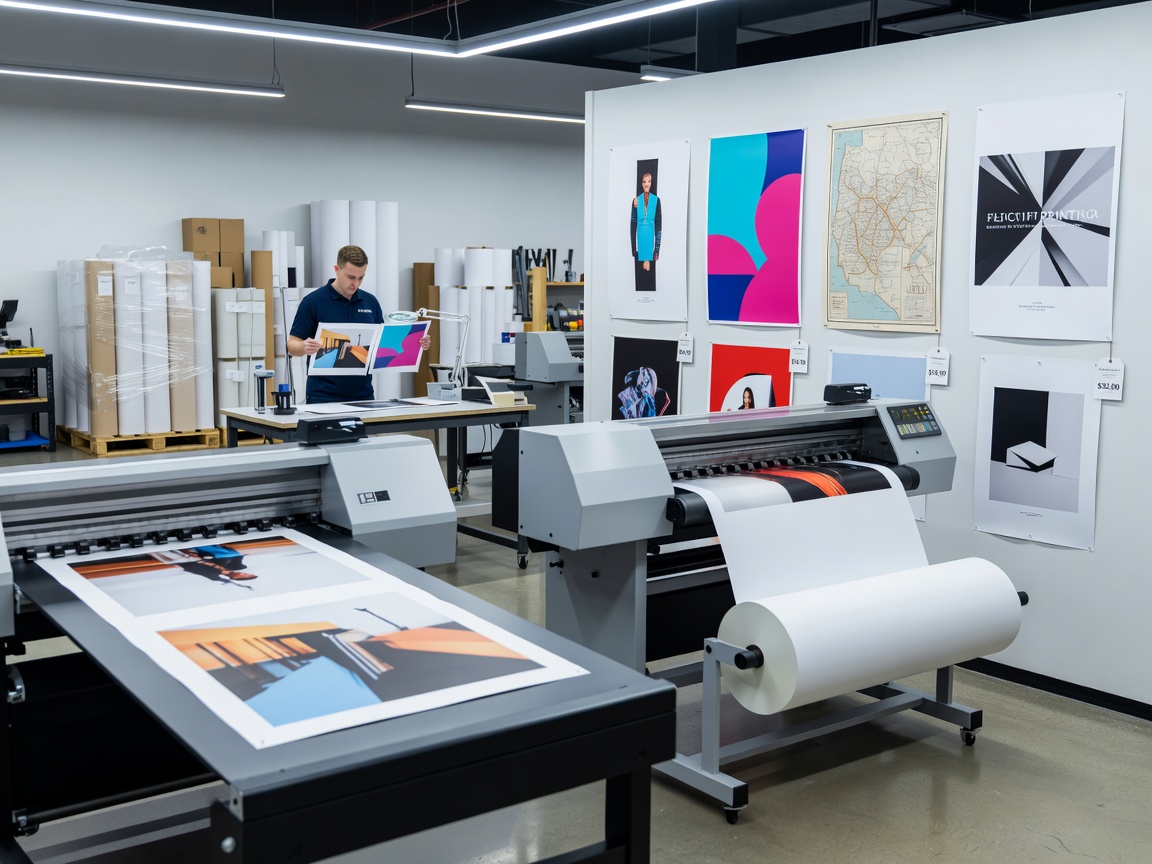
Choosing the right dimensions and media sets the foundation for your entire project. Whether you are prepping for a medical conference, showcasing art, or announcing a major community gathering, matching your dimensions to standard production media keeps costs manageable and avoids unexpected delays.
In the print world, large formats run through wide-feed plotters using continuous rolls. Selecting our Wide Format Printing capabilities means understanding how roll widths interact with standard framing sizes and display spaces.
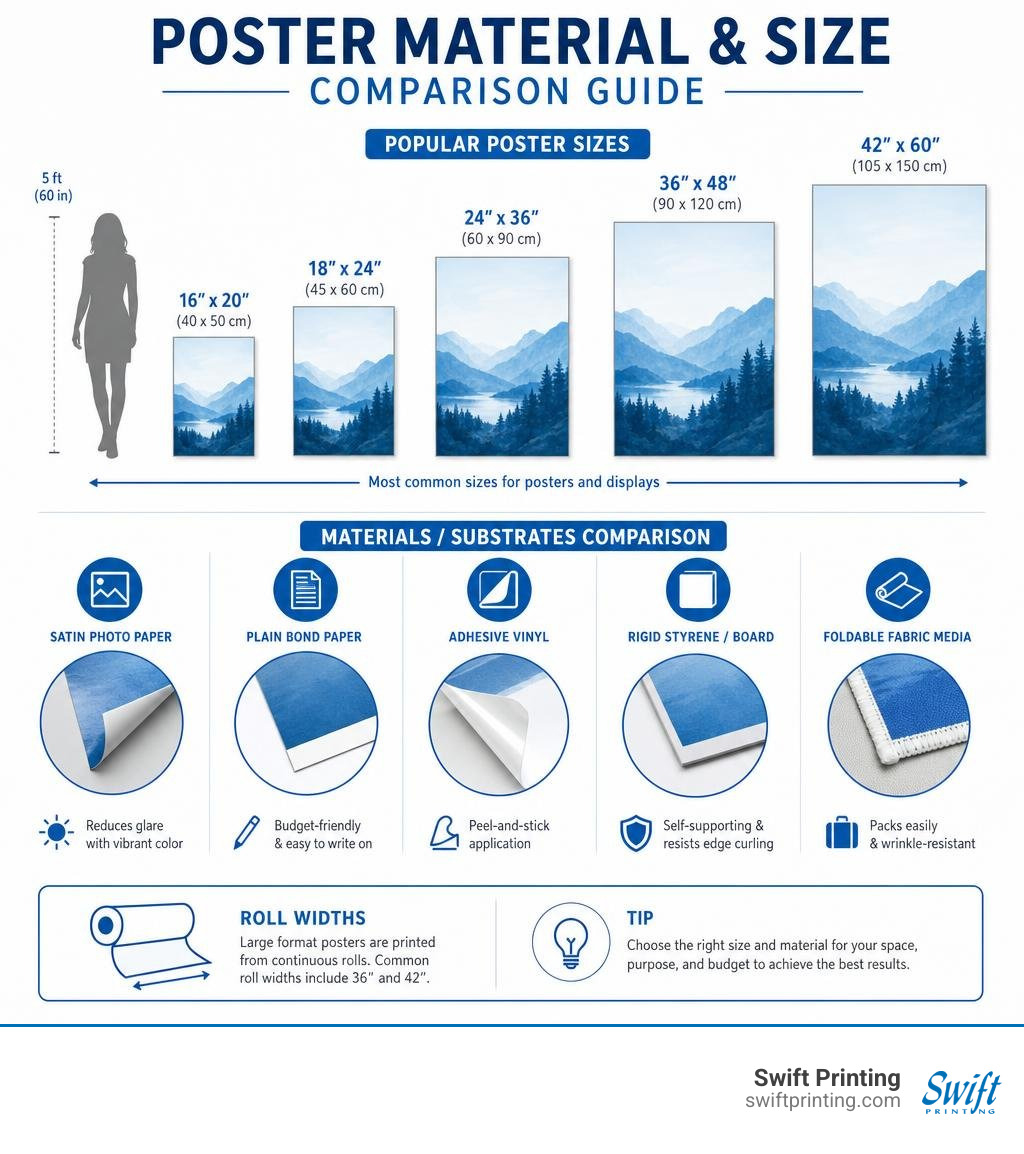
| Material / Substrate | Common Dimensions | Best Use Case | Key Benefit |
|---|---|---|---|
| Satin Photo Paper | 16" x 20", 18" x 24", 24" x 36" | Photo enlargements, retail displays, art prints | Reduces glare while keeping colors vibrant |
| Plain Bond Paper | 24" x 36", 36" x 48", Custom | Blueprints, academic drafts, writable charts | Budget-friendly and easy to mark with pens |
| Adhesive Vinyl | Custom up to 36" or 42" wide | Wall graphics, window signs, smooth surfaces | Peel-and-stick application, no hardware needed |
| Rigid Styrene / Board | 18" x 24", 24" x 36" | Tabletop easels, point-of-sale signs | Self-supporting and resists edge curling |
| Foldable Fabric Media | 36" x 48", 42" x 60" | Scientific symposiums, academic travel | Packs directly into a suitcase without wrinkling |
Sizing Guidelines and Continuous Roll Limits
Standard poster dimensions generally fall into three popular brackets:
- 16" x 20": Ideal for fine art photography, corporate portraits, and compact in-store displays where viewing distance is under four feet.
- 18" x 24": A versatile workhorse for clinic directories, boutique menus, and directional signage.
- 24" x 36": The gold standard for concert promotions, product launches, trade show booths, and major indoor event marketing.
When designing beyond these standard cuts, roll constraints come into play. Wide-format printers operate on continuous rolls of media, typically available in 36-inch and 42-inch roll widths.
This creates a single-axis constraint: at least one side of your artwork must measure 42 inches or fewer (or 36 inches, depending on the chosen substrate). For example, sizes like 42" x 60" or 36" x 48" print seamlessly because one edge fits the roll mouth, allowing the machine to feed the required length along the linear spool. Conversely, a 46" x 56" document exceeds standard roll limits on both axes and cannot be produced as a single seamless sheet on roll-fed equipment.
Selecting the Right Material for Custom Poster Printing
Different environments demand specific media performance:
- Satin Photo Paper: Delivers a rich color gamut without the intense reflections of high-gloss stock. It is the premier choice for photography, presentations, and framed graphics.
- Plain Bond Paper: Perfect for budget-conscious projects, construction schematics, or interactive presentation posters where speakers need to write notes by hand during a live session.
- Adhesive Posters: Featuring a low-tack or permanent backing, adhesive prints stick cleanly to flat walls, glass doors, and smooth panels, eliminating the need for tapes, pins, or frames.
- Durable Styrene & Rigid Boards: When you need a sign to sit neatly on an easel without flopping over, rigid substrates eliminate the necessity of buying a separate picture frame.
- Foldable Fabric Media: A game-changer for traveling researchers and presenters heading out of town. Instead of carrying bulky plastic or cardboard tubes through airport security, you can fold a lightweight fabric poster right into your carry-on luggage.
Pricing, Finishing Upgrades, and Turnaround Times
Understanding commercial print pricing helps you budget effectively while securing the exact durability your display requires. When you need agility, opting for Short Run Digital Printing Near Me gives you professional results without requiring high volume minimums.
Base Rates and Available Promo Codes for Poster Printing
Base pricing for standard paper prints starts from $12.99 USD, scaling depending on size and media selection. For large or continuous custom dimensions, pricing is frequently calculated at $9 USD per linear foot.
If you are incorporating specialty materials or display-ready hardware, adhesive posters start from $16.99 USD, standard indoor banners start from $17.99 USD, rugged outdoor vinyl banners start from $41.99 USD, double-sided yard signs run $34.99 USD each, and wood hanger board prints are available from $29.99 USD each.
To maximize your print budget on upcoming projects, look out for promotional opportunities. You can use code PRINTLOTS to receive 50% OFF prints, posters, and enlargements. If you want a clean, rustic presentation, use code TREE70 to take 70% OFF same-day wood hanger board prints. Choosing Digital Short Run Printing When Speed and Quality Matter lets you leverage these cost-effective runs while hitting tight campaign launch dates.
Mounting, Lamination, and Transport Options
Unprotected paper prints are vulnerable to fingerprints, moisture, and creasing. Adding professional finishing protects your investment:
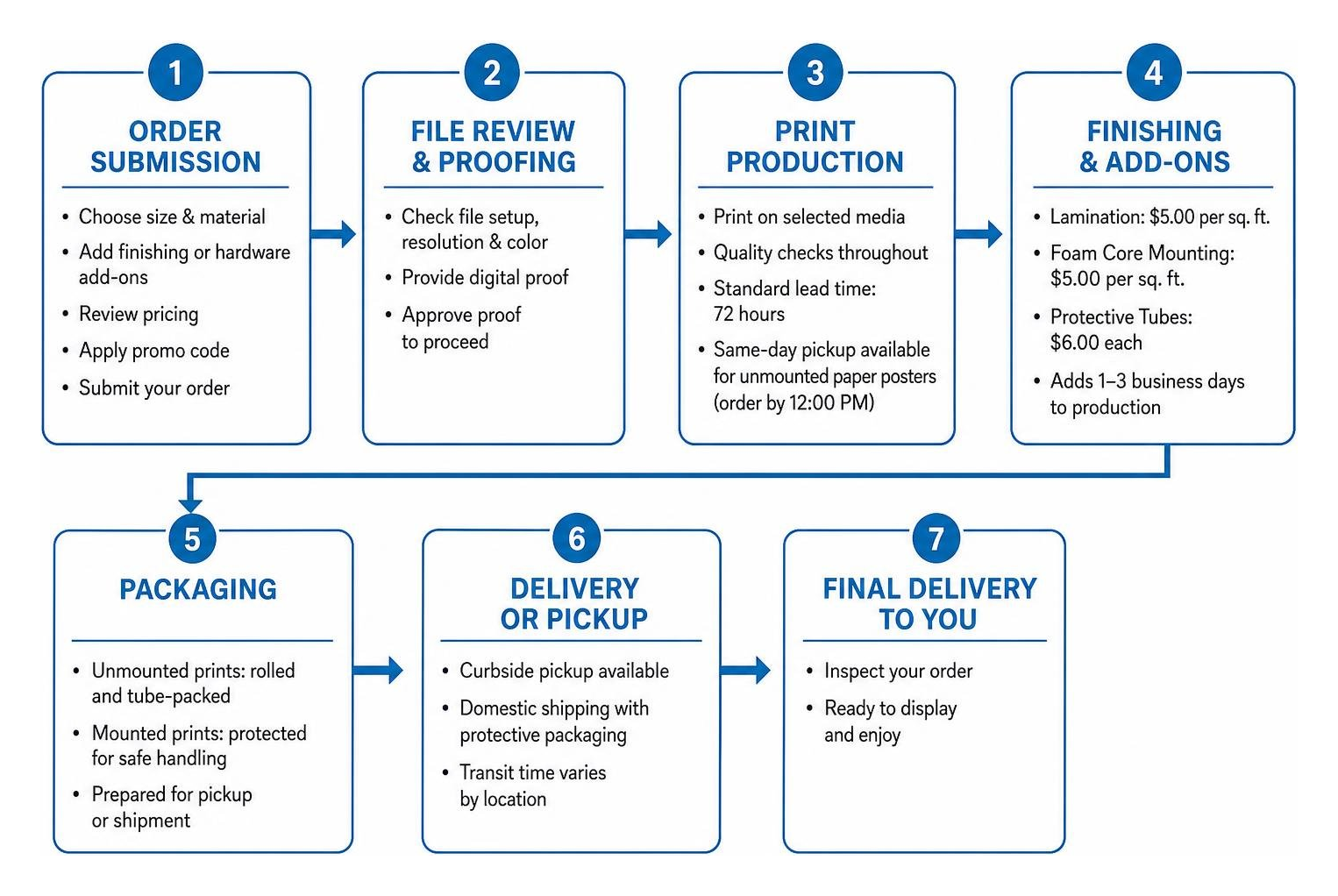
- Lamination ($5 USD per sq. ft.): Encapsulates the poster in a clear protective film. This adds tear resistance, blocks UV degradation, and repels spills.
- Foam Core Mounting ($5 USD per sq. ft.): Adheres the print smoothly to a lightweight, rigid 3/16-inch foam board, creating a self-standing presentation piece suited for tabletop easels.
- Protective Tubes ($6 USD each): Cardboard mailing tubes keep unmounted prints safe from dents, crushed corners, and rain during transit.
When planning your project timeline, post-print finishing requires careful handling. Learn more about the curing and finishing workflow in our overview on Behind the Print: What Happens After the Ink Dries. Adding mounting or lamination generally introduces an additional 1 to 3 business days to your production schedule.
Turnaround Schedules and Delivery Methods
Production schedules depend directly on the complexity of the project and daily cutoffs. Standard unmounted paper posters submitted before 12:00 PM can often be processed for same-day pickup.
For institutional, complex academic, or high-volume orders, a standard 72-hour lead time ensures thorough quality checks, accurate color profiling, and adequate trim drying. Curbside pickup offers a fast local handoff, while protective roll-packaging ensures safe domestic shipping.
File Preparation and Design Best Practices
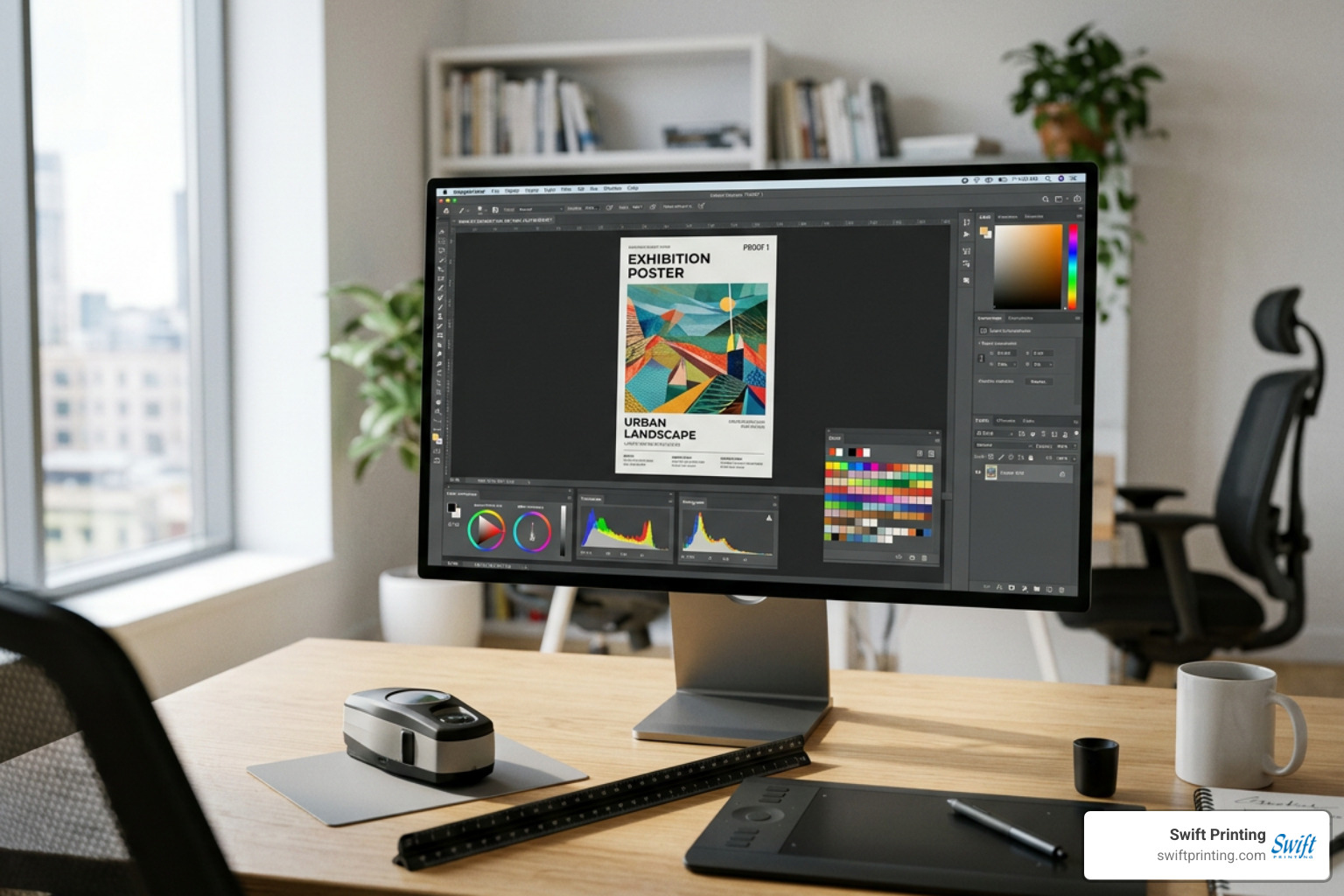
A flawless print begins with a properly prepped digital file. Avoiding typical setup traps prevents unexpected pixelation, color shifts, and missing graphics. Before uploading your final artwork, review The 10 Most Common Print File Mistakes and How to Avoid Them to ensure your files translate cleanly to physical ink.
Formatting Setup and PDF Conversion
To ensure your document prints sharp and distortion-free, follow these foundational setup steps:
- Set Canvas to 100% Scale: Establish your artboard dimensions at the exact finished print size (e.g., 24" x 36") before adding copy or imagery. Upscaling an 8.5" x 11" slide to large format will degrade image clarity.
- Isolate Text Boxes: Create distinct text containers rather than copy-pasting bulk paragraphs directly from word processors, which can create formatting glitches.
- Layer Background Elements: Place background colors and shapes as independent vector objects behind text layers rather than grouping them into single flattened raster files.
- Export to Print-Ready PDF: Always convert your design to a high-resolution PDF with embedded fonts. This prevents missing font substitutions, especially when files move between macOS and Windows platforms.
If you are using modern web-based layout tools, check out our practical guide on How to Prepare a Canva File for the Printer for step-by-step export settings.
Typography Hierarchy and Layout Legibility
Posters communicate fast, often from several paces away. Building strong visual hierarchy ensures your core message connects immediately:
- Viewing Distance Legibility: Headlines should be readable from 10 to 15 feet away. Use clean, bold sans-serif or high-contrast serif typography.
- Body Text Sizing: Keep general body copy at a minimum of 24 points.
- Citations & Fine Print: For footnotes, references, or sponsor acknowledgments, maintain a minimum of 18 points to prevent text from blurring into the background.
- Message Focus: Limit clutter by focusing on one central visual anchor and primary call to action.
For more actionable layout strategies, explore our guide on Nine Things You Can Do to Make Your Printing Materials Look Great.
Frequently Asked Questions

What is the maximum dimension constraint for wide-format printing?
Because wide-format printers feed from continuous media rolls, your poster is constrained by the roll width on one axis—typically 36 or 42 inches. The length along the roll can extend significantly (e.g., 42" x 72" or 36" x 96"), but you cannot exceed the maximum roll width on both axes for a single continuous sheet.
How much do post-print lamination and foam core mounting cost?
Lamination and rigid foam core mounting are priced at $5.00 USD per square foot for each individual service. For example, laminating an 18" x 24" poster (3 square feet) costs $15.00 USD, while adding both lamination and foam core mounting to that same print would total $30.00 USD in finishing upgrades.
What file format is best for preserving poster layouts and fonts?
A press-quality PDF with embedded fonts and CMYK color formatting is the gold standard for poster printing. PDFs lock your vector graphics, chart elements, and typography in place, preventing unintended shifts across different operating systems.
Conclusion
Getting the most out of your poster printing comes down to aligning the right dimensions, selecting durable substrates, and preparing clean digital files. Whether you are running short-run event signage or outfitting an entire trade show presence, careful planning keeps your project on schedule and on budget.
At Swift Printing, we combine three generations of craftsmanship with modern technology. As one of only two Certified B Corporations in the worldwide printing industry, we hold our work to the highest standards of social and environmental performance. If you need personalized guidance for an upcoming display or marketing campaign, reach out to our team at https://www.swiftprinting.com/ to explore our complete suite of sustainable print solutions.