Innovation Can’t Be a Department: What a Multigenerational Family Business Taught Me About Staying Relevant
One of my favorite things about family business is learning from people who understand the strange, wonderful mix of history, responsibility, family dynamics and reinvention that comes with it.
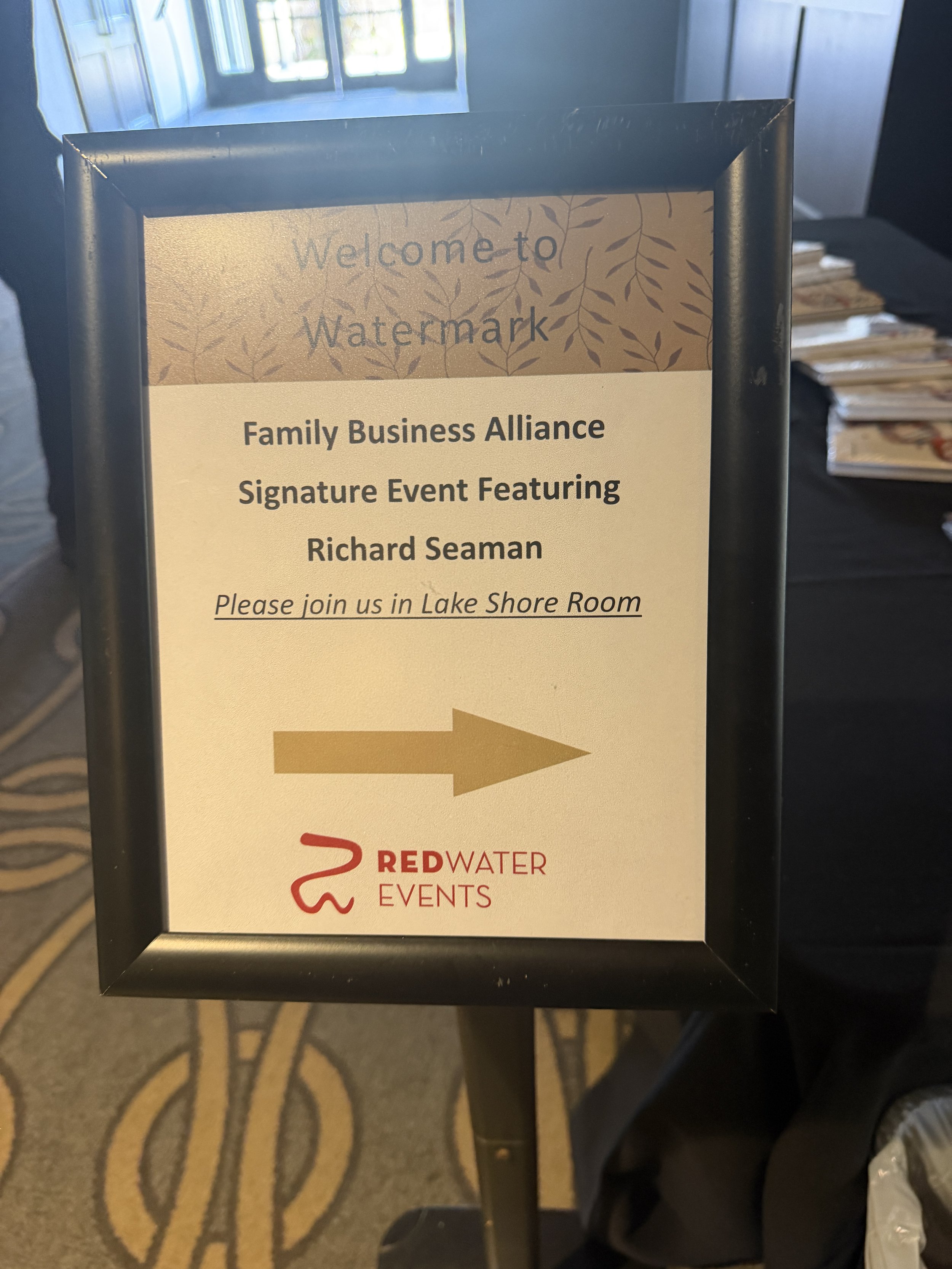
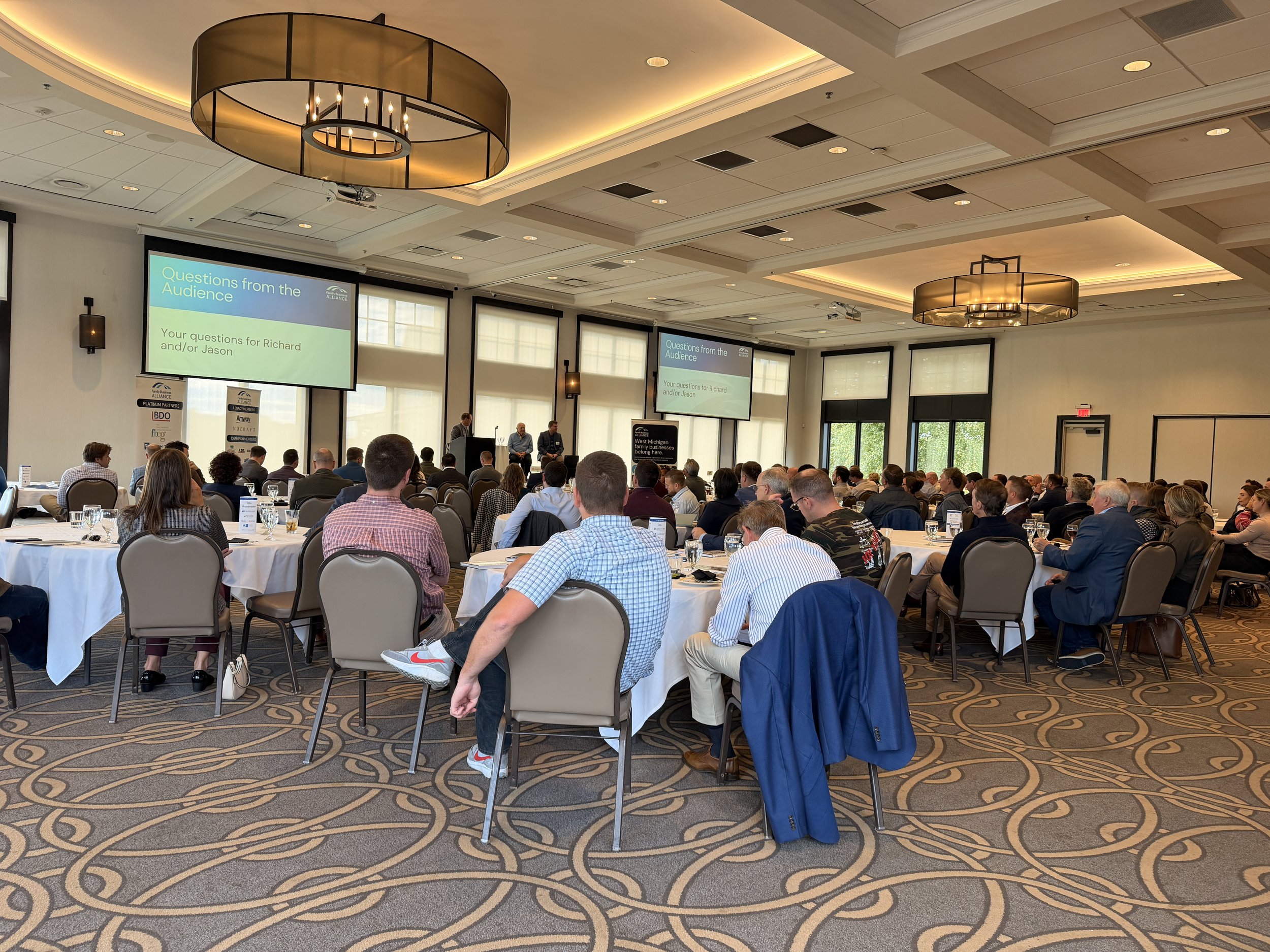
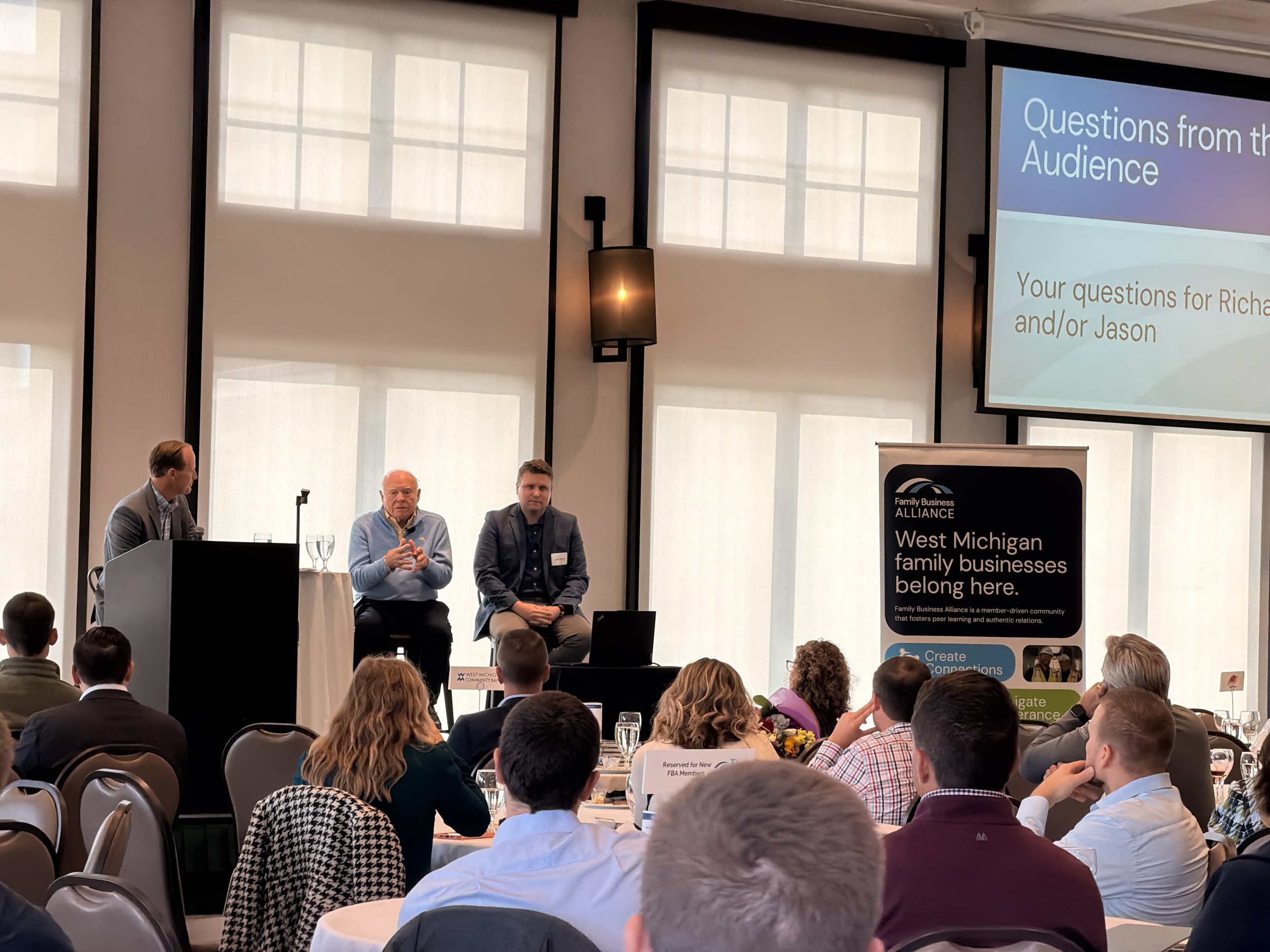
I recently had the opportunity to hear Richard Seaman, Chairman of Seaman Corporation, talk about the evolution of his family business and the culture that helped it continue to grow across generations.
His story stuck with me for a lot of reasons, but the biggest takeaway was simple:
Innovation can’t be a department. It has to be the mindset of the company.
That line has been rolling around in my head ever since.
As someone helping lead a third-generation family business myself, I could relate to so much of what he shared. Different industry, different scale, different story, but many of the same questions.
How do you respect what was built before you without becoming afraid to change it?
How do you bring in new ideas without making the previous generation feel like their work is being dismissed?
How do you keep the family relationships intact when business decisions get complicated?
And maybe the biggest one: How do you make sure the company is still relevant for the generation after yours?
His Favorite Decade? This One.
I asked Richard what his favorite decade has been.
His answer was immediate: this one.
Then he told me I should ask his wife, Judy.
Naturally, I did.
After the event, I tracked her down and asked. She agreed.
I loved that answer.
Here is someone who has experienced decades of growth, challenge, success and change, and the best chapter is still the one he is living right now.
There is something really healthy about that mindset.
Family businesses can spend a lot of time looking backward. We talk about founders, old equipment, previous generations, longtime customers and all the stories that shaped the company.
At Swift Printing, we do that too.
We are proud of where we came from. We still talk about my grandfather, Walt Gutowski Sr., who founded the company in 1950. We still have equipment that connects us to previous generations. We still hear stories from customers who worked with my dad, my grandfather or people who have been part of Swift for decades.
That history matters.
But if all we ever do is look backward, eventually we become a museum.
The real goal is to appreciate where you came from while still believing that your best years can be ahead of you.
Welcome Home From College. Also, We Lost Our Biggest Customer.
One story Richard shared made me laugh because it felt like the kind of education you only get in family business.
His father sent him to school to earn a business degree.
He came back from college, stepped into the role of plant manager and then the company lost its biggest customer.
So much for easing into things.
That is family business in a nutshell sometimes.
You can learn finance, accounting, operations and strategy in school, but eventually something happens that no textbook prepared you for.
A customer leaves.
A machine goes down.
A big project goes sideways.
The economy shifts.
Technology changes.
A key employee retires.
Suddenly, you are not studying business anymore. You are living it.
Swift has had plenty of those moments through the years.
The printing industry today looks very different than it did when my grandfather started the company in 1950. Equipment changed. Technology changed. Customers changed. The way businesses communicate changed.
Entire categories of print work that once kept presses running disappeared or changed dramatically.
If Swift had insisted on doing business exactly the same way generation after generation, there probably would not be a Swift Printing today.
We have had to evolve.
Digital printing became part of the business.
Direct mail became more sophisticated.
Variable-data printing created new opportunities.
Wide-format work expanded.
Customers began expecting faster turnarounds.
Marketing became more integrated between print, email, social media and websites.
Even the way people find a printer has changed.
Now someone might discover us through Google, read a blog post, look at our social media, check our reviews and finally request a quote without ever having spoken to us before.
That means innovation is not just about buying the newest press.
Sometimes it means changing the way you sell.
Sometimes it means changing how you communicate.
Sometimes it means admitting that the process everyone has used for 20 years could probably be better.
Family Business Comes With Family
Richard was also candid about something that often gets left out of polished family-business stories: the family drama.
Because of course there is family drama.
There are different personalities, expectations, communication styles, generations and ideas about what the business should become.
You are trying to run a company while also maintaining relationships with people you will see at Thanksgiving.
That makes things complicated.
At Swift, my brother Walt and I are third-generation leaders. My dad is still connected to the business. We have longtime employees who knew us before we were making decisions.
There are moments where business and family naturally overlap.
That can be one of the greatest strengths of a family business.
It can also be one of the hardest parts.
Richard talked about navigating those challenges over time, and I appreciated that he did not pretend it was always easy.
I think longevity in a family business requires being able to separate ego from stewardship.
The goal cannot always be, “How do I get my way?”
The better question is, “What does the business need to remain healthy for the next generation?”
Those are not always the same answer.
Innovation Is Everyone’s Job
This was the biggest idea I walked away with.
Innovation cannot belong to one person or one department.
You cannot appoint someone the “innovation person” and expect the rest of the company to continue operating exactly as it always has.
Innovation has to become part of the culture.
That means the person answering the phone can have an idea.
The press operator can have an idea.
The person handling finishing can spot an inefficiency.
A customer can ask a question that leads to an entirely new service.
A younger employee can challenge a process everyone else has stopped questioning.
At Swift, some of our best improvements have started with very simple questions:
Why do we do it this way?
Is there a faster way?
Could we make this easier for the customer?
Could we produce this differently and save money?
Is there something else we could offer?
What are customers asking us for that we are not currently doing?
Those questions matter more than having a formal innovation committee.
A culture that welcomes ideas is much more powerful than one person assigned to create them.
Reinvention Without Losing Yourself
What impressed me most about the Seaman Corporation story was the scale of its evolution.
The business started with work that included sewing lace onto baby diapers and eventually became a global provider of high-performance industrial fabrics.
That is not a minor pivot.
That is reinvention.
And yet the family ownership and long-term mindset remained.
I think that is the sweet spot for family businesses.
You do not preserve the company by freezing it in time.
You preserve it by protecting the things that matter while changing the things that need to change.
For Swift, the things worth protecting are pretty simple.
Take care of customers.
Do what you say you are going to do.
Produce quality work.
Communicate.
Stand behind the finished product.
Be part of the community that supports you.
Those principles do not need reinventing.
The tools we use to accomplish them absolutely do.
The Best Decade Might Still Be Ahead
Maybe that is why Richard’s answer about his favorite decade stayed with me so much.
“This one.”
I hope I can say that throughout my career.
I love Swift’s history. I love hearing stories about my grandfather. I love old printing equipment and the craftsmanship that built this industry.
But I am equally excited about what comes next.
What does commercial printing look like in another 10 years?
How will AI change marketing?
How will businesses combine digital communication and physical print?
What new equipment or materials will become standard?
What customers will walk through our doors that we have not even met yet?
What ideas will the fourth generation eventually bring?
I have no idea.
And maybe that is the fun part.
Family business longevity does not come from standing still.
It comes from being grounded enough to know who you are and curious enough to keep asking what you could become.
At Swift, we are proud to be third generation.
But we are not interested in simply being the custodians of what was built before us.
We want to keep building.
And if we do it right, hopefully someday the next generation will look back, appreciate what we did and then change half of it.
Honestly, that is probably exactly what they should do.