The Definitive Guide to Buying Christmas Cards
Buy Christmas Cards That Make the Right Impression

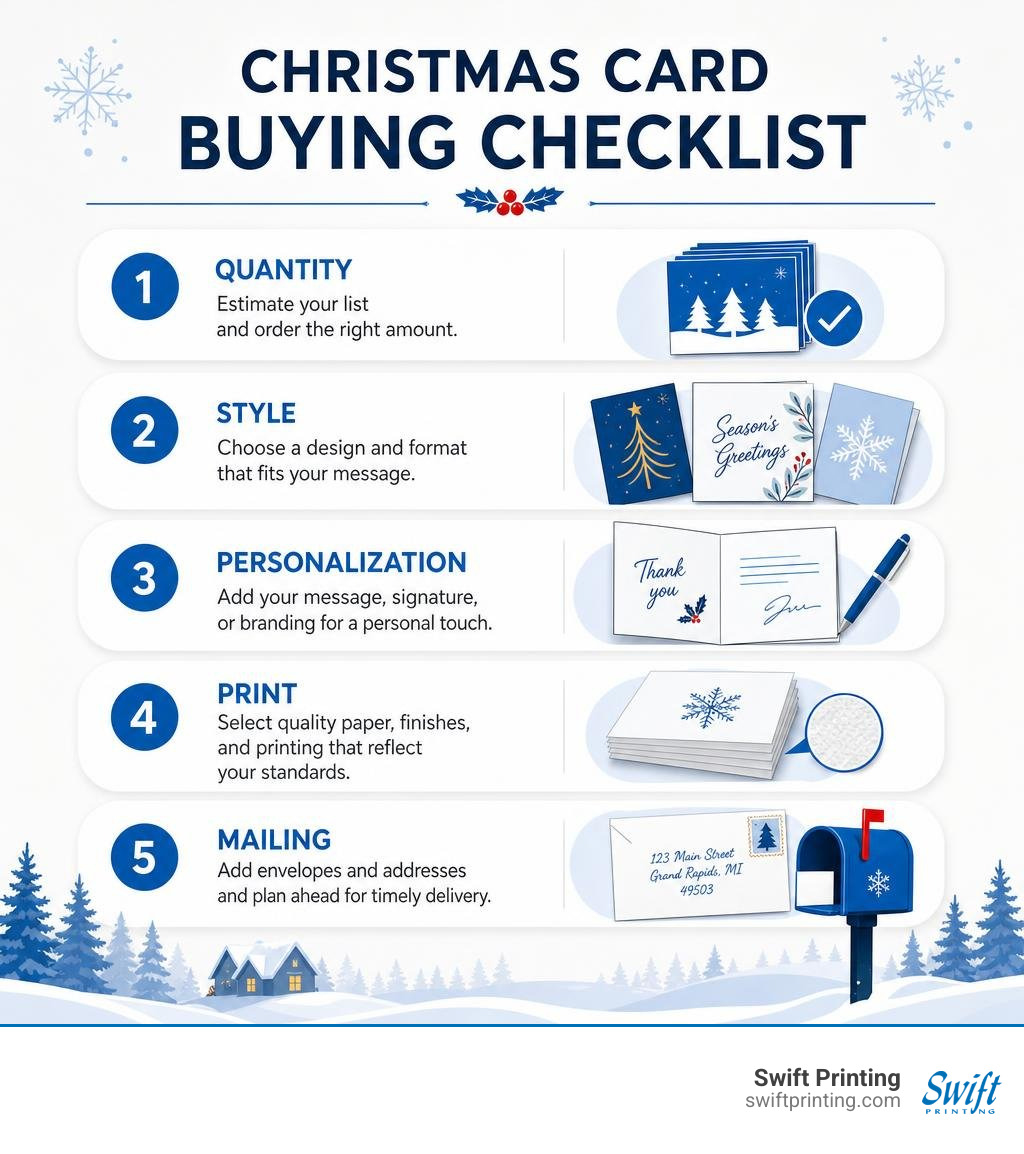
To buy Christmas cards with confidence, start with three decisions: how many you need, who will receive them, and how polished they should feel. Boxed sets are efficient for large lists, personalized folded or flat cards work well for client outreach, and premium specialty cards are best saved for key relationships. For most US business and nonprofit mailings, a 5 x 7 inch card on sturdy stock is a dependable, professional choice.
Plan early if you need custom printing, branded messaging, return-addressed envelopes, or mailing support. Buying in larger quantities can lower the per-card cost, while recycled paper, plastic-free packaging, and cause-based designs can help your holiday message reflect your values.
For lawyers, medical offices, consultants, government agencies, and nonprofits, a Christmas card is more than seasonal mail. It is a simple, tangible way to thank clients, partners, donors, and staff - without sounding like another sales email. At Swift Printing, a high end print shop, we help organizations choose card formats, paper, finishes, and mailing options that look intentional and arrive on schedule.
I’m Jessica Gutowski-Slaydon, president of Swift Printing and a third-generation print leader in Grand Rapids, Michigan. I help organizations buy Christmas cards that balance high-quality print, practical deadlines, and the local values behind every holiday message.
Popular Formats and Styles When You Buy Christmas Cards
Selecting the right card format sets the foundation for your entire holiday greeting campaign. The physical structure of your card influences the visual layout, the amount of message space you have, how the piece is displayed in a client's office, and even your standard postal mailing rates.
Most modern holiday greetings fall into three core formats: flat cards, traditional folded cards, and specialty pop-up or dimensional cards. The standard size across the printing industry remains the classic 5" x 7" dimension (often paired with an A7 envelope). This size fits standard USPS letter postage thresholds, provides generous room for typography, and stands upright easily on desks and mantels.
| Format | Standard Dimensions | Best Use Case | Key Advantage |
|---|---|---|---|
| Flat Cards | 5" x 7" (Single or Double-Sided) | Photo greetings, modern business announcements, quick warm wishes | Cost-effective, clean modern aesthetic, easy to display |
| Folded Cards | 5" x 7" (Folds to 5" x 7", 10" x 7" flat) | Executive client greetings, law firm outreach, multi-signature staff notes | Ample interior space for printed messaging and handwritten notes |
| 3D Pop-Up Cards | Varied (Commonly 5" x 7" collapsed) | VIP donors, executive partners, keepsake holiday gifts | Unforgettable visual impact, interactive mantle display |
When deciding between flat and folded cards, think about how much you want to say. Flat cards are great for clean, photo-forward layouts or bold typographic greetings. Folded cards offer four distinct panels, making them the standard for medical practices, consulting groups, and legal teams that want to combine a formal corporate sentiment on the left panel with room for handwritten signatures on the right.
Custom Photo and Personalized Christmas Cards
Personalization turns standard seasonal mail into an authentic touchpoint. For family greetings, multi-photo collage templates allow you to showcase yearly milestones, travels, and portraits. For corporate and executive mailings, personalization often means incorporating crisp team photography, custom typography, subtle brand colors, and personal greetings tailored to your professional relationships.
Design aesthetics have expanded well beyond standard red-and-green palettes. Modern minimalist treatments, such as those highlighted in our black & white Christmas cards guide 2026, offer a sophisticated, timeless alternative that resonates with architecture firms, boutique agencies, and design-focused practices.
Personalization extends to the exterior packaging as well. Ordering cards with variable data printing allows you to print recipient addresses and return addresses directly onto your envelopes. This eliminates the need for peeling adhesive labels or spending days addressing envelopes by hand, ensuring your mailings look clean and professional from the moment they land in a recipient's mailbox.
Boxed Assortments and Specialty 3D Pop-Up Cards

For organizations and individuals sending holiday cheer to broad networks, pre-printed boxed assortments offer convenience and value. Retail card sets are standardly sold in counts of 12, 16, 24, 36, 40, 48, or 72 units per box. These assortments often feature fine art winter landscapes, traditional nativity illustrations, or nostalgic holiday motifs, providing a polished card for casual acquaintances, vendor partners, and service providers.
Specialty 3D pop-up and laser-cut cards represent the opposite end of the spectrum: high-touch keepsake greetings. Intricate multi-layer paper sculptures—ranging from winter wonderlands to botanical poinsettia bouquets—are designed to sit on a client's credenza or a home mantel all season long. While individual novelty pop-up cards generally retail between $3.95 and $15.00 each, reserving these specialty formats for key board members, high-value accounts, and top donors creates a lasting impression that standard digital greetings simply cannot match.
Key Quality Factors: Paper Stock, Finishes, and Sustainability
The tactile feel of a holiday card communicates your organization's standards before the recipient even reads the first line. Flimsy, lightweight paper can make an outreach feel like an afterthought, whereas dense, textured cardstock conveys stability, prestige, and intentionality.
Specialty finishes elevate printed pieces even further. Foil stamping in metallic gold, silver, or copper adds a celebratory gleam to holiday headings and organizational logos. Embossing provides tactile dimension, while pairing a soft satin coating on the exterior with an untreated, writable interior gives you the best of both worlds: vibrant imagery on the front and smudge-free handwriting inside.
Premium Paper Weights and Texture Selection

When evaluating cardstock options, paper weight is the most reliable indicator of quality. Standard commercial flyers are often printed on flimsy 80 lb or 100 lb text stock, but premium greeting cards demand substantial cover stock.
- 300gsm (approx. 110 lb Cover): This is the gold standard for luxury fine art and corporate greeting cards. It offers a dense, durable hand feel that will not sag or curl when displayed upright on a desk. A smooth or satin 300gsm sheet renders fine lines, photography, and rich seasonal tones with clarity.
- 324gsm (approx. 120 lb Cover): Premium warm-white or eggshell textured paper provides an elevated, artisanal finish. The subtle tooth of a 324gsm sheet creates an inviting tactile experience that works well for law firms, medical practices, and executive suites seeking an understated look.
Choosing heavier paper weights also protects your cards during automated postal sorting. Sturdy cardstock resists bent corners and creasing, ensuring your mailing arrives in pristine condition.
Eco-Friendly Printing and Recycled Materials
Sustainable stationery is no longer a niche preference; it is a baseline expectation for forward-thinking organizations, government agencies, and conscious consumers. As holiday mail volumes surge, choosing environmentally responsible materials ensures your seasonal goodwill supports environmental stewardship.
Key sustainable printing factors to look for include:
- Post-Consumer Recycled Content: Selecting papers manufactured with 30% to 100% post-consumer recycled waste diverts material from landfills and reduces the demand for virgin timber. Even intricate 3D pop-up cards can now be engineered from 100% recycled paper stocks without sacrificing strength.
- FSC-Certified Sourcing: Forest Stewardship Council (FSC) certification guarantees that the wood fiber used in your paper stock comes from responsibly managed forests that provide environmental, social, and economic benefits.
- Plastic-Free Packaging: Traditional retail boxed cards often rely on single-use clear plastic clamshells and petroleum-based shrink wraps. Modern sustainable stationery prioritizes recyclable paperboard boxes, compostable vegetable-based sleeves, and paper bands.
- Cause-Driven Initiatives: Many holiday card collections integrate social and environmental causes directly into the purchase. For example, campaigns that tie card purchases to tree planting in national forests allow businesses to include an inspiring dedication message inside their client greetings.
Smart Purchasing Strategies for Personal and Corporate Orders
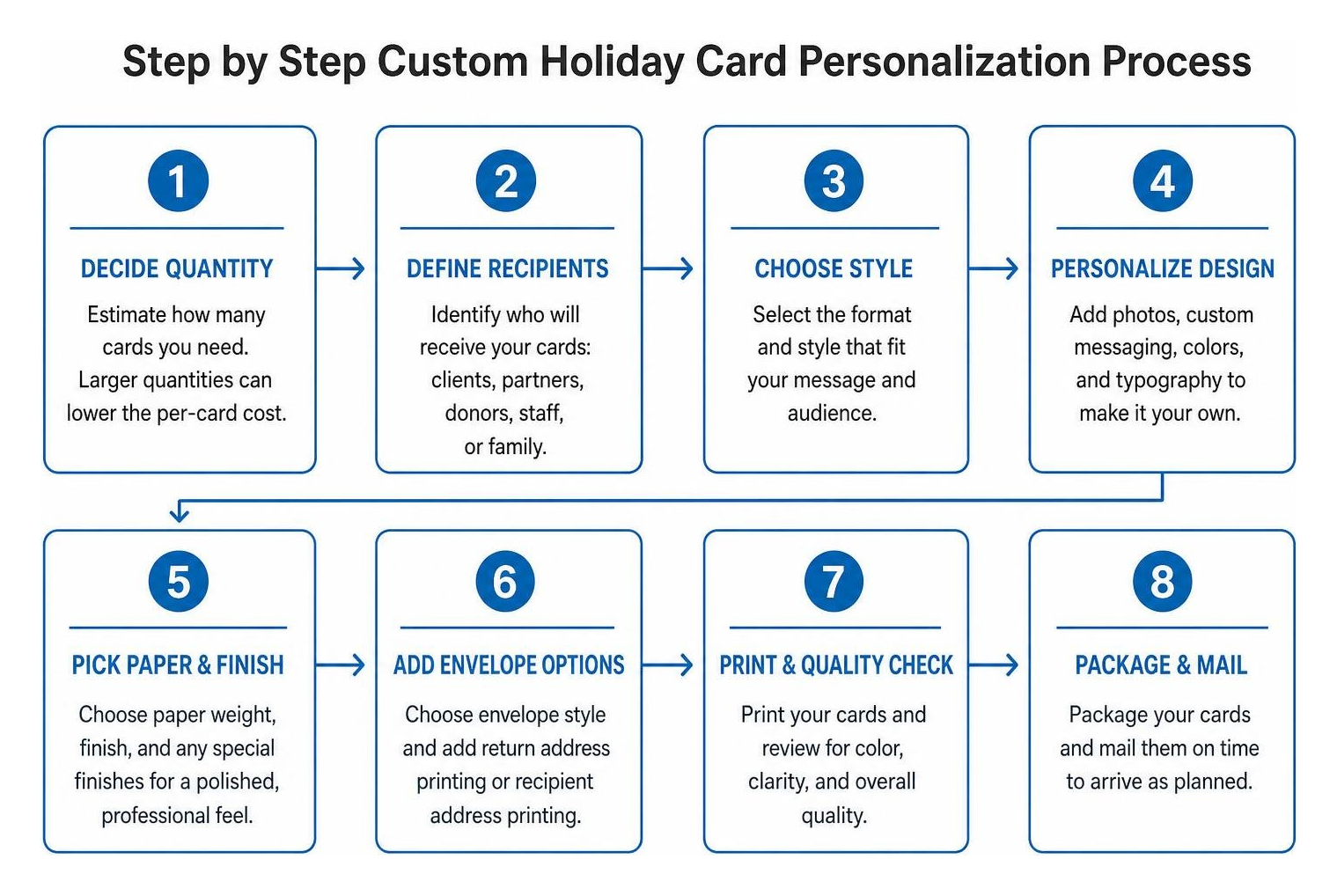
Ordering holiday cards involves managing design files, recipient spreadsheets, production lead times, and USPS cutoff dates. A strategic purchasing approach ensures you maximize your budget while avoiding rush fees and holiday shipping delays.
When planning your budget, look at the full cost of the mailing campaign: card printing, matching envelopes, envelope addressing services, and domestic postage. Factoring in these elements early prevents surprise costs as December approaches.
How to Buy Christmas Cards for Corporate and Client Lists
Corporate holiday card campaigns require a structured workflow. For professional service firms—such as medical clinics, wealth management groups, and municipal agencies—the holiday card serves as a formal relationship-building tool.
To streamline the process, start by segmenting your contacts. As outlined in our guide to simplify your Christmas card mailing list, dividing your recipients into clear tiers (e.g., premier clients, active vendors, community leaders, and internal staff) helps you determine exact quantities for custom-printed executive cards versus standard boxed greetings.
Establish a firm schedule:
- Late September to Mid-October: Finalize card designs, select paper stocks, and gather high-resolution staff or office photos.
- Late October: Scrub recipient lists, verify updated suite numbers, and submit files for proofing and printing.
- Mid-November: Receive printed cards, coordinate internal staff signing sessions, and prepare envelopes.
- Early December: Hand off completed mailings to the USPS for on-time delivery before office holiday closures.
Where to Buy Christmas Cards on a Budget with Volume Discounts
Holiday cards follow standard tiered volume pricing: as your order quantity increases, the per-unit cost drops significantly. For example, a short run of 10 custom cards might cost around $3.00 per unit ($30.00 total), whereas scaling that order up to 100 units or more can bring the price down to $1.95 per card or less.
To get the most out of your holiday budget:
- Consolidate Departmental Orders: Combine orders across multiple offices or practice groups into a single print run to reach higher quantity breaks and lower unit costs.
- Watch for Seasonal Bundles: Retailers often provide promotions like "Buy 3, get the 4th free" on individual cards or include value-add gifts like matching holiday magnets or festive stationery sets.
- Leverage Early-Bird Incentives: Ordering ahead of peak retail rushes allows you to capitalize on early seasonal promotions, such as Black Friday Christmas card deals, while bypassing expedited shipping fees.
- Maintain Buffer Quantities: Always order 10% to 15% more cards than your active list requires. Reordering small batches of 10 or 15 cards later in December carries a much higher per-unit setup cost than including them in your initial run. When you plan ahead and get those cards done before peak holiday stress hits, you can focus on running your business while your holiday outreach runs smoothly.
Frequently Asked Questions About Buying Christmas Cards
What is the ideal paper weight for luxury Christmas cards?
For a true luxury feel, choose a paper stock between 300gsm (approx. 110 lb cover) and 324gsm (approx. 120 lb cover). These weights provide substantial rigidity, ensuring the card feels substantial in the hand and stands upright on a desk without buckling. A 300gsm smooth or satin stock is ideal for photo-heavy artwork, while a 324gsm warm-white textured stock provides an elegant, tactile finish suited for formal executive greetings.
How do bulk pricing and volume discounts work for holiday cards?
Commercial printing pricing is based on tiered quantity breaks. Setup costs (such as digital press preparation, file proofing, and cutting calibrations) are distributed across the total number of units printed. As a result, ordering a small batch of 10 custom cards might carry a unit cost of $3.00, while ordering 100 or more cards typically lowers the price to $1.95 per card. Ordering your full seasonal quantity in a single production batch maximizes these savings.
What are the postal mailing deadlines for holiday greeting cards?
To ensure domestic holiday cards arrive before December 25, the United States Postal Service (USPS) typically recommends mailing standard First-Class mail by December 16–18. For international mailings, cards should be dispatched by late November or the first week of December depending on the destination country. For businesses, we recommend mailing cards during the first week of December so they arrive before clients and corporate partners leave for extended holiday vacations.
Conclusion
A well-crafted Christmas card is a meaningful, physical reminder of the partnerships, friendships, and shared successes built throughout the year. By selecting premium paper weights, choosing thoughtful design formats, and incorporating sustainable materials like FSC-certified, post-consumer recycled paper, your holiday mailing will stand out on any desk or mantel.
At Swift Printing, we believe every piece of print should reflect the highest standards of craftsmanship and community care. As a Certified B Corporation based in Grand Rapids, Michigan, our print shop is dedicated to balancing premium, high-end print production with rigorous standards of social and environmental performance. Whether you are an attorney preparing client greetings, a medical practice thanking your patients, or an organization celebrating a milestone year, our team is here to help you produce holiday stationery that speaks volumes.
To explore more design formats, postal tips, and stress-free holiday scheduling advice, read the ultimate guide to Christmas cards and get your seasonal mailing underway today.