Grand Rapids Book Printing Guide for Self-Publishers and Local Authors
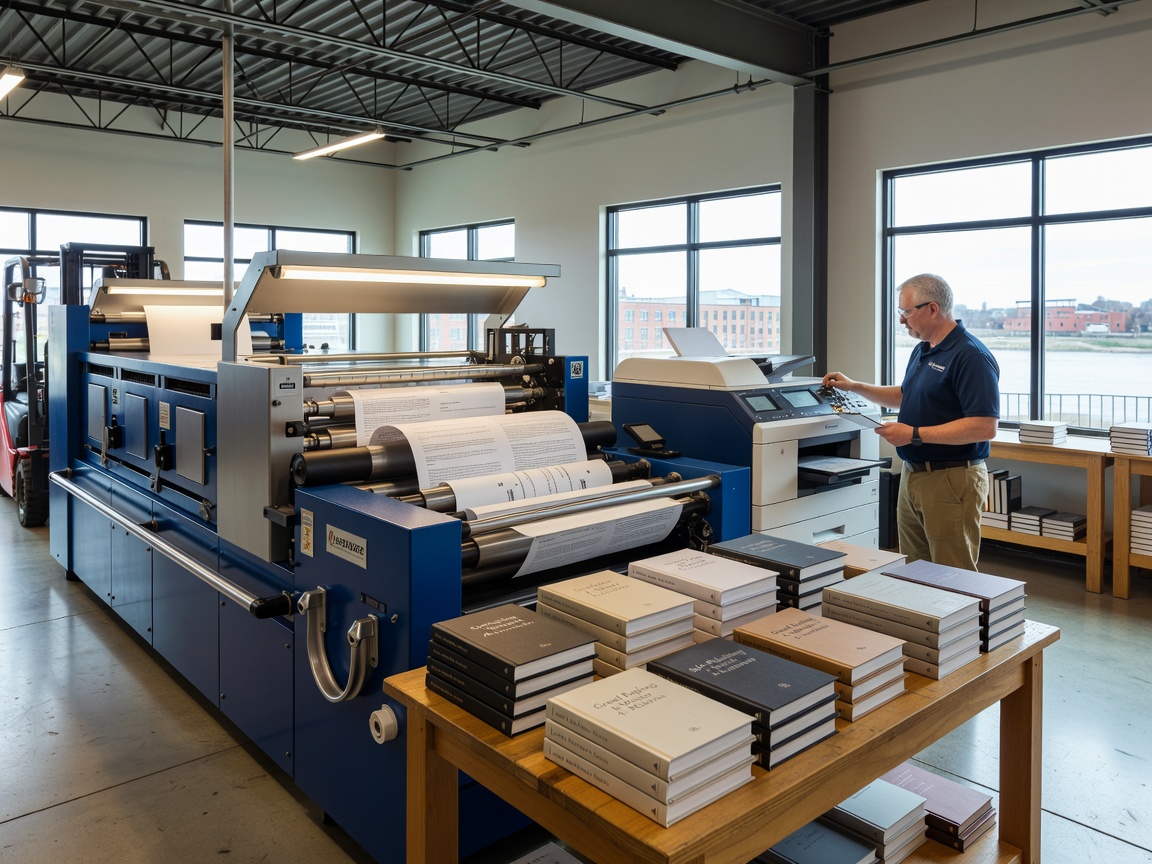
When you embark on the journey of publishing a book, navigating the local printing landscape in Grand Rapids can feel like choosing your own adventure. Depending on where you are in the publishing timeline—whether you're scribbling your initial draft, assembling a manuscript, or preparing for a major regional product launch—different local printing solutions meet different needs.
Local authors generally rely on a combination of municipal document centers for early feedback and professional commercial printers for high-quality, market-ready physical books. Working locally brings distinct advantages: you can hold physical proof sheets in your hands, inspect color swatches under natural light, and speak face-to-face with print experts who understand the West Michigan market. To explore how local printing supports creators across our region, check out our guide to printing in Grand Rapids, Michigan.
Understanding Local Book Printing Grand Rapids Services
Commercial book printing Grand Rapids services are primarily powered by two distinct production techniques: short-run digital printing and high-volume offset printing. Choosing the right method depends on your budget, schedule, and the total volume of books you plan to distribute.
| Printing Method | Ideal Run Size | Turnaround Time | Setup Costs | Best Used For |
|---|---|---|---|---|
| Short-Run Digital | 25 – 500 copies | Fast (Days) | Low | Niche non-fiction, family memoirs, self-published poetry, initial test runs |
| High-Volume Offset | 500 – 5,000+ copies | Standard (Weeks) | Higher (plate creation) | Regional bestsellers, full-color art books, high-run fiction, corporate releases |
Modern digital technology allows authors to start small without breaking the bank. Through flexible Digital Printing Services, writers can print targeted print runs as small as 25 copies to gauge reader interest, send out review copies, or sell at local author events. Conversely, when your title gains traction and you need thousands of identical copies at a lower per-unit production cost, volume-based Offset Printing Services offer unmatched efficiency and deep, consistent color saturation across every page.
Municipal Resources: Grand Rapids Public Library Document Services
Before submitting a manuscript for full commercial production, authors often need to print raw double-spaced manuscript drafts for personal proofreading, red-pen editing, or sharing with local writing critique groups. For these early, raw iterations, local authors can take advantage of municipal services available through the Grand Rapids Public Library (GRPL).
For Grand Rapids residents holding a valid library card, GRPL offers free daily printing, faxing, copying, and scanning services across all branch locations:
- Weekly Allowance: Library cardholders receive up to 50 free printed or copied pages per week across all GRPL branches.
- Additional Pages: Pages printed beyond the 50-page weekly limit cost a modest $0.15 per page.
- Public Computer Access: Main Library cardholders can log into public terminals for up to two hours per session (one-hour sessions at branch locations). Visitors without a card can request temporary guest passes at the front desk.
- Mobile Printing & Scanning: Authors can upload draft documents remotely using mobile printing tools, then visit their local branch to collect printouts or use free scanning equipment to digitize handwritten editing notes.
While GRPL document services are ideal for single-page printouts and rough working drafts, they lack the high-grade text stock, bound covers, trimming equipment, and high-resolution color consistency required for retail-ready books. When your manuscript moves from self-editing to formal publication, transitioning to a commercial book printer is essential.
Manuscript Preparation, Editorial Services, and Custom Bindery

A successful commercial book print job requires careful preparation before the press starts rolling. Transforming a word processor file into an attractive, durable physical book involves structured editorial workflows, precise interior formatting, and smart bindery selection.
In the prepress stage, comprehensive publishing workflows ensure that manuscripts are structurally sound and error-free. From initial editorial reviews, proofreading, and indexing to interior composition and ePub file creation, structuring your text cleanly is vital. Modern publishing often utilizes XML-first composition workflows, structuring text so that print-ready layouts and digital eBook editions can be created simultaneously without re-formatting from scratch.
Preparing Your File for Commercial Book Printing Grand Rapids
To prevent delays and formatting issues, commercial printers require interior pages and outer cover artwork formatted as print-ready PDFs. Exporting standard word processing files directly into PDF format without checking technical specs can lead to unexpected formatting shifts, cut-off text, or pixelated cover images.
When setting up your final manuscript files, keep these foundational rules in mind:
- Trim Size & Margins: Establish your target trim size (such as 5.5" x 8.5" or 6" x 9") early. Maintain clean interior margins—at least 0.5 to 0.75 inches—ensuring text doesn't vanish into the inside gutter once bound.
- Bleed Settings: Any design elements, graphics, or cover images that extend to the outer edge of the paper must include a standard 0.125-inch bleed on all sides. This extra edge ensures clean trimming without unprinted white gaps.
- Spine Calculation: Your outer book cover spread (back cover, spine, front cover) must be exported as a single flat file. Spine width depends directly on your total interior page count and paper thickness. Calculating spine dimensions accurately ensures your title text stays centered on the physical spine.
- Embedded Fonts & Color Modes: Convert all full-color cover assets to CMYK color space (RGB is for digital screens, CMYK is for physical ink) and ensure all custom document typography is completely embedded in your final PDF export.
Paper Weight, Trim Sizes, and Custom Bindery Options
The physical feel of your book communicates quality to readers before they even read the first paragraph. Choosing the ideal paper weight, texture, and binding method depends on your genre and how readers will interact with the book.
Learn more about matching paper weights and coatings to your specific project in Swift's Official Guide to Paper, and discover full finishing options in our overview of Bindery Options Here at Swift.
Binding Styles Overview
- Perfect Bound (Softcover): The industry standard for trade fiction, memoirs, and non-fiction. Flexible paperboard covers are glued securely to interior paper blocks using durable hot-melt adhesives, creating a square, professional spine.
- Case Bound (Hardcover): Offers long-term durability and high retail presentation. Ideal for heavy photography collections, heritage family histories, children's books, or special library editions.
- Spiral & Wire-O Binding: Recommended for workbooks, instruction manuals, cookbooks, and field guides. Pages fold a full 360 degrees and lay completely flat on a table or counter without snapping shut.
To elevate your cover design on store shelves, consider premium decorative features such as custom foil stamping, matte or gloss soft-touch laminations, custom colored endsheets, or tactile 3D spot UV highlights that draw light to your book's title graphic.
Print Quantities, Cost Calculations, and Maximizing Author Profits

Understanding unit economics is key to running a financially sustainable self-publishing venture. The total cost to produce your book is driven by paper choices, binding styles, special finishes, and total volume.
Comparing Short-Run Digital vs. High-Volume Offset Runs
Book printing operates on a basic financial scale: as your overall print quantity increases, the cost per individual book drops significantly. This happens because setup steps—such as file prep, machine calibration, trim alignment, and offset plate output—require fixed labor regardless of whether you produce 50 copies or 5,000.
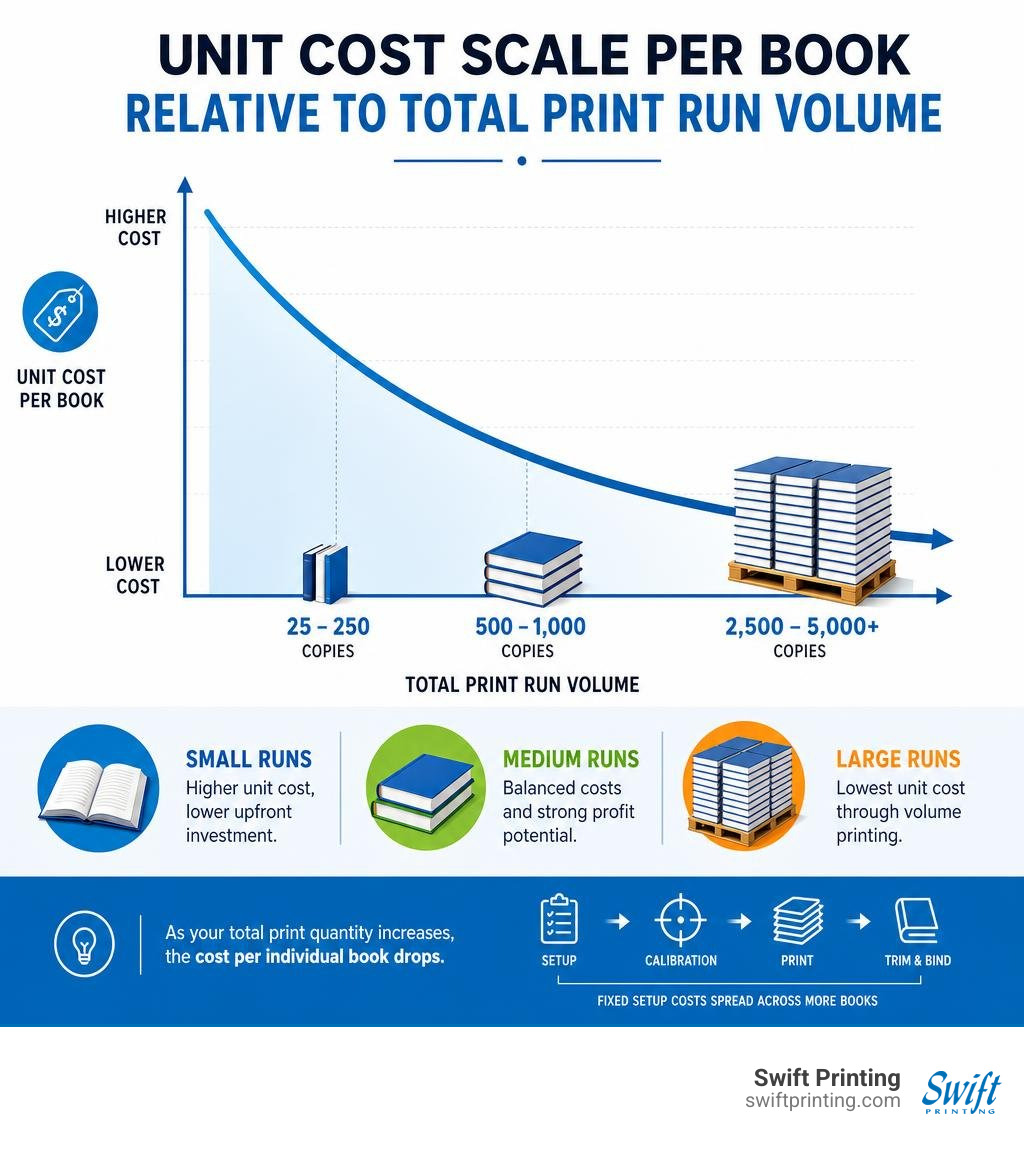
- Small Runs (25 to 250 copies): Higher unit cost per book, but lower total out-of-pocket investment. Perfect for personal projects, local author launches, or specialized niche titles where preserving upfront capital is important.
- Medium Runs (500 to 1,000 copies): Balanced sweet spot. Lowers per-book production expenses enough to leave solid retail profit margins while maintaining manageable inventory storage.
- Large Runs (2,500 to 5,000+ copies): Lowest possible cost per book via volume offset printing. Ideal for established authors with pre-orders, distribution contracts, or active lecture circuits.
Unlike traditional print-on-demand (POD) platforms—which charge steep per-page rates that cut deep into author profits—ordering short-run digital batches gives authors full control over physical quality, paper stock, and profit margins.
How Self-Published Authors Can Keep 100% of Profits
When authors distribute books through large online retail databases or third-party wholesale distributors, middleman commissions, stocking allowances, and platform processing fees can consume up to 40% to 60% of every sale. To maximize revenue, savvy local authors use direct-to-reader sales strategies:
- Direct Author Storefronts: Set up a simple eCommerce storefront or custom author landing page integrated directly with payment processors like PayPal Business or Stripe.
- Local In-Person Event Sales: Sell physical copies directly to readers at Grand Rapids book signings, community farmers' markets, craft expos, and literary conventions, keeping 100% of the cash or card sales.
- Consignment with Local Retailers: Partner directly with independent West Michigan bookstores using straightforward local consignment arrangements rather than national distribution chains.
- Elimination of Listing Fees: By owning your print inventory, you avoid listing fees, mandatory discounting schedules, and account maintenance costs charged by third-party print platforms.
Marketing and Selling Your Self-Published Book
Printing a beautifully finished book is a major milestone, but selling it requires getting the word out. Building a proactive local marketing campaign ensures your printed books find their audience across Grand Rapids and beyond.
- Host Local Author Events: Reach out to community spaces, independent bookshops, coffee houses, and neighborhood branches of the Grand Rapids Public Library to arrange book launch readings, Q&A panels, and signings.
- Leverage Targeted Direct Mail: Connect directly with local readers, literary clubs, library buyers, and regional media outlets. Using Direct Mail Printing Services to distribute eye-catching promotional postcards, author bookmarks, or signed sales sheets is an effective way to generate pre-orders and event attendance.
- Build an Author Email List: Include a clear call-to-action on the final page of your book inviting readers to visit your website, sign up for an author newsletter, download a bonus chapter, or leave a review.
- Engage West Michigan Media: Pitch local feature writers, regional arts magazines, podcasts, and community bloggers with a compelling local angle. Explain why your story matters to West Michigan readers.
Frequently Asked Questions about Printing Books in Grand Rapids
What is the difference between library printing and commercial book printing?
The Grand Rapids Public Library offers free self-service document printing up to 50 pages per week for cardholders. This service uses standard office paper and is intended for single-sheet documents, basic copies, or working manuscript drafts. Commercial book printing utilizes high-grade book papers, precise color calibration, professional cover finishes, and specialized binding machines (such as softcover perfect binding or hardcover casing) to produce retail-ready books suitable for sale.
How many copies should I order for a short-run book printing project?
For most self-published authors launching a new title, starting with a short-run digital order between 100 and 500 copies balances low upfront costs with reasonable unit production prices. If you need a small batch for advance review copies, test readers, or family projects, short-run print batches can start as low as 25 copies.
What file formats are required for custom cover and interior layouts?
Printers require high-resolution, print-ready PDF files. Your manuscript interior should be saved as a single continuous PDF file with embedded fonts and consistent trim margins. The cover design must be submitted as a separate, flat single-page PDF spread that includes the back cover, spine, and front cover—complete with standard 0.125-inch trim bleed and CMYK color formatting.
Conclusion
Bringing a written manuscript to life as a finished, professionally bound book is a rewarding achievement for any author. By combining local municipal resources like the Grand Rapids Public Library for early drafting with experienced commercial printers for final production, local authors can navigate book printing Grand Rapids smoothly while retaining complete creative and financial independence.
At Swift Printing, we have proudly served the Grand Rapids community for generations. As one of only two Certified B Corporations in the entire printing industry worldwide, we prioritize people, community, and our planet alongside full-service print excellence. We use eco-friendly practices, sustainable paper stocks, and efficient production methods to ensure your self-published book looks exceptional while honoring environmental standards.
Whether you're ready to print a 25-copy family history or launching a 5,000-copy regional release, our team is here to guide you through file preparation, paper selection, bindery finishing, and direct promotional mailers. Reach out to Swift Printing today to talk through your book project and request a custom print quote!