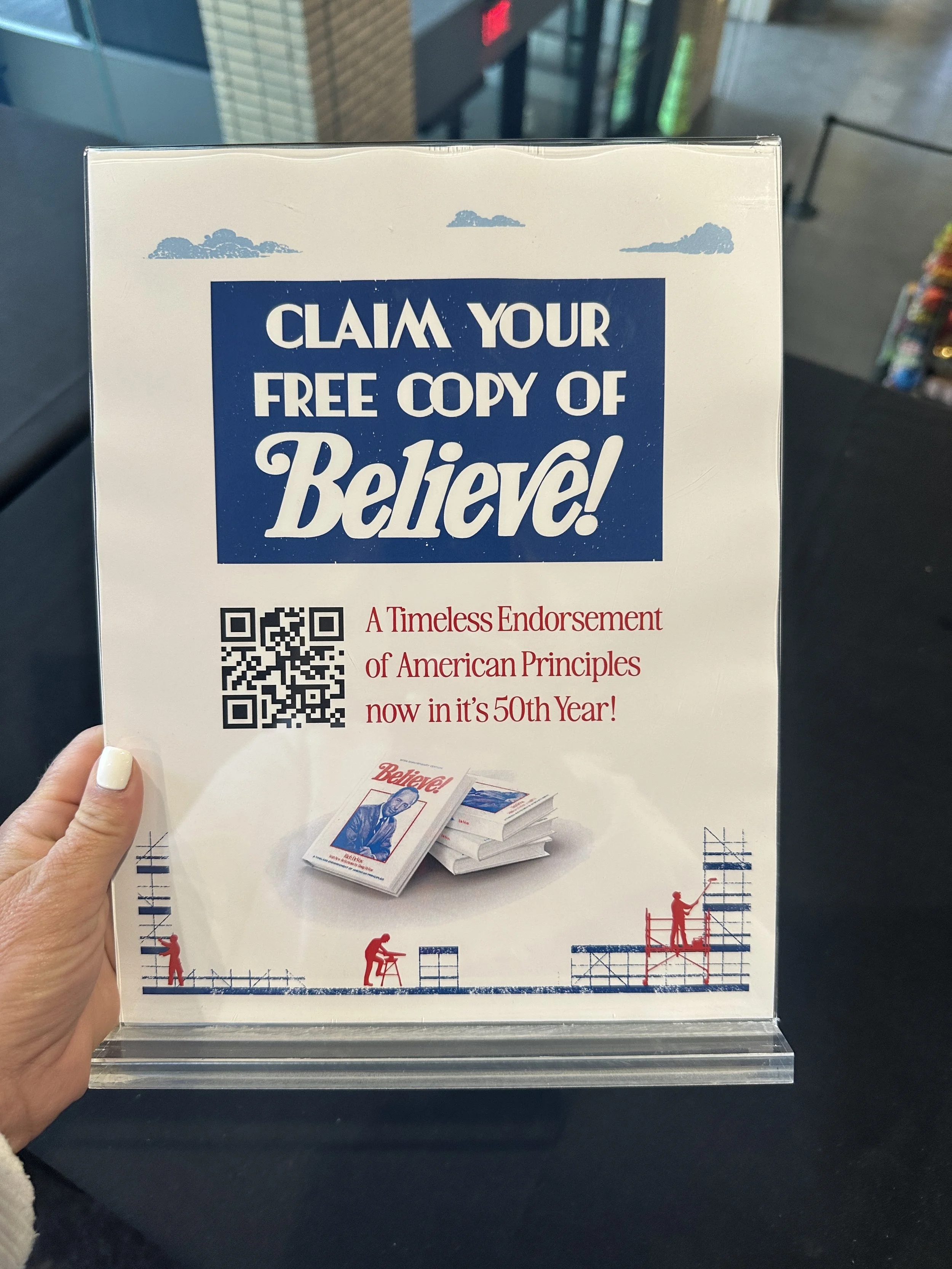
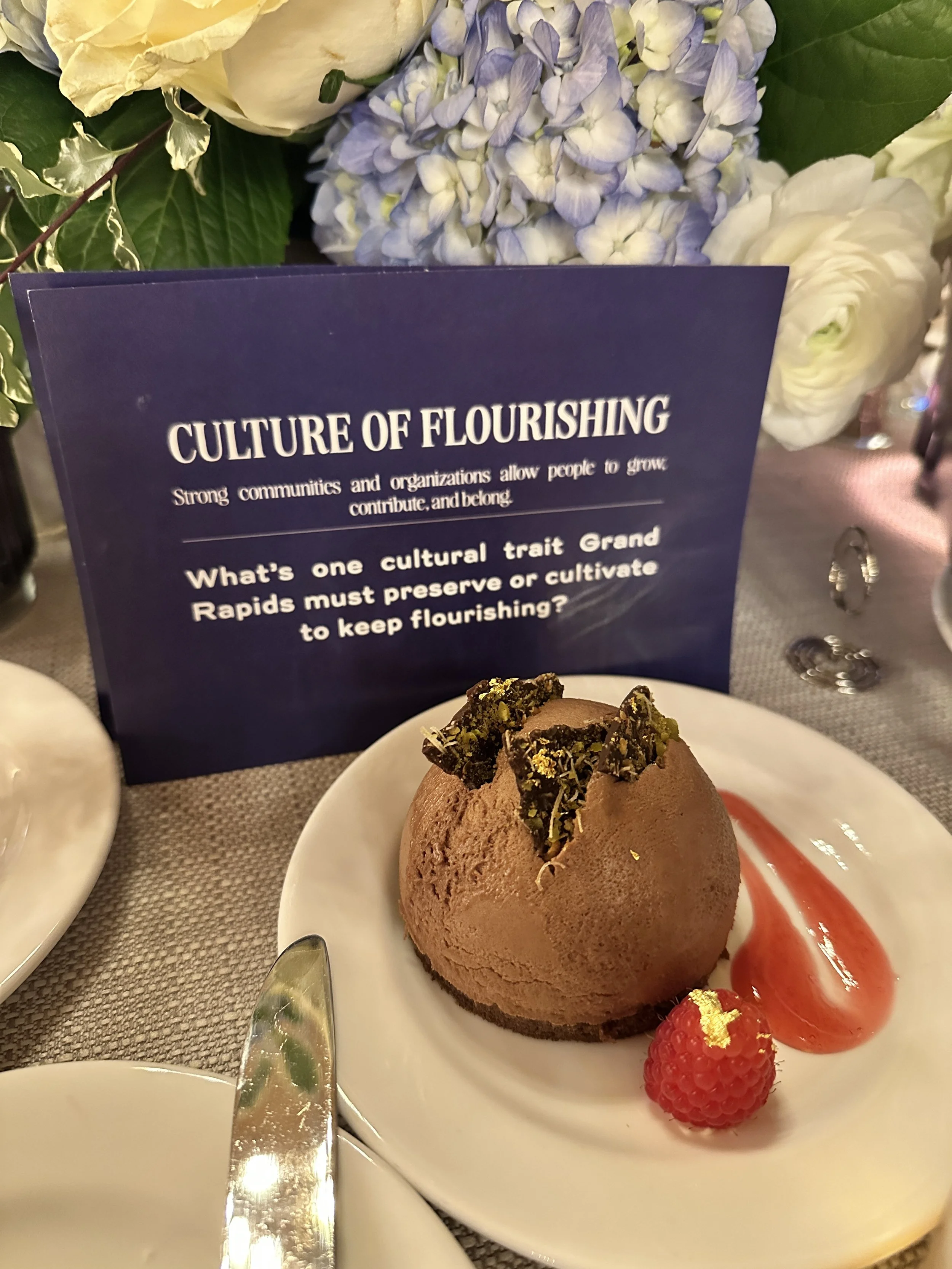
Grand Rapids shows up when it’s about building something together, and that’s exactly what I experienced at Believe! in Our City, a two-day gathering centered on “Unleashing the Spirit of Entrepreneurship.” We met downtown at The Rutledge and Studio Park on September 3–4, and the energy was equal parts practical, hopeful, and very “West Michigan” in the best way, roll up your sleeves, share what works, and invite your neighbor into the work.
Watch my instagram reel on the event here.
This wasn’t a typical conference with jargon and air-quotes; it was a nuts-and-bolts look at how business, faith, education, government, and community leaders can actually uplift the people who create solutions—founders, entrepreneurs, and problem-solvers—so those solutions stick. The theme: free enterprise at its best, powered by people, not top-down plans.
The format
Night one was a dinner conversation at The Rutledge that set the tone: a candid dialogue on principled entrepreneurship, what it looks like when vision meets integrity and daily practice.
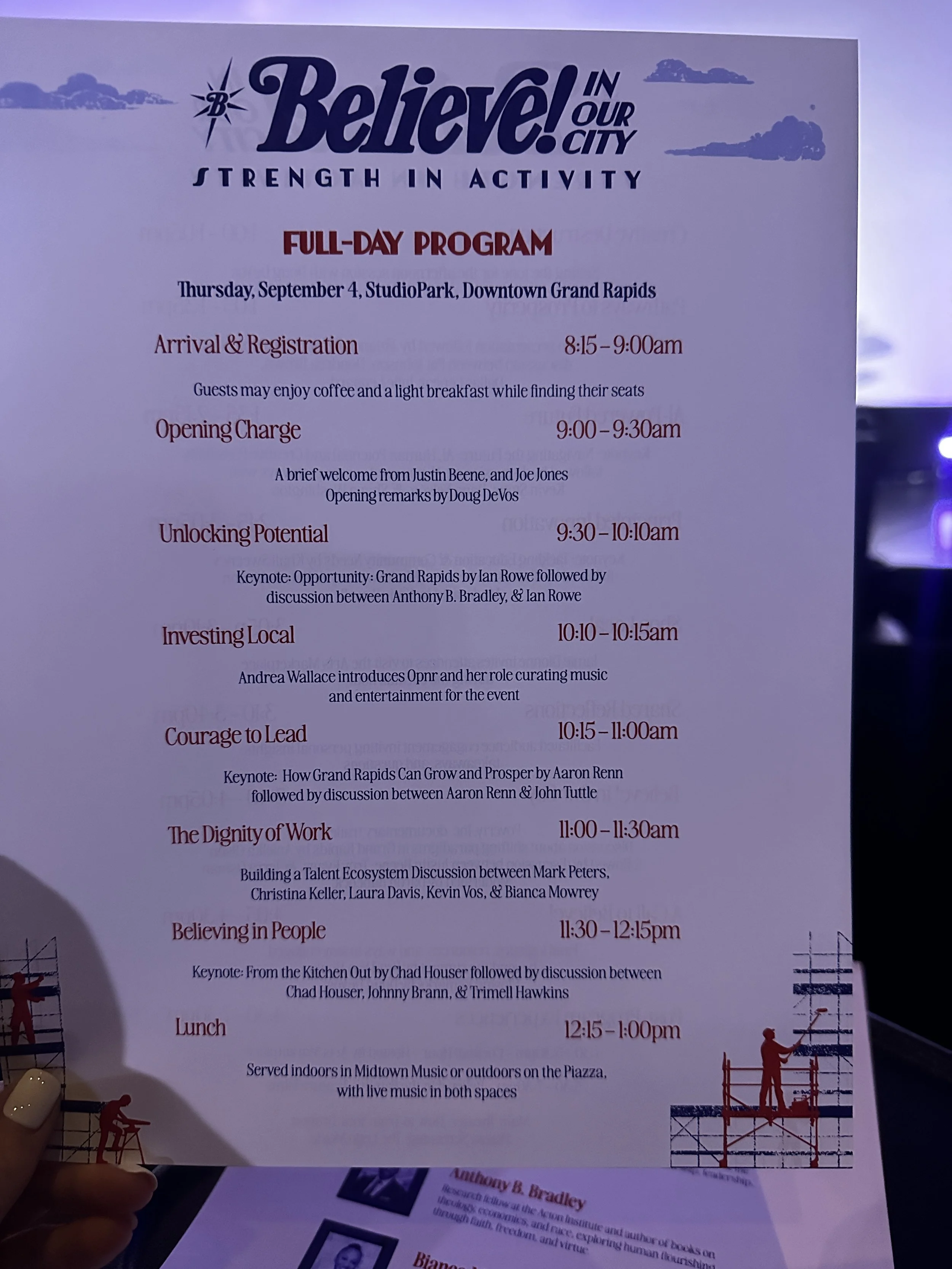
Day two moved to Studio Park for an all-day summit packed with short talks and panels: rebuilding local industry, second-chance enterprises, the future of work, and a closing session that asked us to commit to something tangible when we walked out. Family movie night in the early evening gave the day a softer landing and reminded us who all this work is for.
Who was in the room
The lineup blended national voices with hometown leaders: from urban analysts and educators to manufacturing CEOs, community-transformation founders, and workforce innovators. Among the many: Andreas Widmer(principled entrepreneurship), Chad Houser (Café Momentum), Christina Keller (Cascade Engineering), John Tuttle(Acrisure/NYSE alum), Khali Sweeney (Downtown Boxing Gym), Mark Peters (Butterball Farms), Daron Babcock(Bonton Farms), Ian Rowe (education and mobility), and more.
The event is hosted by Doug DeVos part of a larger Believe! effort that brings civic and business leaders together to talk about the principles that help communities thrive. That through-line—values first, then action—was visible across both days.
My five big takeaways (and how we can apply them more in West Michigan)
1) Principled > performative
“Entrepreneurship” can become a buzzword. The antidote is principle, clarity about what you’re trying to build and for whom. The conversation at The Rutledge emphasized that how you build matters as much as what you build. That means transparent hiring, shared wins, and products that make neighbors’ lives tangibly better.
2) Second chances are strategy, not charity
Hearing from leaders building pathways for justice-involved youth and adults reinforced a simple truth: the talent we need might be on the sidelines. When businesses design on-ramps—real training, real wages, real expectations, everyone wins: families stabilize, employers fill persistent roles, and neighborhoods gain mentors kids can actually see.
3) Workforce is a team sport
Several sessions drove home that education, employers, and community organizations need shared dashboards—not just shared hopes. When we align on what “job-ready” means for a role and measure consistently, the hiring conversation changes from “who’s missing?” to “how do we grow what’s working?”
4) Manufacturing still matters here
Hearing manufacturers talk about retention, frontline resilience, and scaling quality reminded me how much quiet excellence lives in our plants. When a shop improves a process, that win ripples—to suppliers, to crews, and to the family budgets those paychecks support.
5) Storytelling isn’t fluff
I loved how often leaders tied success back to clear, consistent messaging, internally and externally. If your people don’t know the “why,” the “how” starts to wobble. And if customers can’t repeat your value in one sentence, they’ll default to price.
Session snapshots that stuck with me
On principled entrepreneurship: The opening dinner set a reflective tone: integrity isn’t a line item—it’s a process discipline.
On the future of work: Whether AI-enabled career navigation or values-driven corporate cultures, the message was: technology changes fast; purpose and people keep you grounded.
Why this matters to Grand Rapids (and how small businesses can plug in)
We already have the ingredients. West Michigan’s collaborative culture is our superpower. When we connect the dots—city, schools, employers, nonprofits—the wins add up.
Small businesses are the flywheel. Many of the best ideas shared came from boutique firms and neighborhood innovators who tested, refined, and shared what works. That’s us.
Buy local, build local. Every time a business chooses a local partner—printing, prototyping, packaging—they’re shortening supply chains, adding resilience, and keeping dollars in the community.
At Swift Printing, that looks like:
Equipping a nonprofit with direct mail that performs (clean lists, on-brand design, postal smart).
Giving a manufacturer durable labels and visual standards that survive the plant floor and reduce errors.
Producing event kits that make a growing team look like they’ve been doing this for years.
Final word: make it local, make it yours
Walking out of Studio Park, I kept thinking: we don’t have to wait for permission to do the next right thing. Call the partner you’ve been meaning to call. Invite the student who needs a shot. Document a process so the next person can win faster. Tell your story, clearly and often.
And if a project on your desk could use a practical boost, from print strategy to packaging to event materials, I’m here for it. Grand Rapids is at its best when we create together. Let’s unleash a little more of that spirit this fall.