How to Format an Address on a Package
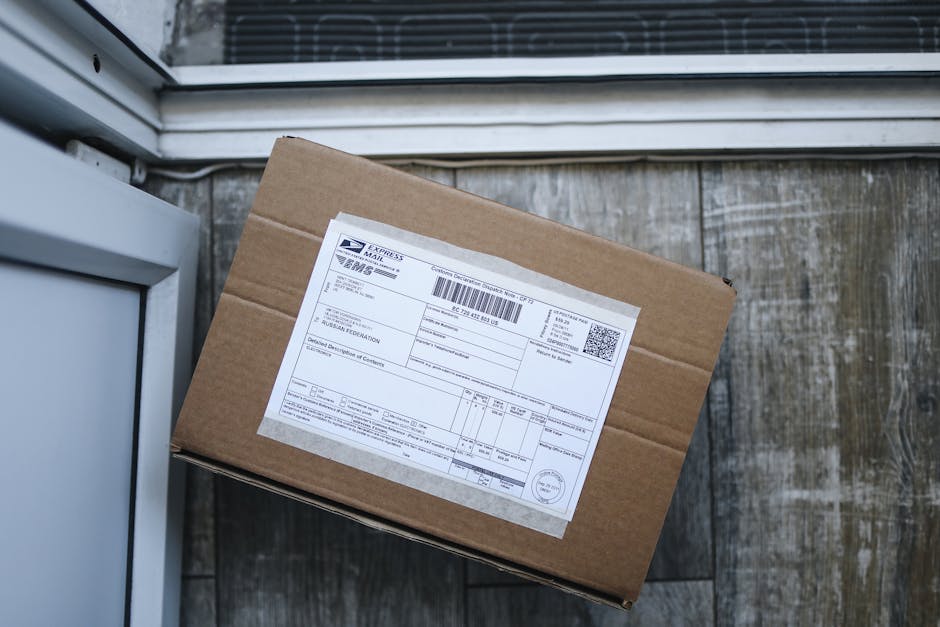
The basic address on package format for a U.S. shipment has three lines: recipient name, street address with any apartment or suite number, and city, two-letter state abbreviation, and ZIP Code. Put the delivery address on the largest, flattest side of the box, and place your return address in the upper left. Keep both clear of seams and old labels.
I’m Jessica Gutowski-Slaydon, president of Swift Printing in Grand Rapids. My work with direct mail, envelopes, and labels has shown me how much a clear address on package format matters when preparing materials to mail.
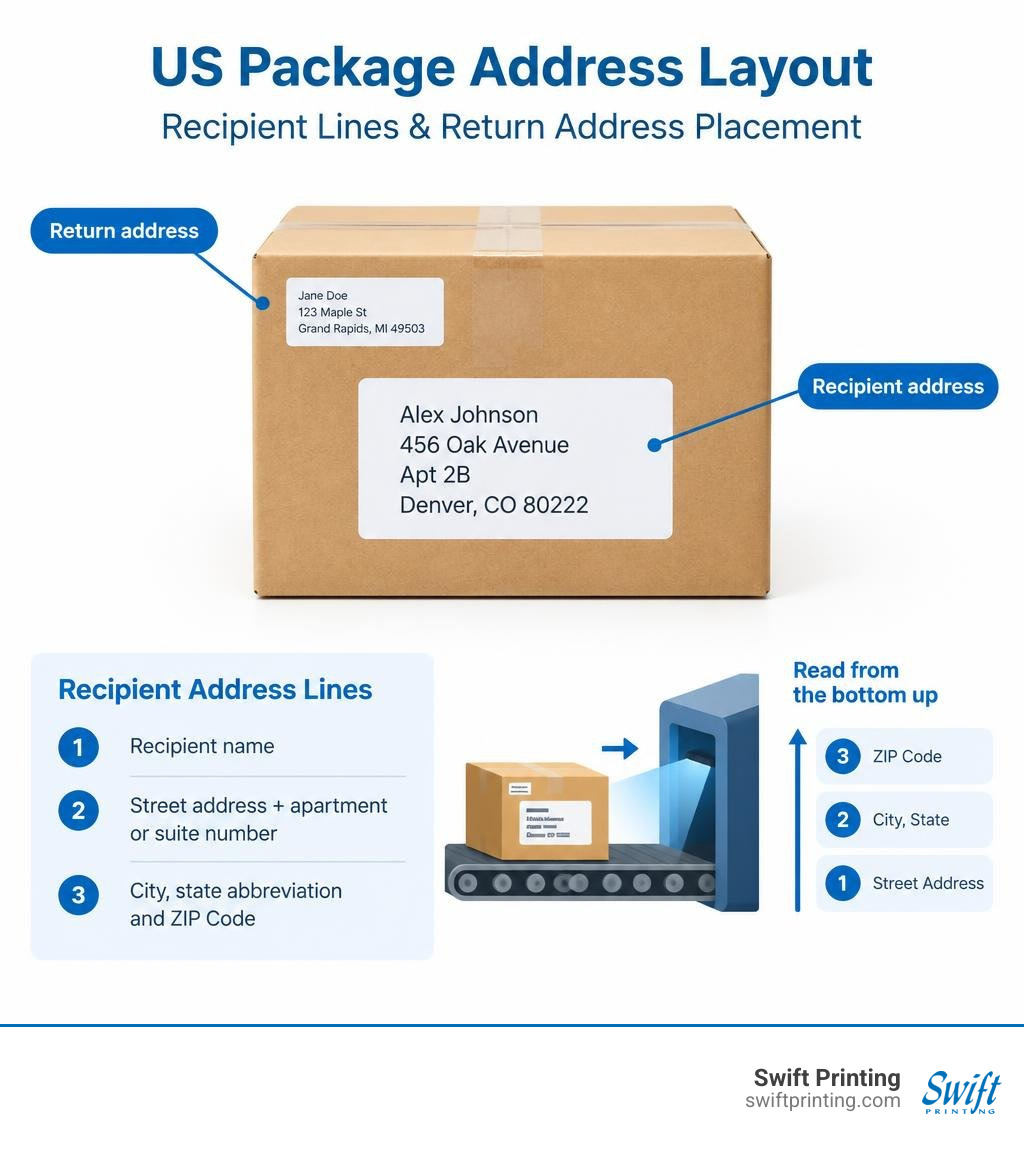
Almost 25% of all mailpieces processed across the country encounter an issue caused by an address error. A missing apartment identifier, an inverted numeral, or an unreadable directional indicator can send an important shipment into a manual sorting loop. Modern logistics networks rely heavily on high-speed Optical Character Recognition (OCR) systems. These automated cameras read address blocks from the bottom up—evaluating the city, state, and ZIP Code before reading the specific street delivery line. Ensuring your address layout aligns perfectly with machine-reading specifications keeps your parcels moving at top speed.
Standard Address on Package Format for Domestic Shipments
When sending materials across town or across the nation, following standard address formatting standards guarantees that both sorting cameras and postal carriers can process parcels without hesitation. The primary rules for domestic shipping labels involve consistent line sequencing, strict left-alignment, standard postal abbreviations, and minimal punctuation.
Sorting machinery reads text blocks cleanly when all lines share a flush left margin. While social stationery might use centered calligraphy, commercial parcels require clean, structured rows. Punctuation marks such as periods after abbreviations or commas between city and state names should be eliminated entirely on machine-read labels, as stray dots can be misinterpreted by scanning sensors as alphanumeric characters.
Recipient and Delivery Line Breakdown
A properly assembled domestic address block should follow a distinct top-to-bottom hierarchy:
- Line 1: Recipient Name / Attention Line: Include the full name of the individual recipient. If sending to a specific professional within a firm, you can prefix the line with "ATTN:" or list their professional title.
- Line 2: Business or Organization Name: If applicable, state the company, medical practice, or agency name on the second line.
- Line 3: Delivery Address Line: This line contains the street number, pre-directional (such as N, S, E, W), street name, street suffix (AVE, ST, BLVD, RD), and post-directional, followed by secondary unit designators (such as STE, APT, or RM).
- Line 4: City, State, and ZIP Code: Write the full city name, followed by a single space, the standard two-letter state abbreviation, two spaces, and the complete ZIP Code or ZIP+4 code.
Directional indicators are vital. In many cities—including Grand Rapids, Lansing, and Kalamazoo—the difference between "100 Division Ave N" and "100 Division Ave S" represents entirely separate physical locations miles apart. Omitting directionals is one of the most common causes of misdirected shipments. Whenever possible, run your mailing lists through an official ZIP+4 lookup database. The extra four digits narrow the delivery point down to a specific side of a street, a specific office floor, or an individual high-volume department.
Mastering the Address on Package Format for Military and Diplomatic Mail
Shipping packages to military personnel or overseas diplomatic posts requires a special layout. These parcels enter the domestic postal stream before transferring to military handling, following standard domestic procedures rather than international customs routing.
When formatting an address for an Army Post Office (APO), Fleet Post Office (FPO), or Diplomatic Post Office (DPO), do not include civilian city or foreign country names. Adding a foreign city or country name will cause the parcel to enter foreign international customs instead of the military postal system, resulting in severe delays.
The components include:
- Line 1: Full name, including military rank or title.
- Line 2: The assigned unit and box number.
- Line 3: The designated military postal code (APO, FPO, or DPO), followed by the two-letter armed forces region code:
- AA: Armed Forces Americas
- AE: Armed Forces Europe, Middle East, Africa, and Canada
- AP: Armed Forces Pacific
- Line 4: The standard 9-digit ZIP+4 military code.
Addressing U.S. Territories: Puerto Rico and U.S. Virgin Islands
Shipments traveling to U.S. territories such as Puerto Rico (PR), Guam (GU), and the U.S. Virgin Islands (VI) use domestic addressing conventions and standard domestic shipping services. However, Puerto Rico addresses often feature an additional geographic component known as an urbanization code.
In Puerto Rico, identical street names and house numbers frequently exist within the same ZIP Code area. To resolve this, addresses use an urbanization name (prefixed by "URB") to identify the specific neighborhood development.
When addressing packages to Puerto Rico:
- Place the urbanization indicator on the line directly above the street address line.
- Use standard Spanish street prefixes like "CALLE" when listed in the physical address.
- Never write "Puerto Rico" as a country name on the bottom line; always use the two-letter state abbreviation "PR" on the city and ZIP line.
Placement and Typography Rules for Machine-Readable Package Labels
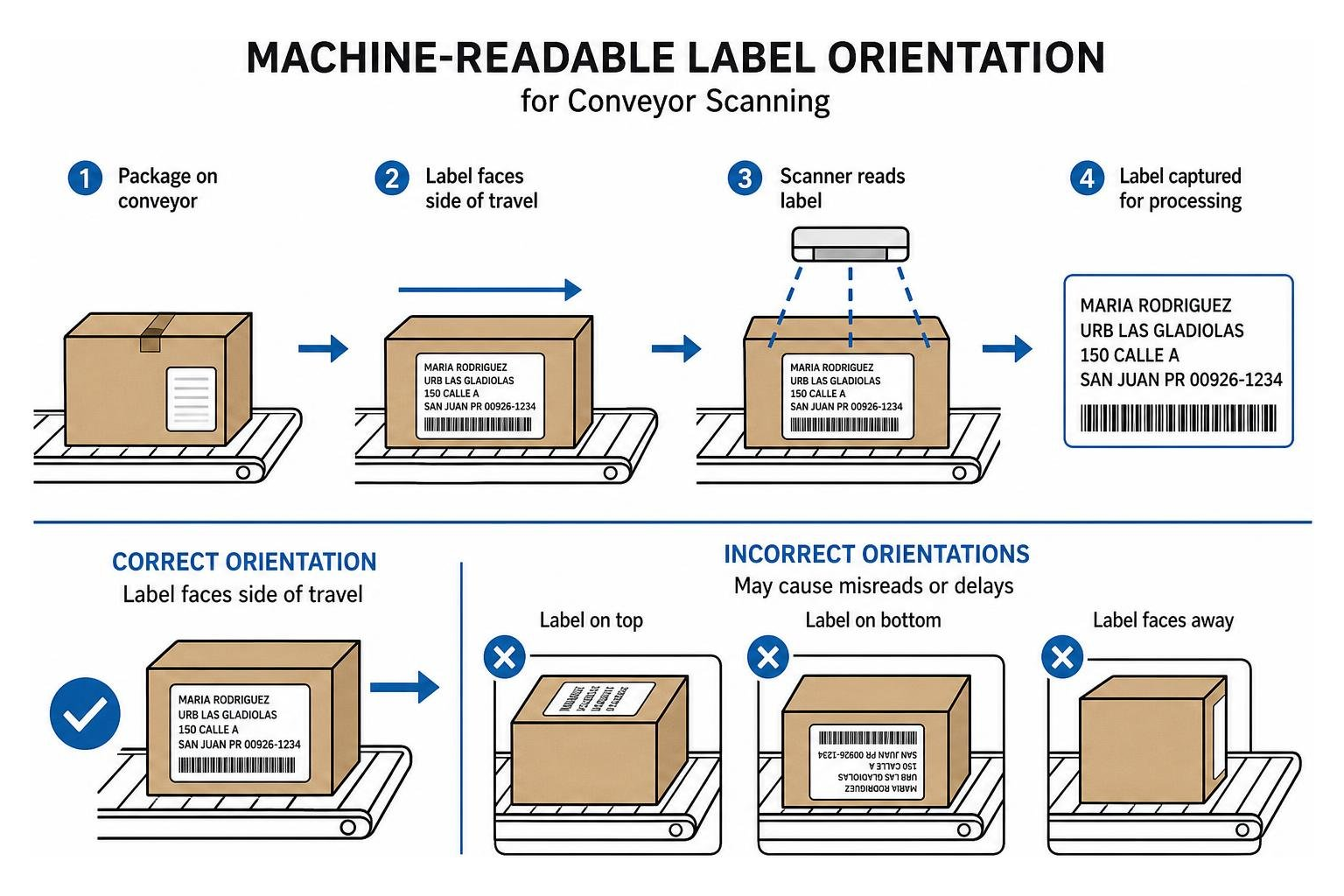
Logistics hubs process hundreds of thousands of packages every single hour. To keep your items moving smoothly through conveyor networks, your parcel label typography and physical placement must meet high machine-readability standards.
Typography and Layout Rules for an Address on Package Format
Automated sorting machines use OCR sensors calibrated to interpret crisp, clean characters. Highly stylized cursive scripts, serif fonts with delicate hairline strokes, and overly condensed typefaces can cause machine read errors, kicking parcels into manual processing streams.
- Typeface Selection: Use simple sans-serif fonts such as Arial, Helvetica, Calibri, or Roboto.
- Font Sizing: Keep font sizes between 8-point and 12-point for standard parcel labels (postal machines accept fonts ranging from 7-point to 17-point, but 10-point to 12-point is optimal for optical scanners).
- Capitalization: Use uppercase block lettering across all recipient address lines.
- Ink and Background Contrast: Print dense, dark black ink directly on a white, non-glossy, light-colored label background. High optical contrast is essential for rapid digital scanning.
| Carrier | Recommended Recipient Font | Minimum Margin Clearance | Preferred Postal Code Format |
|---|---|---|---|
| USPS | Uppercase Sans-Serif (10–12 pt) | 0.25 inch from edges | 5-Digit ZIP or ZIP+4 |
| UPS | Clear Block Type (8–12 pt) | 0.50 inch from parcel borders | Full 5-Digit or 9-Digit ZIP |
| Canada Post | Uppercase Sans-Serif (10–12 pt) | 15 mm from margins | A1A 1A1 (Space in Center) |
| Royal Mail | Uppercase Clean Font (10–14 pt) | Flush Left, bottom-left zone | Clean UK Postcode with Space |
Exact Label Positioning on Boxes and Parcels
Where you position a label on a cardboard carton or rigid mailer is just as important as the text printed on it.
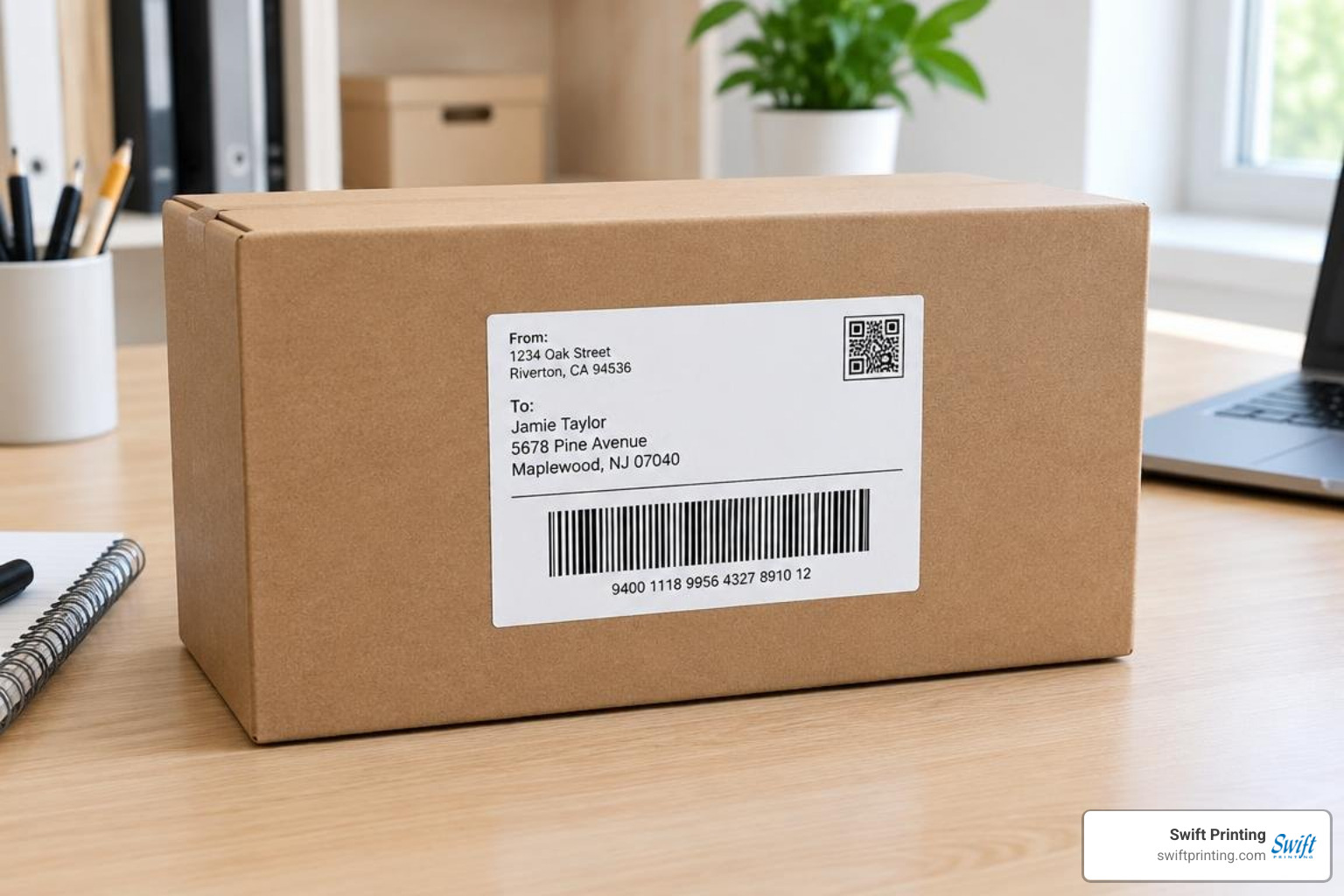
- Primary Delivery Surface: Affix the shipping label flat on the largest face of the parcel. The text must read parallel to the longest edge of the box.
- Seams and Edges: Never place an address label over a box seam, flap junction, or closure tape. If the tape creases or splits during transit, scanning cameras cannot read the underlying barcode or street address.
- Return Address Placement: Position the complete sender return address in the upper-left corner of the primary label face, keeping at least 1/4 inch of clear space from the edge of the label or carton.
- Clearance Zones: Ensure the postage area or carrier barcode sits securely in the upper-right corner or bottom portion of the shipping label, leaving a minimum margin clearance around all scanning bars.
International Package Addressing Standards by Country
International shipping requires adherence to universal mailing frameworks alongside specific destination-country conventions. The Universal Postal Union (UPU) coordinates these global standards, requiring the destination country name to be printed in English using all capital letters on the very last line of the address block.
For senders shipping from the United States, your return address must also explicitly feature "USA" on its final line. Non-document international parcels require appropriate customs declarations (such as CN22 or CN23 forms, or integrated electronic customs barcodes) securely attached to the outside of the box.
European Guidelines: Germany and the Netherlands
European postal networks employ distinct line sequences that differ from U.S. standards.
In Germany, address formatting follows the national DIN 5008 standard. Unlike American conventions where house numbers precede the street name, German addresses place the street name first, followed by the building number. Furthermore, the five-digit German postal code is positioned immediately before the destination city name.
In the Netherlands, postal operator PostNL requires clean margins and strict line structures as outlined in their General Conditions for Designing Mail Items 2023. Dutch addresses feature a four-digit numeric postal code followed by a space and two uppercase letters, placed right before the city. Senders must leave at least a 10 mm buffer zone around the address field.
Commonwealth Formats: Canada Post and Royal Mail
Navigating shipments to Commonwealth nations involves specific spacing rules and structural conventions detailed by references like How to Write an Address Correctly | YourDictionary.
Canada Post requires uppercase block formatting with precise spacing rules. Apartment or suite numbers should be linked to the street number using a hyphen, or placed on the line above. Write the municipality, province abbreviation, and postal code on the same line, with one space separating the city and province, and two spaces separating the province and postal code. Never use the "#" symbol.
For shipments traveling to the United Kingdom, Royal Mail sorting equipment reads post towns and postcodes in all capital letters. Interestingly, Royal Mail sorting algorithms do not require county names because the UK postcode identifies the exact geographic delivery route.
Best Practices to Prevent Package Delivery Failures
Reliable parcel delivery comes down to preparation. Reviewing mailers best practices & ways to keep the USPS happy helps professional shippers eliminate avoidable delivery errors and avoid unexpected handling surcharges.
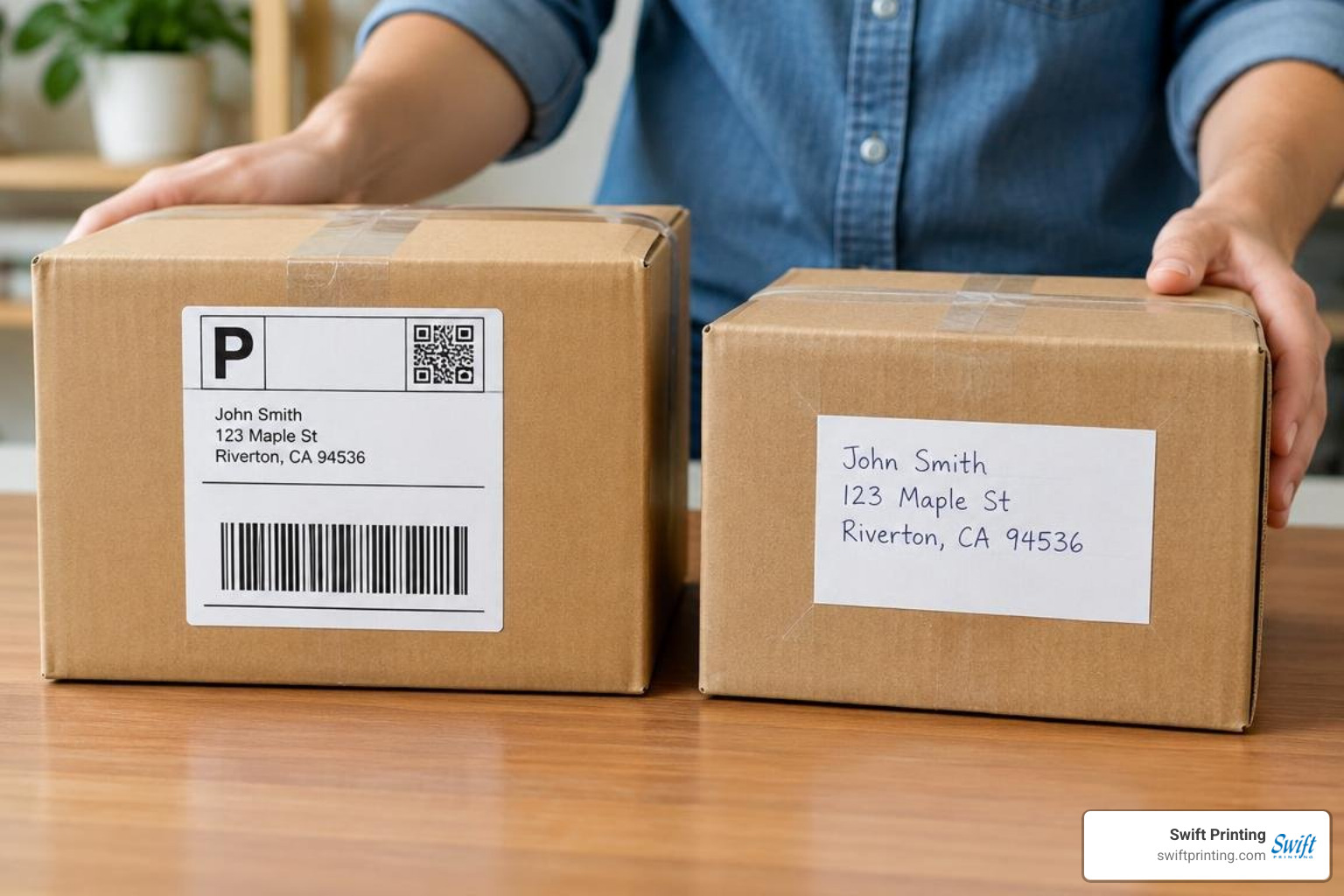
Handwritten Addresses vs. Printed Thermal Labels
While writing an address by hand with a permanent marker might work for an occasional personal parcel, commercial shipments benefit significantly from printed labels.
Handwritten ink can smudge in rainy conditions, and variations in penmanship can confuse automated sorting cameras. If you must hand-address a parcel:
- Use a waterproof, permanent black ink pen.
- Print clearly using block capital letters.
- Do not use decorative flourishes, script lettering, or light gel inks.
For medical clinics, legal offices, and corporate operations, direct thermal or thermal-transfer printed labels offer clear, high-contrast barcodes and scannable text that resist moisture, friction, and sorting machine wear.
Package Preparation, Weight Limits, and Interior Packing Slips
Proper package construction ensures that an addressed carton arrives at its destination in pristine condition:
- Adhere to Carrier Constraints: The domestic weight limit for standard USPS parcels is 70 pounds. The combined length and girth (girth is the distance around the thickest part perpendicular to the length) cannot exceed 130 inches for standard ground services, or 108 inches for Priority Mail.
- Enclose an Interior Packing Slip: Always place a duplicate address slip or business packing slip inside the box right before taping it closed. If an exterior shipping label is torn, scuffed, or damaged on an automated conveyor line, postal recovery teams can open the parcel, locate the interior slip, and route the package safely.
- Obliterate Old Barcodes on Reused Boxes: Reusing clean cardboard boxes is an environmentally friendly practice, but leftover routing labels and old 2D barcodes will trigger misrouting errors. Use a dark permanent marker or heavy packing tape to completely cover or remove prior shipping labels.
- Use Heavy-Duty Shipping Tape: Seal package flaps using professional 2-inch wide pressure-sensitive plastic tape or water-activated reinforced paper tape. Avoid masking tape, duct tape, cellophane tape, or household string, which easily snag in automated conveyor rollers.
Frequently Asked Questions About Addressing Packages
Where should the return address be placed on a package?
Place the complete return address in the upper-left corner on the same face as the delivery address label. Maintain at least a 1/4-inch margin from the top and left edges of the box. Including a complete return address ensures that if an unforeseen event prevents delivery, carrier recovery systems can promptly route the parcel back to your facility.
How should apartment, suite, or unit numbers be formatted on a shipping label?
Secondary unit indicators—such as STE, APT, BLDG, FL, or RM—should ideally appear at the end of the primary street delivery line, separated by a single space (e.g., "450 MAIN ST STE 200"). If the combination of the street address and unit title exceeds carrier character limits, place the suite or unit number on the line immediately above the street delivery address, never below it. Do not use the pound sign (#) as a substitute for standard unit designators.
What size and font are recommended for package address labels?
A sans-serif font between 8-point and 12-point size (such as Arial, Calibri, or Helvetica) is recommended for parcel address labels. Use uppercase lettering, dark black ink, and a plain, light-colored label background to maximize contrast for high-speed OCR optical sorting equipment.
Conclusion
A well-formatted address label ensures your packages move through carrier sorting facilities and arrive on time. By maintaining structured line sequences, omitting punctuation, verifying ZIP+4 data, and adhering to placement margins, professional service providers and corporate teams can eliminate transit delays across all shipping channels.
At Swift Printing, we are a high-end print shop setting the standard for printing in the boutique business. From our commercial print facility in Grand Rapids, Michigan, we partner with law firms, medical clinics, consulting agencies, and government offices across West Michigan—including Ada, Belmont, Rockford, Lansing, and Kalamazoo. Whether you need custom branded packaging, direct thermal labels, or guidance on formatting a spreadsheet for a mailing, our team delivers the personalized service, technical precision, and reliable quality your business deserves.