A Pulaski Days Tradition: Perogi-Making Extravaganza

Every year, as Pulaski Days approach in Grand Rapids, my neighbors and I gather to celebrate with a time-honored tradition – a perogi-making party. This year marked our third such gathering, and each time, we've grown a little better at perfecting the process.
Our inaugural year was a frenzy of dough rolling, stuffing, sealing, boiling, and sautéing that lasted over eight hours. We simply couldn't stop making perogies. The result? A freezer bursting with these delectable treats. But as much as we adored the abundance of perogies that first year, we realized it was time to set some limits.
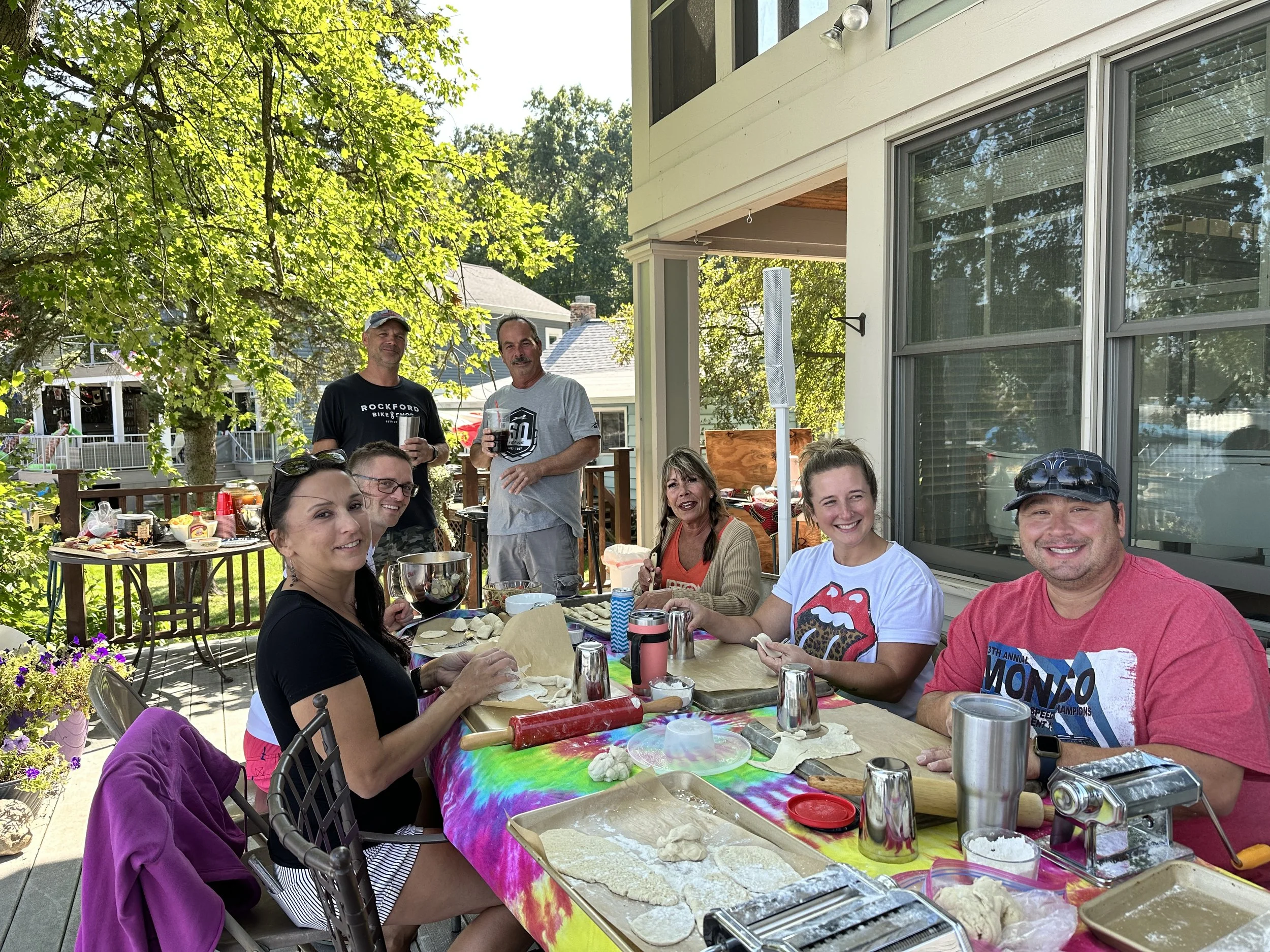
These are my adorable neighbors! Jodi, Walt, Brian, Andy, Sherry, Rachel & Justin. (Yup, Walt & I are neighbors too.)
A Celebration of Heritage with a Modern Twist
I'm a third-generation American, proud of my Polish heritage. While some purists might argue we're not making them exactly right, we're still honoring our culture with a unique twist, bringing together our melting pot of influences.
The Evolution of a Tradition
The tradition of perogi-making parties began 15 years ago when my friend Kolleen Schmidt-Chulski shared her family's recipe. While her recipe was fantastic, I found myself leaning toward a dough that was a hybrid between pot stickers and traditional Polish perogies. Over time, we experimented with different dough variations and fillings. Our quest for the perfect perogi led to some unforgettable moments, like the time I had our entire family and friends making them in a hotel room for Easter – a bit too intense even for us.
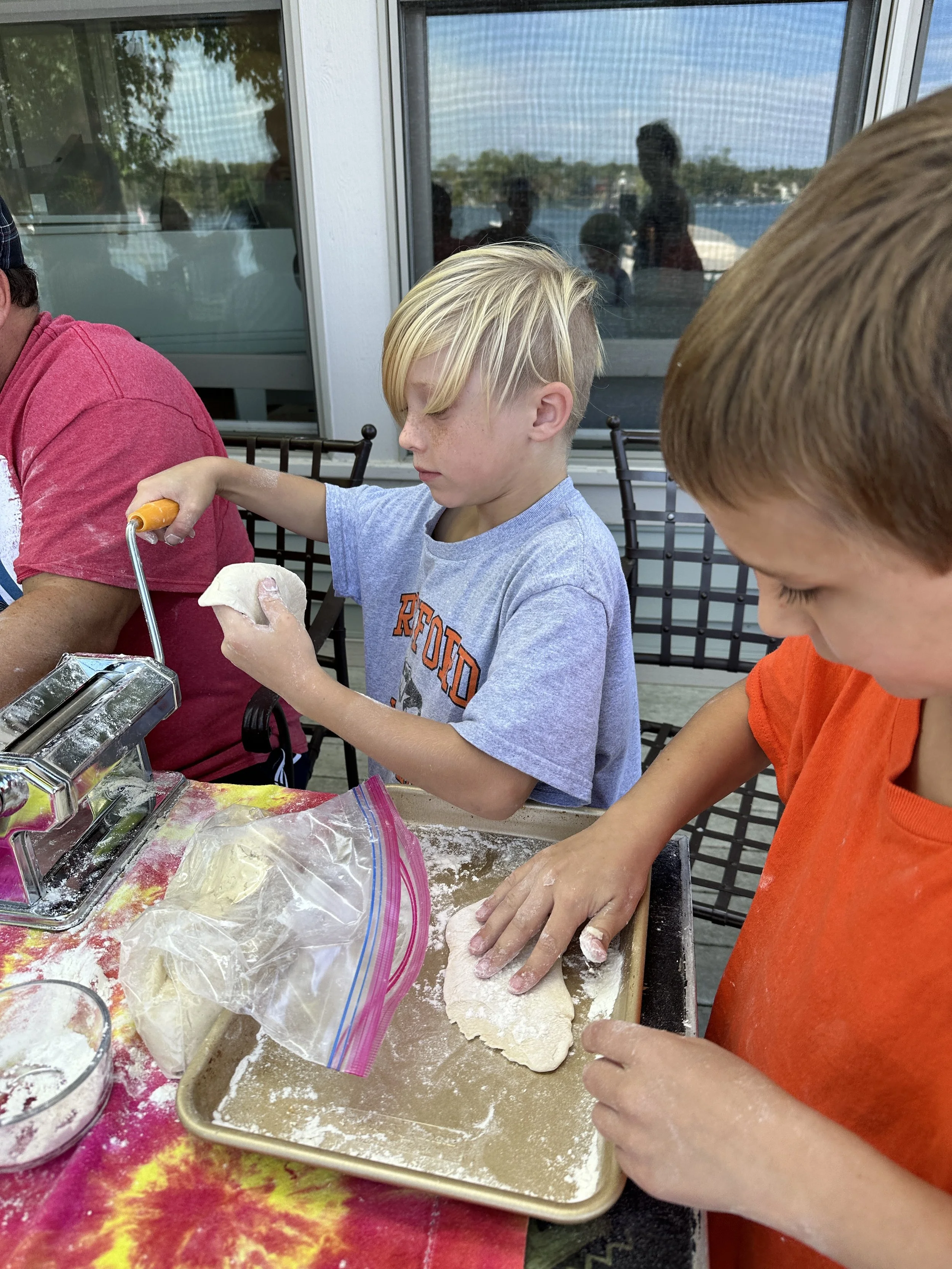
That’s my son Dax on the pasta maker.
The Perfect Dough Recipe
Here's my favorite dough recipe, by Natasha's Kitchen:
Dough Ingredients:
1 cup warm water
1/4 cup whole milk
2 Tbsp sour cream
1 large egg
1 tsp salt
4 cups all-purpose flour
Instructions:
In the bowl of a stand mixer (or large mixing bowl if mixing by hand), whisk together 1 cup warm water, 1/4 cup milk, 2 Tbsp sour cream, 1 egg, and 1 tsp salt until blended.
Using the dough hook attachment, add 2 cups of flour and mix on speed 2 until incorporated.
Add the remaining flour 1/2 cup at a time, letting it incorporate before adding more.
Add the last bit of flour 1 Tbsp at a time just until the dough no longer sticks to the sides of the bowl.
Knead on speed 2 or by hand for 10 minutes.
Perfecting the Fillings
Over the years, we've learned that classic fillings work best to ensure perogies turn out perfectly. Potato and cheddar, cabbage and bacon, and farmer's cheese are our top favorites. If you want to experiment, keep in mind that the filling needs to remain solid when boiled to avoid leakage.
Potato and Cheddar Filling:
2 lbs rustic potatoes
Cheddar cheese
Miracle blend seasoning
Instructions:
Boil 2 pounds of potatoes with skins on until they mash easily, but not completely. Let them cool.
Mash the potatoes, leaving them slightly chunky.
Add a cup or two of cheddar cheese and 2-3 tablespoons of miracle blend seasoning.
Taste and adjust the seasoning, adding a bit more than usual because the boiling process can dilute the flavors.
Cabbage and Bacon Filling:
Bacon
Onion
Cabbage (preferably red)
Beef and chicken bouillon cubes
Butter
Salt and pepper
Instructions:
Finely chop 4-5 pieces of bacon and place them in a cast iron pan or Dutch oven on the stove.
Dice an onion and add it to the bacon once it's nearly cooked.
Shred the cabbage using a mandolin and add it directly to the pot.
Let it reduce down and add the other ingredients.
Farmer's Cheese Filling:
You can typically find this cheese at a local market.
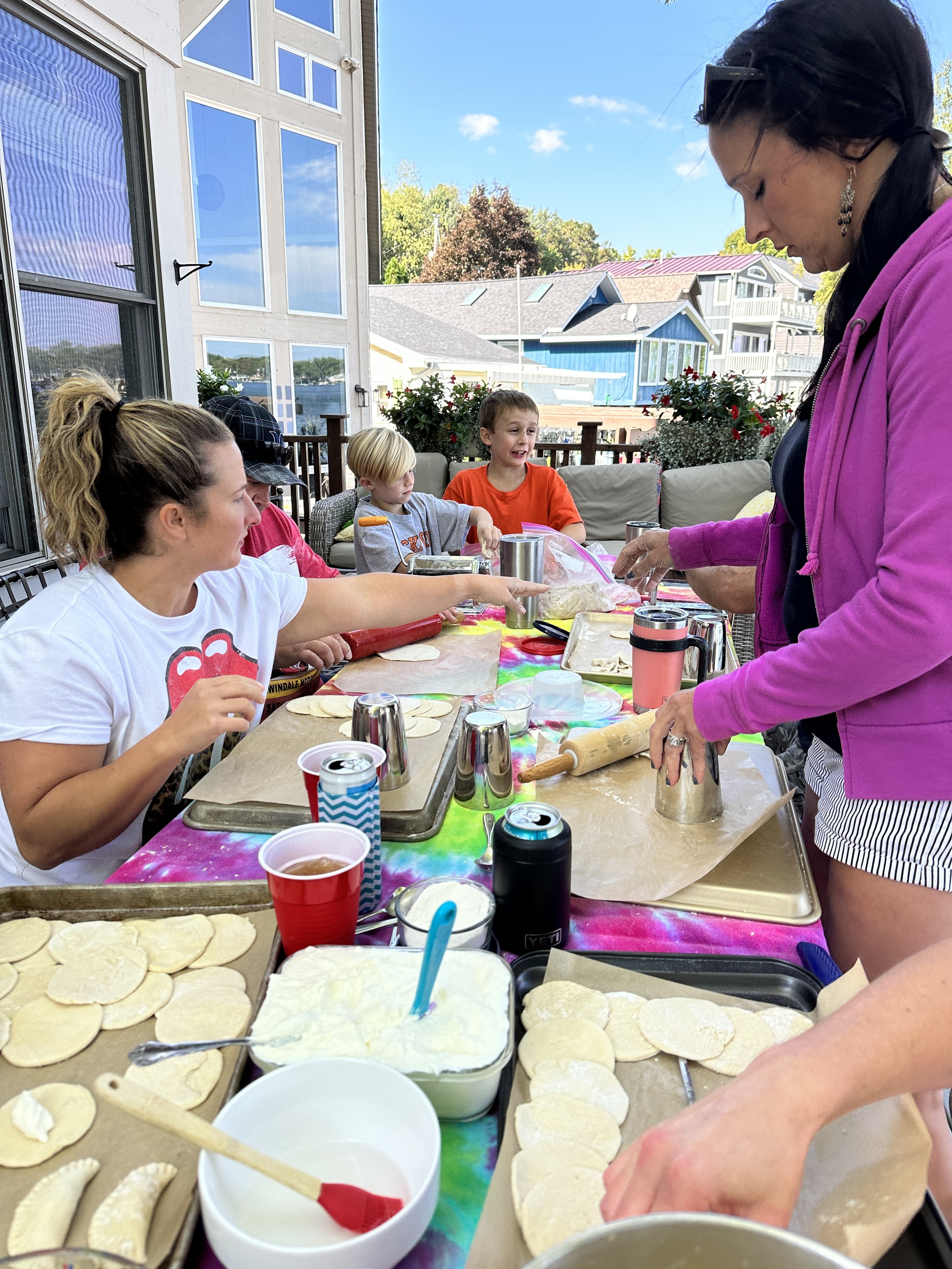
Assembly Line
Now that you have all your ingredients ready, set up an assembly line. Feed the dough through a pasta maker, pass it to the next person for rolling and cutting, We use silver cocktail mixing cup for our circle cutters, then to the fillers and sealers (ensure they seal them tightly). Finally, line the perogies on a baking pan.
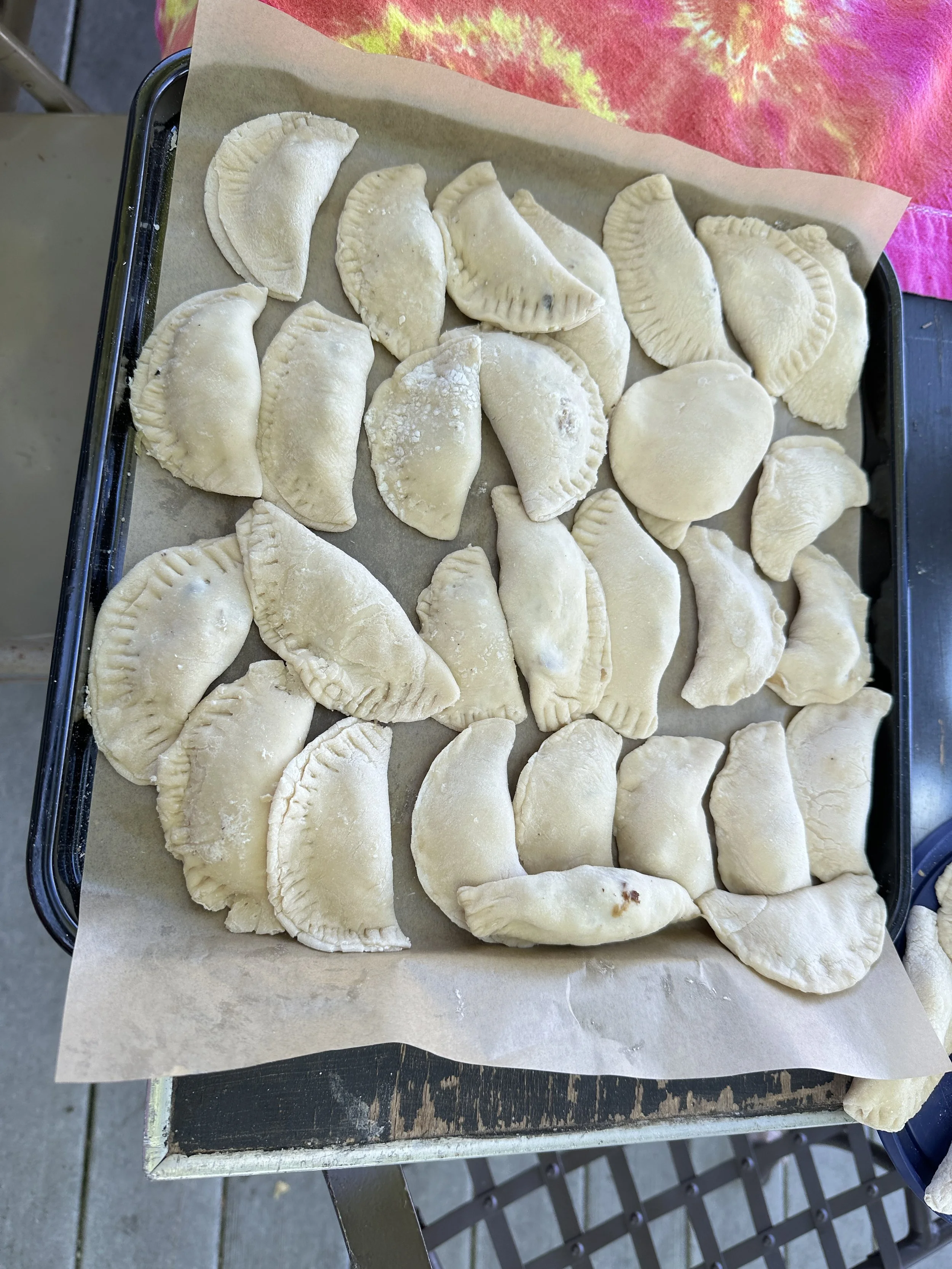
They don’t need to be pretty they just need to be sealed up properly.
Boiling and Sautéing
Boil the perogies in a large pot of water until they rise to the top, indicating they are done. Remove them carefully, dry them on paper towels, and optionally, spray them with oil.
The perogies you plan to eat right away should be sautéed with onions, butter, and oil. We recommend using a cast-iron skillet for this step, but that's a matter of preference.
For our party, we set up an outdoor double burner to keep the festivities outside.
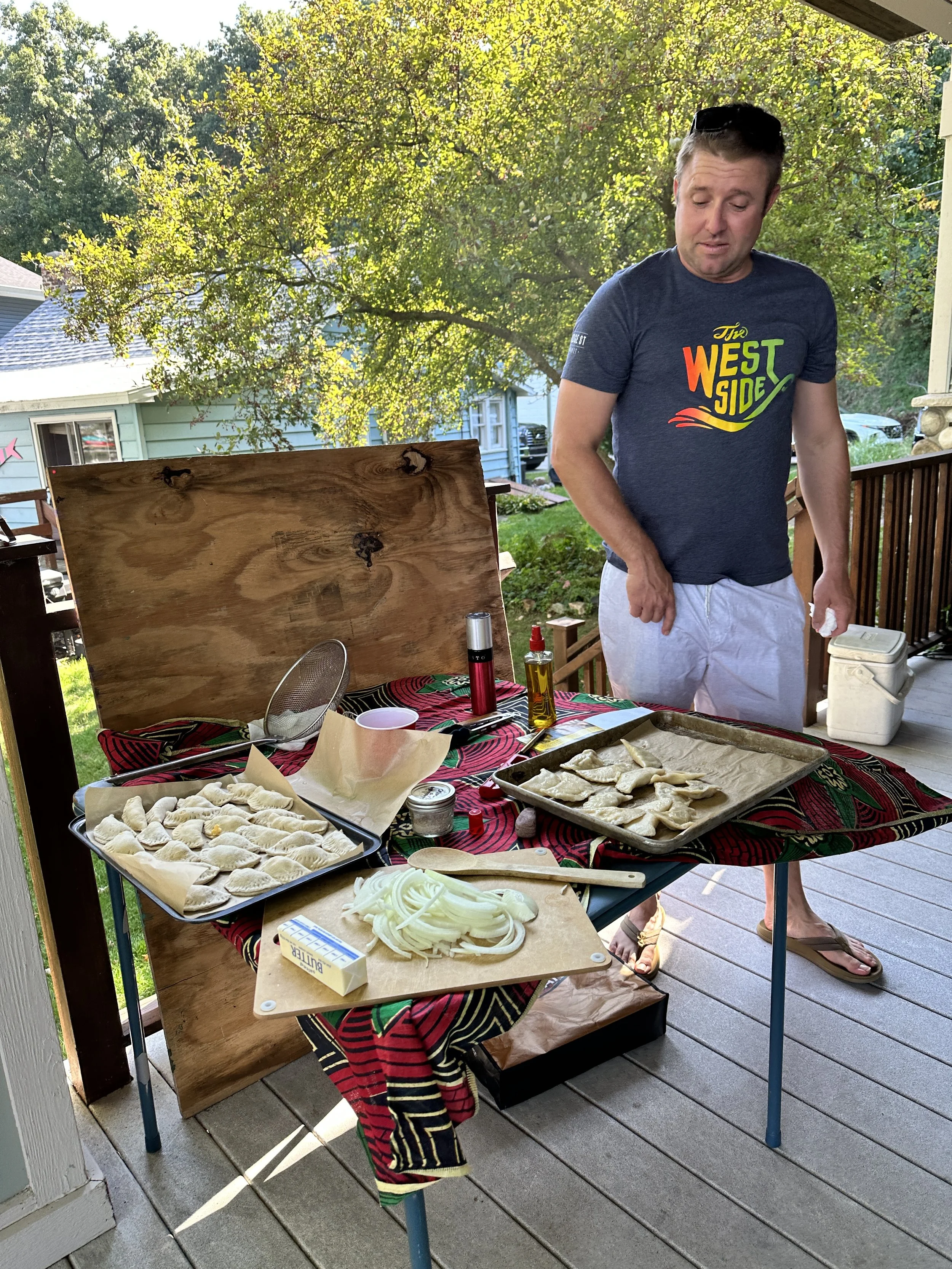
For perogies you plan to save, refrigerate them if you intend to eat them within a couple of days. If you're freezing them, do so on a pan separately. Once frozen, place them in an airtight container. Freezing them separately prevents them from sticking together and falling apart when you’re ready to eat them. No need to defrost, just pop them in the skillet.
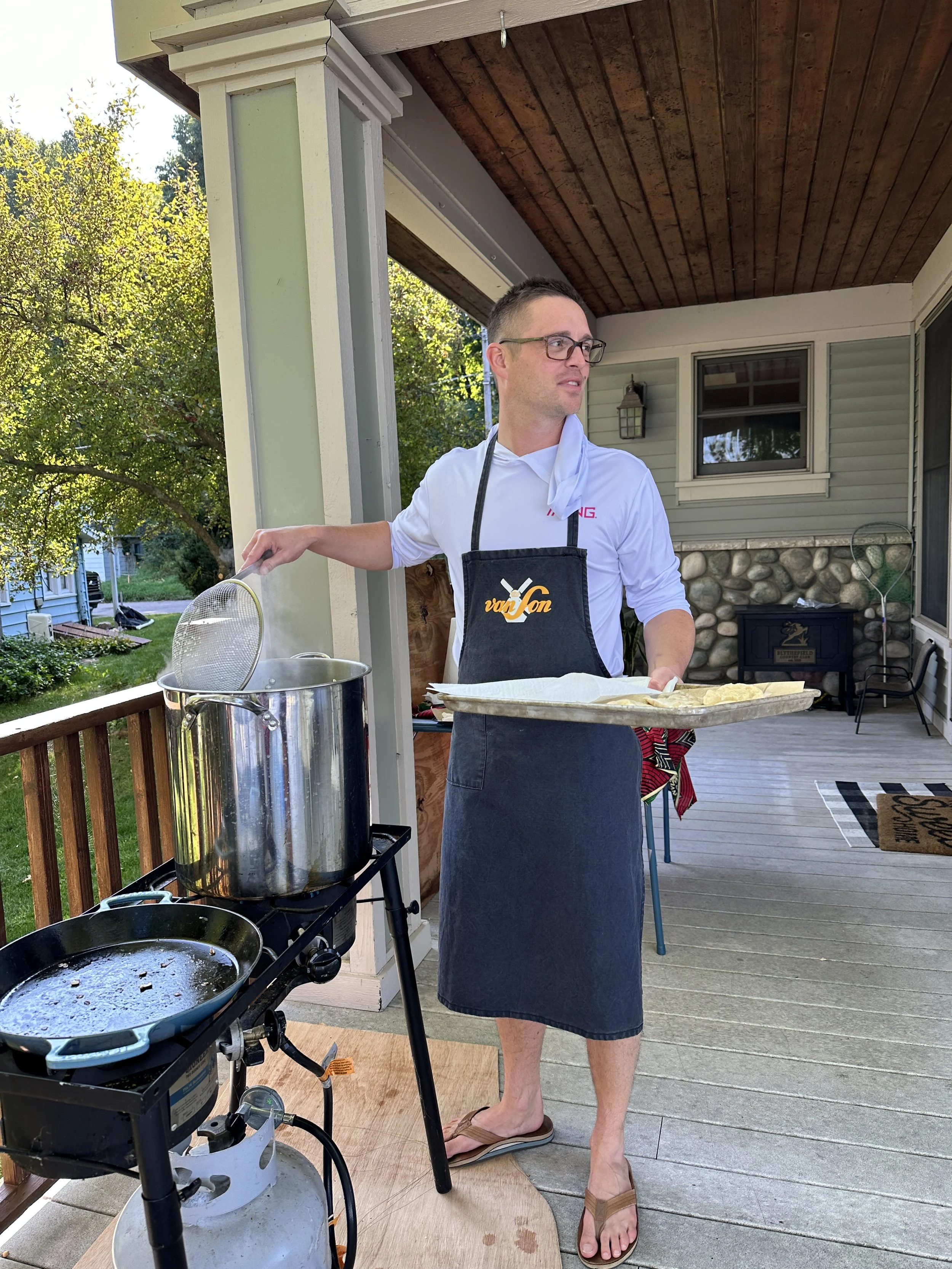
Walt is an excellent pierogi making man. Have you ever heard his Pierogi Poem?
Justin's Mushroom Gravy Sauce
Now, for the pièce de résistance, Justin's Mushroom Gravy Sauce. This is what elevates our perogies to the next level:
Mushroom Gravy Sauce Ingredients:
1 Large onion
2 tablespoons of butter
1 pint fresh mushrooms
1 tablespoon flour
½ tsp salt
¼ tsp pepper
½ cup whipping cream
½ cup sour cream
¼ cup grated cheddar cheese
2 tablespoons melted butter
Instructions:
Melt the butter and sauté chopped onion.
Add mushrooms and sauté for 5 minutes.
Blend in flour and add other ingredients, except the remaining butter and cheese.
Transfer to a casserole dish or crockpot.
Top with cheddar and melted butter, then bake for 20 minutes at 250 degrees.
And if you thought that was enough food, our neighbors brought kielbasa and glumpli (cabbage rolls) as well!

Have you ever hosted a perogi-making party? What worked best for you? We'd love to hear your experiences.
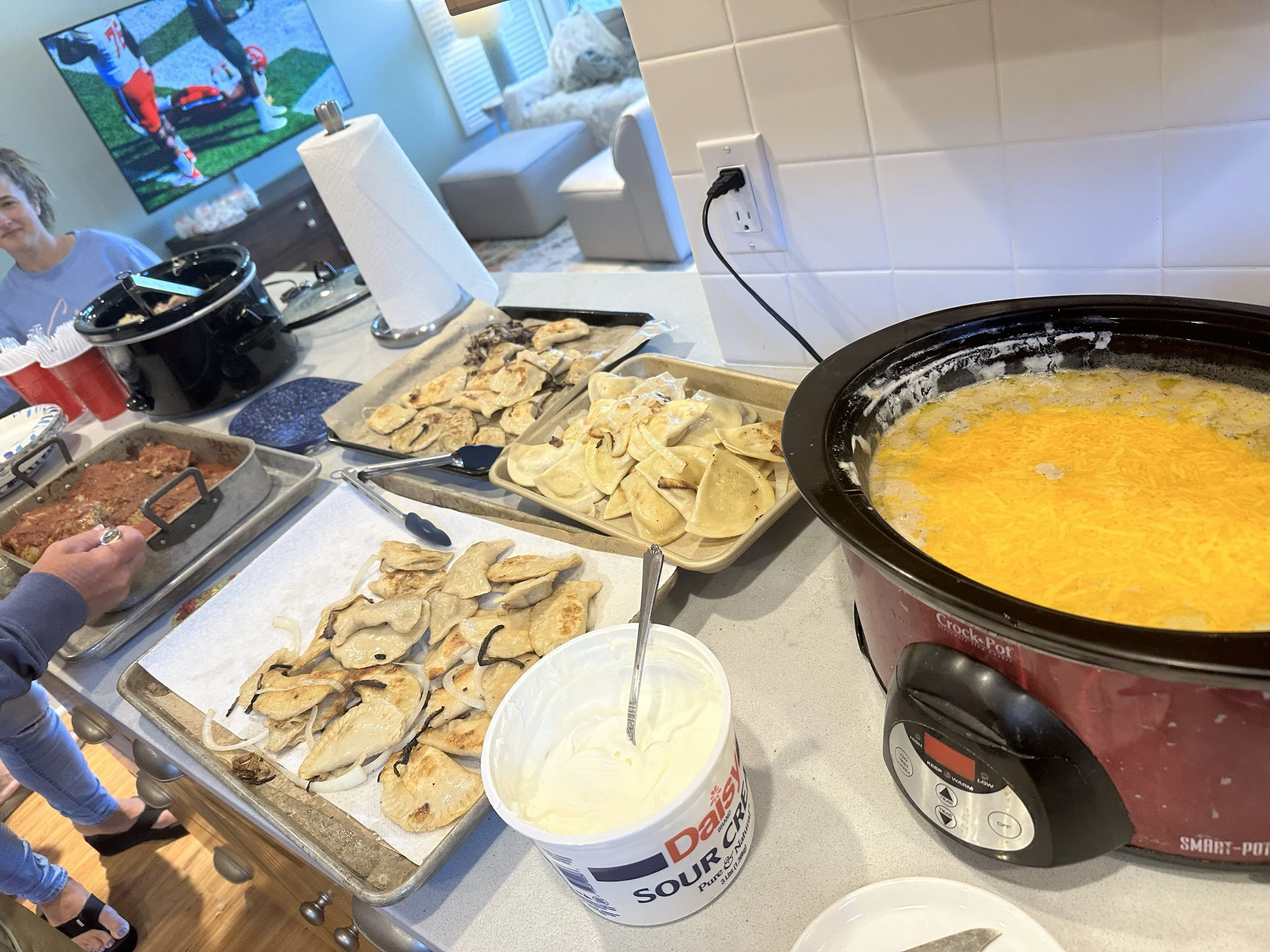
What does Pierogi have to do with Swift Printing?
What's the connection between a Perogi Party and Swift Printing, you ask? Well, it all starts with our founder, Walt Gutowski Sr., and his wife Lorraine, both children to proud Polish immigrants. At Swift Printing, we have a deep appreciation for our Polish heritage, and it's evident in the polish cookbook we publish, featuring cherished old-world recipes. You can grab your copy in person at Swift, The Grist Mill or online here. All proceeds are reinvested back into the Polish heritage community.
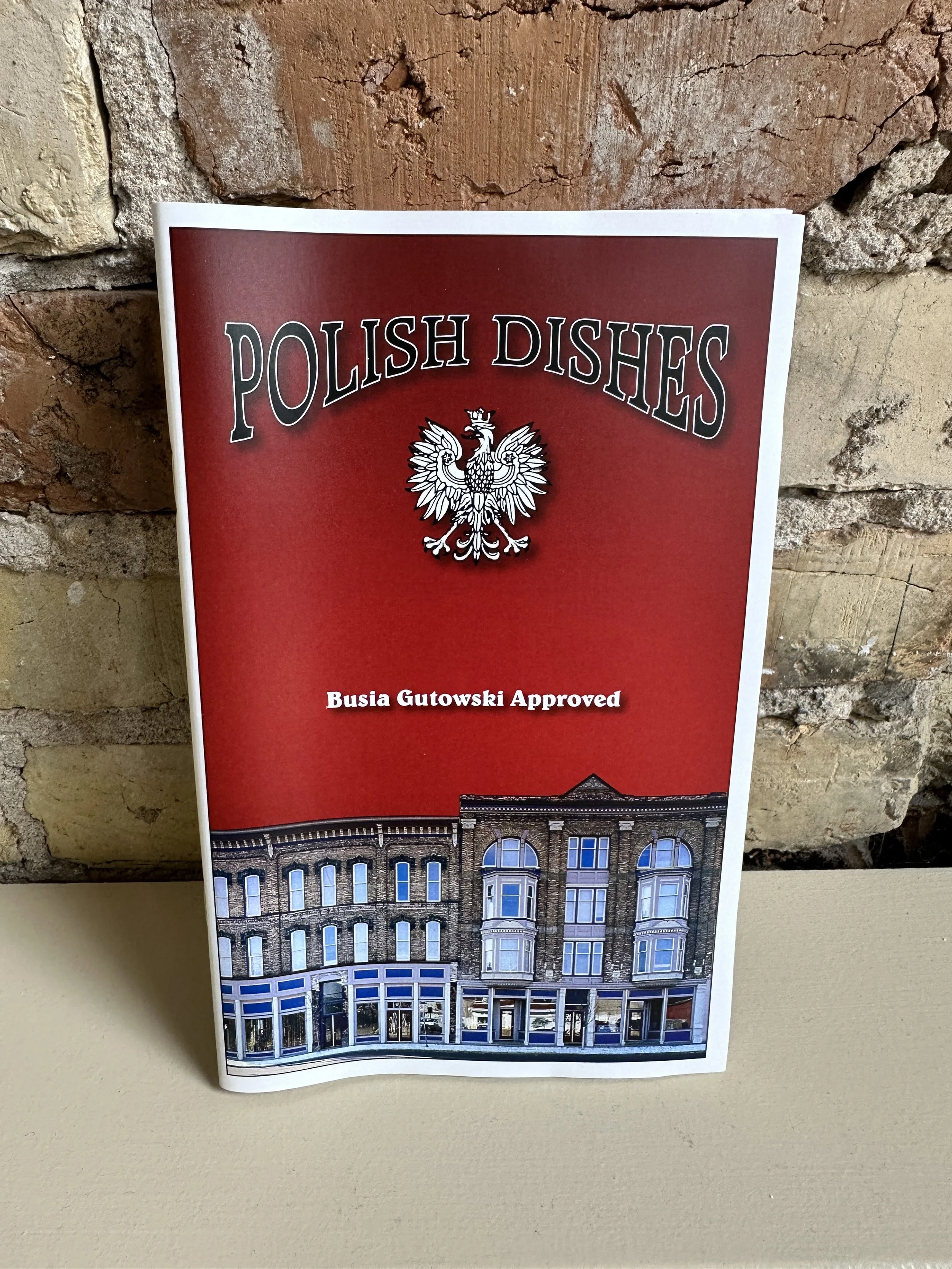
Perhaps it's time for Walt Gutowski III and me to embark on creating a new cookbook, putting our own unique spin on these timeless 16th-century classics? What do you think? Submit a recipe to be featured at jes@swiftprinting.com